The Kawah Ijen blue fire phenomenon is the visible combustion of sulfuric gases, which emerge from cracks in the volcano at high pressure and temperature, igniting upon contact with oxygen-rich air. This creates ethereal electric-blue flames that dance in the dark, a sight unique to only a handful of locations worldwide, with Kawah Ijen offering the most accessible viewing experience. It is not blue lava, as some might mistakenly believe, but rather the intense burning of sulfur.
As the Kawah Ijen Trek & Volcano Editor at Ijen Blue Fire Tours, I’ve navigated the paths of this active volcano over a hundred times. I know the rhythm of the mountain, the biting cold of the pre-dawn hours, and the specific moment when the blue fire reveals itself before the first hint of sunrise washes its magic away. My role is to help you understand precisely what awaits you, from the demands on your lungs and legs during the descent into the sulfur basin to the profound silence broken only by the crackle of burning gas.
What Is Ijen Blue Fire? The Geology Behind Kawah Ijen’s Electric-Blue Flames
To understand what is Ijen blue fire, we must look beneath the surface. Kawah Ijen is an active stratovolcano in East Java, Indonesia, part of a larger volcanic complex. Its geothermal activity is the engine behind this spectacular display. Deep within the volcano, immense pressure forces sulfuric gases through fissures and vents. These gases are superheated, emerging at temperatures exceeding 600°C (1,112°F).
When these hot, sulfur-rich gases meet the oxygen in the cooler night air, they spontaneously ignite. The sulfur burns with a distinct, vivid blue flame. This is the core of the kawah ijen blue flames geology sulfuric gas explanation. The color is not due to the lava itself being blue – Ijen’s lava, if it were to flow, would be a typical red-orange. Instead, the intense blue is purely a characteristic of burning sulfur. The flame height and intensity can vary, sometimes reaching several meters high, depending on the volume and pressure of the escaping gas, creating a dynamic, shifting spectacle that feels almost otherworldly.
The Science of Sulfur Combustion
Sulfur, a yellow, non-metallic element, is abundant in volcanic environments. When heated to its ignition point in the presence of oxygen, it oxidizes, producing sulfur dioxide (SO2), a gas, and releasing energy in the form of light and heat. The specific emission spectrum of burning sulfur is what gives these flames their distinctive blue hue. It’s a chemical reaction, pure and simple, yet its manifestation here is anything but ordinary.
Why Kawah Ijen Is Unique: The Blue Fire Ijen Only Place on Earth (Almost)
While sulfur-rich volcanic gases are found in many active volcanoes, the conditions necessary to produce such visible, large-scale blue flames, particularly in a location accessible to tourists, are exceedingly rare. This makes Ijen one of few blue fire volcanoes in world rare and truly special. Kawah Ijen is globally recognized as the most prominent and reliable place to witness this natural phenomenon.
The combination of readily accessible vents emitting high-purity sulfur gas, the sheer volume of this gas, and the specific atmospheric conditions at the crater floor allows the Kawah Ijen electric blue sulfuric flames phenomenon to occur with remarkable consistency. Most other instances of blue flames in volcanic settings are either ephemeral, small-scale, or occur in remote, inaccessible locations.
The World’s Largest Acidic Crater Lake
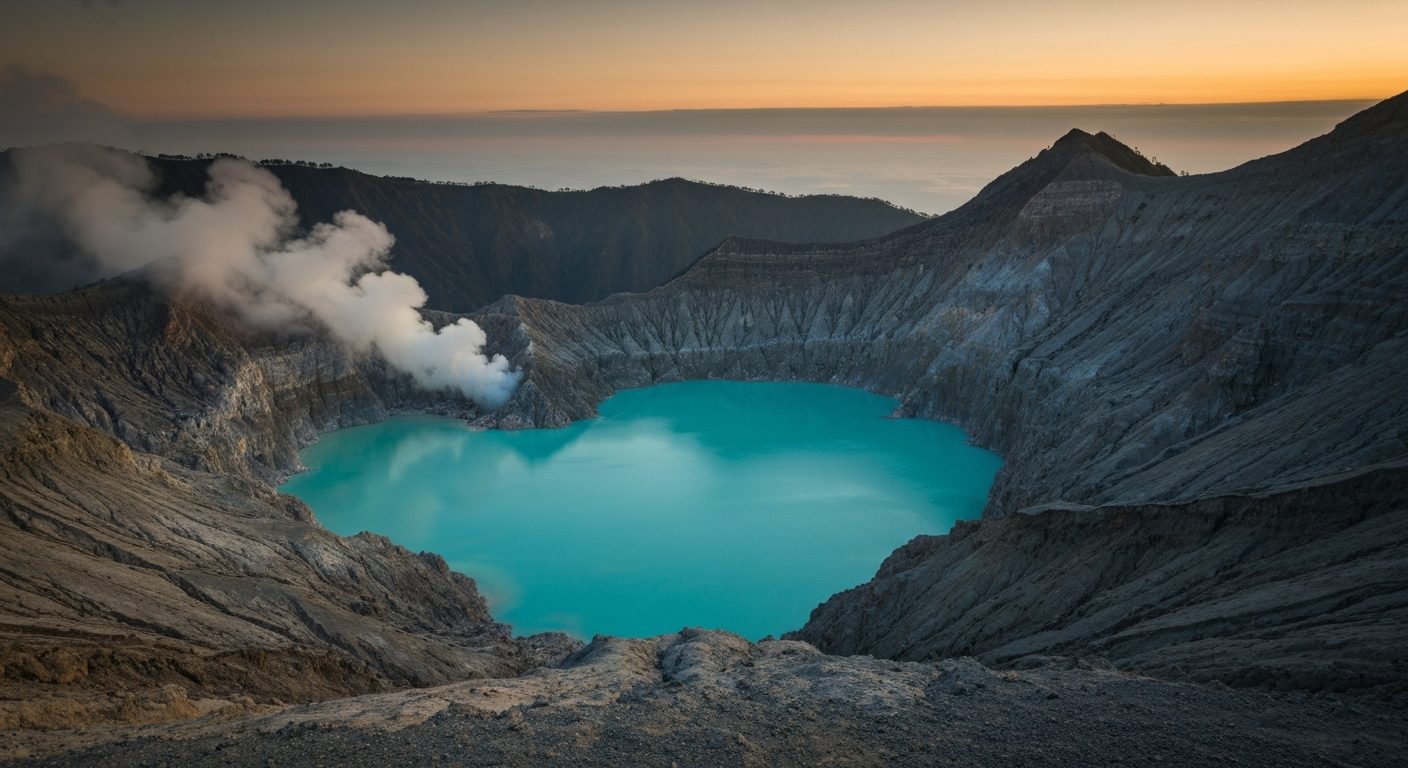
Adding to Ijen’s mystique is its massive, turquoise crater lake. This isn’t just a pretty backdrop; it plays a critical role in the overall environment. Known as the world’s largest highly acidic crater lake, it measures approximately 1 kilometer wide, with a pH often below 0.5. The lake’s vibrant turquoise color comes from its high concentration of sulfuric and hydrochloric acids, along with dissolved volcanic minerals.
The lake itself doesn’t directly cause the blue fire, but its presence signifies the intense geothermal activity beneath, which also drives the sulfur gas emissions. The stark contrast between the electric blue flames, the yellow sulfur deposits, and the neon turquoise lake creates a landscape unlike any other on Earth. This unique combination contributes significantly to why the blue fire ijen only place on earth narrative holds such weight for visitors.
How to See the Electric Flames: Best Time to See Ijen Blue Fire Midnight to Dawn
Witnessing the electric flames requires precise timing and a commitment to the night. The best time to see Ijen blue fire is strictly between midnight and approximately 4:00 AM. Why this narrow window? The blue flames are only visible in complete darkness. As soon as the first hint of pre-dawn light bleeds into the sky, the intensity of the blue fire diminishes, quickly becoming invisible to the naked eye.
Our treks are timed specifically to get you to the crater floor during this prime viewing window. It’s a race against the sun, but a race we’ve mastered over hundreds of ascents.
Naked Eye vs. Camera: Capturing the Blue Fire
The blue fire is absolutely visible to the naked eye. It glows with an intensity that will imprint itself on your memory. However, cameras, especially those capable of longer exposures, can capture the flame’s color and movement with even greater vibrance. A good camera can sometimes pick up subtle blues that are harder for the human eye to discern in the low light.
For photography, a sturdy tripod and a camera with manual controls (to adjust ISO, aperture, and shutter speed) are essential. Long exposure shots, typically 10-30 seconds, are often needed to truly bring out the kawah ijen electric blue sulfuric flames phenomenon in photographs. But remember, the most important lens is your own eye. Take time to simply watch, to absorb the moment without the screen of a device.
The Trek: What to Expect on the Night Climb
The journey to witness the blue fire is an adventure in itself, demanding preparation and resolve. The trek begins around midnight from Paltuding, the base camp at an elevation of approximately 1,800 meters above sea level. The path to the crater rim is roughly 3 kilometers long, ascending steadily through volcanic ash and rocky terrain. It’s a challenging climb, but manageable for anyone with a reasonable level of fitness.
The initial ascent to the crater rim takes about 2 to 3 hours. Once at the rim, at an elevation of around 2,386 meters, the air is noticeably thinner and the cold more pronounced. From the rim, the path descends steeply into the crater basin, an additional 800 meters down to where the blue fire is visible. This descent is rocky, uneven, and requires careful footing, especially in the dark.
Altitude, Cold, and Gas Masks
- Altitude: At nearly 2,800 meters, the altitude can affect some trekkers. Pacing yourself is crucial. Our licensed East Java guides are experts at setting a sustainable rhythm, ensuring you conserve energy and acclimatize gradually.
- Cold: The pre-dawn temperatures at Kawah Ijen can drop significantly, often nearing freezing, especially with wind chill. Layers of warm clothing, including a windproof outer shell, gloves, and a hat, are non-negotiable.
- Gas Masks: As you descend into the crater, the concentration of sulfuric gases increases dramatically. Gas masks are absolutely mandatory for your safety and comfort. Our guides provide high-quality, government-approved masks and ensure you know how to use them effectively. The smell of sulfur is pervasive, even with a mask, often described as rotten eggs.
Typical Kawah Ijen Night Trek Overview
| Aspect | Details |
|---|---|
| Starting Point | Paltuding Base Camp (approx. 1,800 m ASL) |
| Trek Start Time | Usually between 12:00 AM – 1:00 AM |
| Ascent to Rim | ~3 km, moderate to steep incline. Takes 2-3 hours. |
| Crater Rim Alt. | ~2,799 meters ASL. |
| Descent to Basin | ~800 meters, steep and rocky. Takes 30-60 minutes. |
| Blue Fire Viewing | Midnight to ~4:00 AM. |
| Ascent from Basin | ~800 meters, steep. Takes 45-90 minutes. |
| Descent to Base | ~3 km, gentle downhill. Takes 1.5-2 hours. |
| Total Trek Time | ~6-8 hours (round trip from Paltuding, including viewing time). |
| Key Equipment | Headlamp, gas mask, warm layers, sturdy hiking shoes. |
The Ascent to Witness the Sunrise
After witnessing the blue fire, the trek continues. You’ll ascend back to the crater rim. This is often timed to coincide with sunrise, offering a truly spectacular view over the turquoise lake and the surrounding volcanic landscape. The contrast between the pre-dawn darkness, the electric blue flames, and the vibrant colors of sunrise over the crater is an experience that stays with you long after the trek concludes.
Safety First: Sulfur Basin
The blue fire is viewed at the crater floor amid toxic sulfuric gas, which is why safety is paramount. The environment is inherently hazardous. Approaching the blue flames without proper protection and guidance is extremely dangerous. This is not merely an adventure; it’s an encounter with raw volcanic power.
Why a Licensed Guide and Gas Mask Are Non-Negotiable
- Toxic Gases: The air at the crater floor is thick with sulfuric acid fumes. Inhaling these gases without a proper gas mask can cause severe respiratory irritation, burning in the eyes and throat, and can be life-threatening, especially for individuals with pre-existing respiratory conditions. Our guides provide high-quality, tested gas masks and ensure they fit correctly.
- Volcanic Activity: Kawah Ijen is an active volcano. While typically stable for tourism, conditions can change. Our licensed East Java guides are trained to monitor the environment, understand the risks, and make informed decisions for your safety. They are familiar with the terrain, the best viewing spots, and emergency protocols.
- Navigating in Darkness: The descent into the crater is undertaken in complete darkness, on uneven, often slippery terrain. A local guide’s knowledge of the path is invaluable, preventing missteps and ensuring a safe passage. They also carry first-aid supplies and are equipped to assist in case of any issues.
Bali Premium Trip operates all private night treks with vetted, licensed East Java guides who have extensive experience on Kawah Ijen. They are not just navigators; they are companions, experts who prioritize your well-being while ensuring you experience the full majesty of the blue fire.
Planning Your Kawah Ijen Blue Fire Trek
Arranging a trip to Kawah Ijen, especially from Bali, involves logistics that are best handled by experienced operators. We, Ijen Blue Fire Tours, are operated by Bali Premium Trip. We specialize in arranging and operating private night treks, ensuring a seamless and safe journey from start to finish.
What Our Private Treks Include
Our treks are designed to remove the complexities of independent travel to this unique destination. They typically include:
- Private Transportation: From your accommodation in Bali or Banyuwangi directly to Paltuding base camp and back. This often involves a ferry crossing from Bali to Java.
- Licensed Local Guides: Expert, vetted East Java guides who lead your trek, provide gas masks, and ensure your safety and comfort.
- Park Entrance Fees & Permits: All necessary permits for entry into the Kawah Ijen National Park.
- Accommodation (for multi-day tours): Comfortable lodging in Banyuwangi for rest before or after the trek.
- Equipment: Headlamps and high-quality gas masks.
For a private 2-day/1-night Kawah Ijen blue fire trek originating from Bali, including return transport, accommodation in Banyuwangi, park fees, and a licensed guide, indicative pricing typically ranges from US$280-550 per person (last verified June 2026), depending on the season, group size, and specific accommodation choices. This range provides a sense of the investment for a comprehensive, worry-free experience.
We arrange all third-party services such as park jeeps, local guides, and permits via our network of licensed local partners, ensuring you benefit from local expertise and adherence to all regulations. When you choose to trek with us, you book directly with our own Bali Premium Trip reservations team at transparent, published rates with no third-party markup.
Are you ready to witness the extraordinary kawah ijen electric blue sulfuric flames phenomenon? Let us help you plan your trip. Our team is available via WhatsApp to answer your questions and customize your perfect Kawah Ijen adventure.
Frequently Asked Questions
Is Ijen blue fire real lava or burning gas?
The Ijen blue fire is not real lava. It is the visible combustion of sulfuric gases that emerge from the volcano at extremely high temperatures (over 600°C) and ignite upon contact with the air, creating electric-blue flames. The lava, if present, would be a typical red-orange.
How do you see the electric flames at Kawah Ijen?
To see the electric flames, you must undertake a night hike to the Kawah Ijen crater. The trek typically starts around midnight, allowing you to descend into the crater basin between 1:00 AM and 4:00 AM when the blue fire is most visible in complete darkness. A licensed guide and gas mask are essential for safety.
Why is Kawah Ijen the only place on Earth to see blue fire?
While blue flames from burning sulfur can occur in other volcanic areas, Kawah Ijen is unique due to the sheer volume and purity of the sulfur gas emissions, the consistent conditions for ignition, and its accessibility for tourists. This combination makes it the most prominent and reliable place on Earth to witness this rare phenomenon.
What is the best time to visit Kawah Ijen for blue fire?
The best time to visit Kawah Ijen for the blue fire is during the dry season (typically April to October) for clearer skies and safer trekking conditions. Within the day, the blue fire is only visible between midnight and approximately 4:00 AM, before the sun begins to rise.
Is it safe to go to the blue fire at Ijen?
Going to the blue fire at Ijen can be safe if proper precautions are taken. It is crucial to trek with a licensed guide, wear a high-quality gas mask provided by your guide, and follow all safety instructions. The crater floor environment contains toxic sulfuric gases, so independent entry or inadequate protection is dangerous.