Embarking on an Ijen Blue Fire Tour from Banyuwangi is the most direct and comfortable way to witness the electric-blue flames of Kawah Ijen. This guide helps you plan your journey from Banyuwangi, positioning it as the closest, fastest gateway to this incredible natural phenomenon.
As a night-and-landscape photographer who has spent countless pre-dawn hours framing Kawah Ijen’s blue flames and documenting the miners’ lamplit climb, I’ve seen firsthand what makes a successful and safe trek. My goal here is to give you an honest, practical overview of what to expect, from low-light camera technique to gas-mask safety, and the essential fitness and gear checklists that keep first-timers comfortable and out of trouble on the mountain. We arrange private night treks, operated by Bali Premium Trip and its vetted, licensed East Java guides.
Why Banyuwangi is Your Best Gateway to Kawah Ijen’s Blue Fire
When planning your Kawah Ijen adventure, the departure point significantly impacts your experience. Banyuwangi, located on the eastern tip of Java, stands out as the optimal launch point for the blue fire trek. It’s not just a matter of convenience; it’s about maximizing your sleep, conserving energy, and arriving at the crater fresher and ready to fully absorb the experience.
The Closest Launchpad: More Sleep, Fresher Legs
The blue fire phenomenon is best viewed between 2:00 AM and 4:00 AM, necessitating a midnight start. This means a significant portion of your tour takes place in the dark. The drive from your accommodation to the Paltuding ranger post, the starting point for the trek, is a critical factor.
From Banyuwangi, the drive to Paltuding typically takes around 1.5 to 2 hours. This relatively short journey means you can depart later, around midnight or 1:00 AM, allowing for a few more precious hours of rest compared to other departure cities. More sleep translates directly into fresher legs for the uphill hike, a clearer head for dark trail, and a more enjoyable experience overall. It’s a simple equation: shorter drive equals more sleep, fresher legs, and a better blue fire experience.
Comparing Departure Points: Banyuwangi vs. Bali, Bondowoso, Surabaya
While Kawah Ijen tours can be arranged from various locations, Banyuwangi offers distinct advantages.
- Banyuwangi:
- Pros: Closest to Paltuding (1.5-2 hours drive). Direct access via ferry from Bali, train from major Java cities, and small airport. Maximizes sleep. Ideal for ijen blue fire tour from banyuwangi.
- Cons: Fewer luxury accommodation options compared to Bali. Limited international flight connections.
- Bali:
- Pros: Well-established tourist infrastructure, easy international flights. Can combine with a Bali holiday.
- Cons: Requires an early start (often 7-8 PM) to catch the ferry and drive to Banyuwangi, then Paltuding. Adds significant travel time (5-6+ hours one way to Paltuding) and cost to the tour, reducing sleep and increasing fatigue before the trek.
- Bondowoso:
- Pros: Another Java city, slightly further than Banyuwangi, but still a reasonable base. Some tours originate here.
- Cons: Drive to Paltuding is longer than Banyuwangi (around 2-3 hours). Less direct transport links compared to Banyuwangi.
- Surabaya:
- Pros: Major international airport. Can combine with other Java explorations.
- Cons: Very long drive to Kawah Ijen (6-8 hours one way), making a direct midnight trek impractical without an overnight stay in Banyuwangi or Bondowoso first. Not suitable for a direct blue fire tour unless part of a multi-day itinerary.
For those prioritizing the blue fire experience itself, Banyuwangi is the clear winner for its logistical superiority and the comfort it affords. It is truly the gateway to Kawah Ijen from Banyuwangi.
Getting to Banyuwangi: Airport, Train, Ferry Access
Banyuwangi is remarkably accessible, making it an ideal staging point for your kawah ijen tour from banyuwangi.
- By Ferry from Bali: If you’re coming from Bali, the most common route is a short (approximately 45-60 minute) ferry ride from Gilimanuk (west Bali) to Ketapang Ferry Port in Banyuwangi. Ferries run 24/7. Our ijen blue fire tour from banyuwangi with hotel pickup can include pickup directly from the ferry port.
- By Train: Banyuwangi is well-connected by train to major cities in Java, including Surabaya, Malang, and Yogyakarta. The main station, Banyuwangi Kota (formerly Karangasem), is central. For those arriving by rail, our ijen crater tour from banyuwangi train station service ensures a smooth transition from your train to your accommodation, and then to the trek.
- By Air: Banyuwangi’s Blimbingsari Airport (BWX) offers domestic flights, primarily connecting to Surabaya and Jakarta. This is the fastest option for travelers coming from further afield in Indonesia. We provide seamless pickup from the airport as part of our comprehensive tour packages.
Regardless of your arrival method, Bali Premium Trip’s reservations team coordinates all necessary transfers, ensuring you’re comfortably settled before your midnight adventure begins.
What to Expect on Your Ijen Blue Fire Tour from Banyuwangi
The Kawah Ijen blue fire trek is an experience that lingers. It’s raw, challenging, and profoundly rewarding. Here’s a detailed breakdown of what the midnight climb is really like, from start to finish.
The Midnight Start: Pickup and Drive to Paltuding
Your ijen midnight trek from banyuwangi begins late. Expect your private vehicle and licensed local guide to pick you up from your Banyuwangi accommodation (or train station/ferry port) between 12:00 AM and 1:30 AM, depending on your exact location and the season. This careful timing ensures you arrive at Paltuding ranger post, the base camp for the trek, just as the gates open around 2:00 AM.
The drive itself is scenic, even in the dark. You’ll ascend winding mountain roads, leaving the town lights behind and entering the cooler, crisp air of the Ijen plateau. Your guide will use this time to brief you on the trek ahead, cover safety protocols, and distribute essential gear like gas masks and headlamps. This is the moment to ask any last-minute questions and mentally prepare for the climb.
The Ascent: Kawah Ijen’s Trail in the Dark
Upon arrival at Paltuding, you’ll register and begin the trek. The trail to the crater rim is approximately 3 kilometers long, with an elevation gain of about 300 meters. It’s a steady uphill climb, initially through a well-defined path that gradually becomes steeper. The terrain is mostly compacted dirt and gravel, but it can be slippery in places, especially after rain.
Your headlamp will be your primary light source, illuminating just enough of the path ahead. The darkness is profound, broken only by the beams of other trekkers’ lamps, creating a surreal, moving constellation on the mountainside. The air is cool, often cold, so layers are essential. Your guide will set a comfortable pace, allowing for breaks as needed. Listen to your body. There’s no rush. The goal is a steady, sustainable ascent.
Meeting the Blue Fire: Descending into the Crater
Reaching the crater rim in the dark is a significant milestone. From here, the blue fire is often visible, a distant, ethereal glow in the pitch black. However, to truly experience the blue flames up close, a further descent into the crater is required. This part of the trek is considerably more challenging.
The descent into the crater is a steep, rocky, and often slippery path, roughly 800 meters long. It demands careful footing, especially in low light. This is where your gas mask becomes crucial. As you get closer to the sulfur vents, the air quality rapidly deteriorates. Your guide will instruct you on when to don your mask and how to use it effectively. The blue flames themselves are a truly unique sight: sulfurous gases, ignited by the heat of the volcano, burning with an intense, electric-blue light.
The Miners: A Glimpse into Their World
Amidst the curious trekkers, you will encounter the Ijen sulfur miners. These resilient individuals work through the night and into the early morning, extracting chunks of solidified sulfur and carrying staggering loads (often 70-90 kg) up the steep crater path and down to the weighing station. Their presence is a stark reminder of the harsh realities of life and labor in this extraordinary place.
Observing them is a humbling experience. While it’s natural to be fascinated, remember to be respectful. Do not block their path, do not shine lights directly in their faces, and if you wish to photograph them, always ask for permission first. A small gesture of gratitude, like offering a cigarette or a small tip, is often appreciated but never expected. Our guides facilitate respectful interactions.
Sunrise at the Crater Rim: Turquoise Lake Unveiled
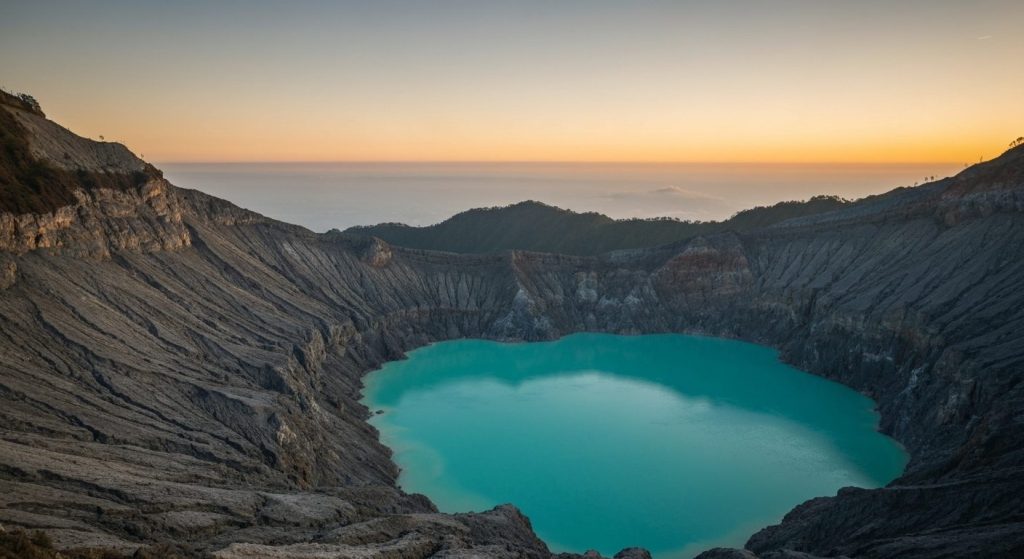
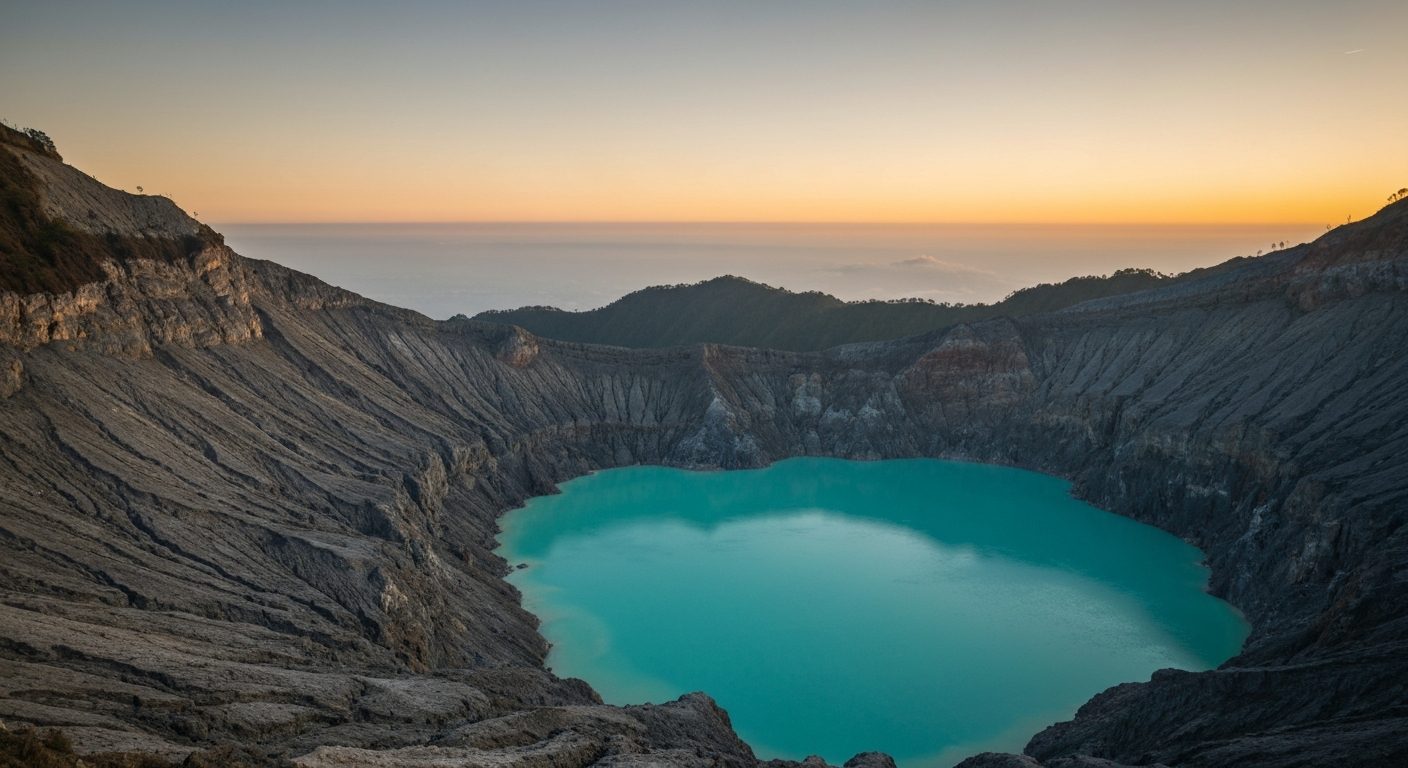
After witnessing the blue fire, you’ll ascend back to the crater rim. This return journey, while uphill, is often easier mentally as the first hints of dawn begin to lighten the sky. Position yourself at a good vantage point on the rim before sunrise. As the sun climbs, it paints the sky in hues of orange and pink, gradually revealing the vast, acidic turquoise lake within the crater. This immense lake, one of the most acidic in the world, contrasts dramatically with the surrounding volcanic landscape. The transition from the dark, intimate blue fire experience to the grand, panoramic sunrise view is incredibly powerful.
The Descent and Return to Banyuwangi
With the sun fully up, the path back down to Paltuding is much clearer. You’ll see the landscape you ascended in darkness, offering new perspectives. The descent is generally easier on the lungs but harder on the knees, so take it slow and steady. Once back at Paltuding, your driver will be waiting. You’ll then begin the drive back to Banyuwangi, typically arriving mid-to-late morning, allowing you time to rest, shower, and reflect on an memorable adventure.
This kawah ijen crater guided tour from banyuwangi is a full circuit, demanding physical effort but delivering profound rewards in equal measure.
Choosing Your Ijen Blue Fire Tour from Banyuwangi: Private vs. Shared
Bali Premium Trip offers both private and shared tour options for your ijen blue fire tour from banyuwangi. Your choice will depend on your budget, desired flexibility, and preference for group size.
Private Kawah Ijen Blue Fire Tour from Banyuwangi: Flexibility and Focus
A private tour provides an exclusive experience tailored to your pace and preferences. You’ll have a dedicated vehicle and a personal licensed guide. This option is ideal for couples, families, or small groups who value privacy, flexibility, and personalized attention.
Benefits of a Private Tour:
- Personalized Pace: Trek at your own speed, stopping for photos or rests whenever you wish, without feeling rushed or holding others back.
- Direct Pickup: Enjoy direct pickup from your hotel, train station, or ferry port in Banyuwangi at a time coordinated precisely for your needs.
- Dedicated Guide: Your guide can focus entirely on your group’s safety, questions, and interests, offering deeper insights into the geology, mining, and local culture.
- Comfort and Space: You’ll have the vehicle to yourselves, offering more room for gear and relaxation before and after the trek.
Ijen Blue Fire Shared Tour Banyuwangi: Community and Cost-Effectiveness
A shared tour, also known as an open tour, groups individual travelers together. This is an excellent option for solo travelers or budget-conscious explorers who enjoy meeting new people. Our shared tours maintain small group sizes to ensure a good experience.
Benefits of a Shared Tour:
- Cost-Effective: Shared tours generally offer a lower per-person price, making them a more cheap ijen blue fire tour banyuwangi option.
- Social Experience: A great opportunity to connect with fellow travelers from around the world.
- Guaranteed Departures: Shared tours often have guaranteed departures once a minimum number of participants is met.
Here’s a comparison to help you decide:
| Feature | Private Tour | Shared Tour |
|---|---|---|
| Group Size | Exclusive to your booking (1-6 people) | Small group (typically 4-8 people) |
| Flexibility | High; customizable pace & stops | Moderate; group pace & schedule |
| Cost per Person | Higher (e.g., US$150-250) | Lower (e.g., US$75-120) |
| Pickup/Dropoff | Direct from your accommodation | Designated pickup points or consolidated hotel pickups |
| Personalization | High; guide focused on your group | Moderate; guide manages group dynamics |
| Social Aspect | Limited to your private group | Opportunity to meet other travelers |
Whether you choose a private kawah ijen blue fire tour from banyuwangi or a shared ijen tour from banyuwangi, Bali Premium Trip ensures you receive a high-quality experience with licensed guides and reliable transport.
Ijen Blue Fire Tour from Banyuwangi Price: Understanding the Costs
Transparency in pricing is key. The ijen blue fire tour from banyuwangi price varies based on several factors, including whether you opt for a private or shared tour, the number of participants, and the inclusions. We believe in providing clear breakdowns so you know exactly what you’re paying for.
What’s Included in Your Tour Package
Our standard tour packages are designed to cover all the essentials for a comfortable and safe blue fire experience. When you’re considering a banyuwangi ijen blue fire tour booking with us, you can expect the following inclusions:
- Round-trip private transportation: Comfortable, air-conditioned vehicle from your accommodation in Banyuwangi (hotel, train station, ferry port) to Paltuding and back.
- Licensed local guide: An experienced, English-speaking guide who knows the mountain, its conditions, and safety protocols intimately.
- Professional gas mask: High-quality, properly fitting gas masks are provided and essential for safely viewing the blue fire.
- Headlamp: To navigate the dark trails.
- Entrance fees and permits: All necessary Kawah Ijen entrance tickets and national park permits are arranged and covered by us.
- Bottled water: Staying hydrated is important during the trek.
Some premium private packages may also include breakfast after the trek, or a professional photographer (like myself) if pre-arranged, offering tailored photography advice and capturing your moments.
Permit and Entrance Fees for Kawah Ijen Crater
The Kawah Ijen crater is part of a protected area, and entrance fees are mandatory. These fees contribute to the maintenance of the park and support local initiatives. Our tour packages include these fees, so you don’t need to worry about additional payments at the gate.
- Weekday Entrance Fee: Typically around IDR 100,000 per person for foreigners (approximately US$6-7).
- Weekend/Public Holiday Entrance Fee: Typically around IDR 150,000 per person for foreigners (approximately US$9-10).
These fees are subject to change by the park authorities. We always ensure you have the most up-to-date information and that all necessary permits are secured for your entry.
Indicative Price Ranges (Last Verified June 2026)
Please note that prices are indicative and can vary based on season, specific inclusions, group size, and current exchange rates. These ranges are provided to give you a clear idea for planning your budget.
- Ijen Blue Fire Shared Tour from Banyuwangi: Expect a price range of approximately US$75 – US$120 per person. This typically includes shared transport, guide, gas mask, headlamp, and entrance fees.
- Private Kawah Ijen Blue Fire Tour from Banyuwangi: For a more personalized experience, prices generally range from US$150 – US$250 per person, depending on the number of participants (lower per person for larger private groups) and additional services requested. This includes private transport, a dedicated guide, all gear, and entrance fees.
These figures are for tours originating and returning to Banyuwangi. Tours starting from Bali or other cities will naturally incur higher costs due to extended travel and logistics.
Factors Affecting Your Banyuwangi Ijen Blue Fire Tour Booking Cost
Several elements can influence the final price of your tour:
- Group Size: Private tours become more cost-effective per person with more participants.
- Seasonality: Peak season (July-August, December-January) may see slightly higher demand and pricing.
- Additional Services: Requesting specific add-ons like a post-trek breakfast, accommodation booking assistance, or onward travel arrangements will affect the total cost.
- Pickup Location: While our tours include pickup within Banyuwangi, very remote accommodations might incur a small surcharge, though this is rare.
We believe in transparent pricing. When you reach out to our Bali Premium Trip reservations team, we will provide a detailed quote tailored to your specific needs, with no hidden fees.
Ready to plan your trek? Plan your trip with us today via WhatsApp or email for a personalized quote.
Safety First: Gas Masks, Sulfur, and Altitude Exposure
My role as Safety Editor comes from years of experience in the crater. Kawah Ijen is a powerful, active volcano. While incredibly beautiful, it presents real environmental and physical challenges. Your safety is paramount, and understanding these risks is the first step towards a responsible and enjoyable visit.
The Importance of a Proper Gas Mask
This is non-negotiable. Descending into the crater brings you into close proximity with active sulfur vents. These vents continuously release sulfur dioxide (SO2) gas. Exposure to SO2 can cause respiratory irritation, coughing, burning eyes, and difficulty breathing. For individuals with asthma or other respiratory conditions, it can be particularly dangerous.
A standard medical mask or a simple cloth mask is entirely insufficient. You need a professional-grade gas mask with an activated carbon filter, specifically designed to filter out acidic gases like SO2. All Bali Premium Trip tours provide high-quality, well-maintained gas masks as a standard inclusion. Your guide will ensure you know how to fit it properly and when to wear it. Trust me, you’ll be grateful for it when the wind shifts and you’re surrounded by sulfur fumes.
Understanding Sulfur Exposure Risks
Beyond the immediate respiratory irritation, prolonged or intense exposure to sulfur fumes can lead to more serious health issues. While our guides manage crater access based on wind direction and gas levels to minimize risk, it’s crucial to be aware. If you feel dizzy, nauseous, or experience severe irritation, inform your guide immediately. They are trained to assess the situation and guide you to safer air. We prioritize your well-being over getting the perfect shot of the blue fire.
Altitude Sickness and Physical Fitness for the Ijen Midnight Trek from Banyuwangi
Kawah Ijen’s crater rim sits at an elevation of approximately 2,386 meters (7,828 feet) above sea level. While not extremely high, the rapid ascent combined with the late-night timing can affect some individuals. Symptoms of mild altitude sickness can include headaches, nausea, dizziness, and shortness of breath.
The trek itself, while not technically difficult, requires a good level of physical fitness. It’s a continuous uphill climb for about 1.5 to 2 hours to the rim, followed by a steep descent and ascent within the crater. You don’t need to be an athlete, but you should be comfortable with sustained walking on uneven terrain. If you have any pre-existing heart, lung, or joint conditions, consult your doctor before undertaking the ijen midnight trek from banyuwangi.
Our Safety Protocols and Licensed Guides
Bali Premium Trip works exclusively with vetted, licensed local guides who possess extensive knowledge of Kawah Ijen. They are trained in first aid, aware of the mountain’s changing conditions, and prioritize your safety above all else. Our safety protocols include:
- Pre-trek Briefing: Comprehensive explanation of the route, potential hazards, and emergency procedures.
- Equipment Check: Ensuring all trekkers have proper headlamps, footwear, and correctly fitted gas masks.
- Constant Monitoring: Guides continuously monitor weather, wind direction, and gas levels in the crater, making real-time decisions about safe access.
- Controlled Pace: Guides set a comfortable pace and encourage regular breaks.
- Emergency Procedures: Clear plans for any medical emergencies or unforeseen circumstances.
You are in capable hands with our kawah ijen crater guided tour from banyuwangi.
Your Kawah Ijen Crater Guided Tour from Banyuwangi: Gear & Essentials
Preparation is key to comfort and enjoyment on the mountain. Here’s a practical checklist based on my own experience traversing these trails countless times.
What to Wear: Layers are Key
The temperature at Kawah Ijen can fluctuate dramatically. It can be quite cold at the base and on the mountain in the early hours (sometimes as low as 5-10°C or 40-50°F), but you’ll warm up quickly during the climb. Once the sun rises, it can become quite warm.
- Base Layer: A moisture-wicking long-sleeve shirt. Avoid cotton if possible, as it retains sweat and can make you cold.
- Mid-Layer: A fleece jacket or light sweater for warmth.
- Outer Layer: A windproof and waterproof jacket. This is crucial for protection against wind chill and any unexpected light rain.
- Bottoms: Comfortable trekking trousers or activewear. Jeans are not recommended as they restrict movement and dry slowly.
- Footwear: Sturdy, closed-toe hiking shoes or trekking boots with good ankle support and grip. The terrain is uneven and can be slippery. Running shoes are generally not sufficient, especially for the crater descent.
- Socks: Thick, moisture-wicking hiking socks to prevent blisters.
- Headwear: A warm beanie or hat, and a buff or bandana for extra neck/face protection against cold and dust.
- Gloves: Lightweight gloves can be very helpful against the cold, especially when holding onto rocks during the crater descent.
What to Bring: The Essentials Checklist
Pack light but smart. Every item you carry adds weight to your ascent.
- Small Backpack: To carry your essentials.
- Water: At least 1-1.5 liters. Staying hydrated is vital. We provide bottled water, but feel free to bring extra.
- Snacks: Energy bars, fruit, or small sandwiches are great for a quick energy boost during breaks.
- Personal Medications: Any prescription medications you require.
- Sunscreen and Sunglasses: Essential for the descent once the sun is up.
- Camera & Power Bank: Fully charged camera and spare batteries. A power bank for your phone is also a good idea.
- Small Towel: For wiping sweat or drying hands.
- Cash: Small Indonesian Rupiah (IDR) for souvenirs or tipping.
Photography Tips for the Blue Fire (Daniel’s special touch)
As a photographer, I know the allure of capturing the blue fire. It’s challenging but rewarding. Here are my top tips:
- Tripod is Essential: The blue fire requires long exposures (15-30