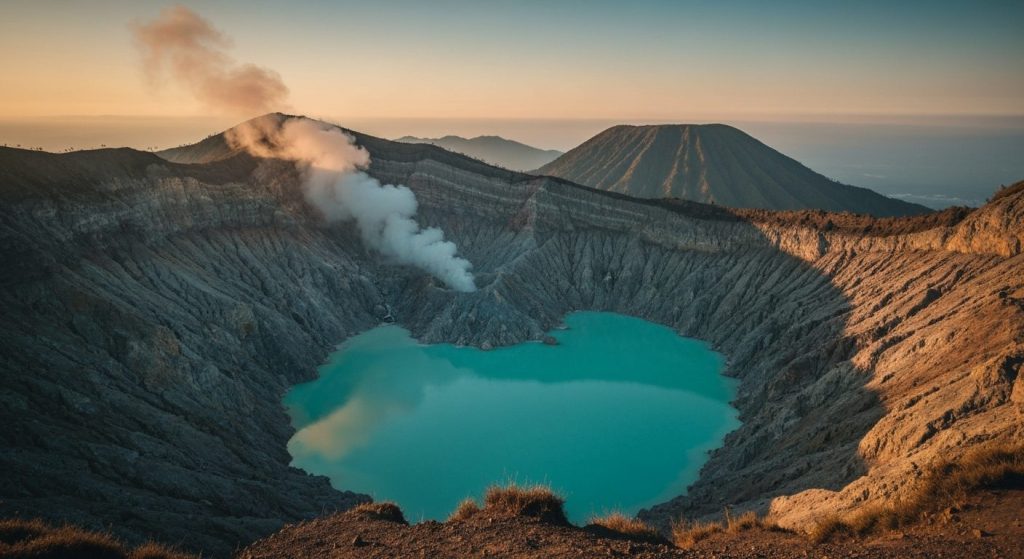
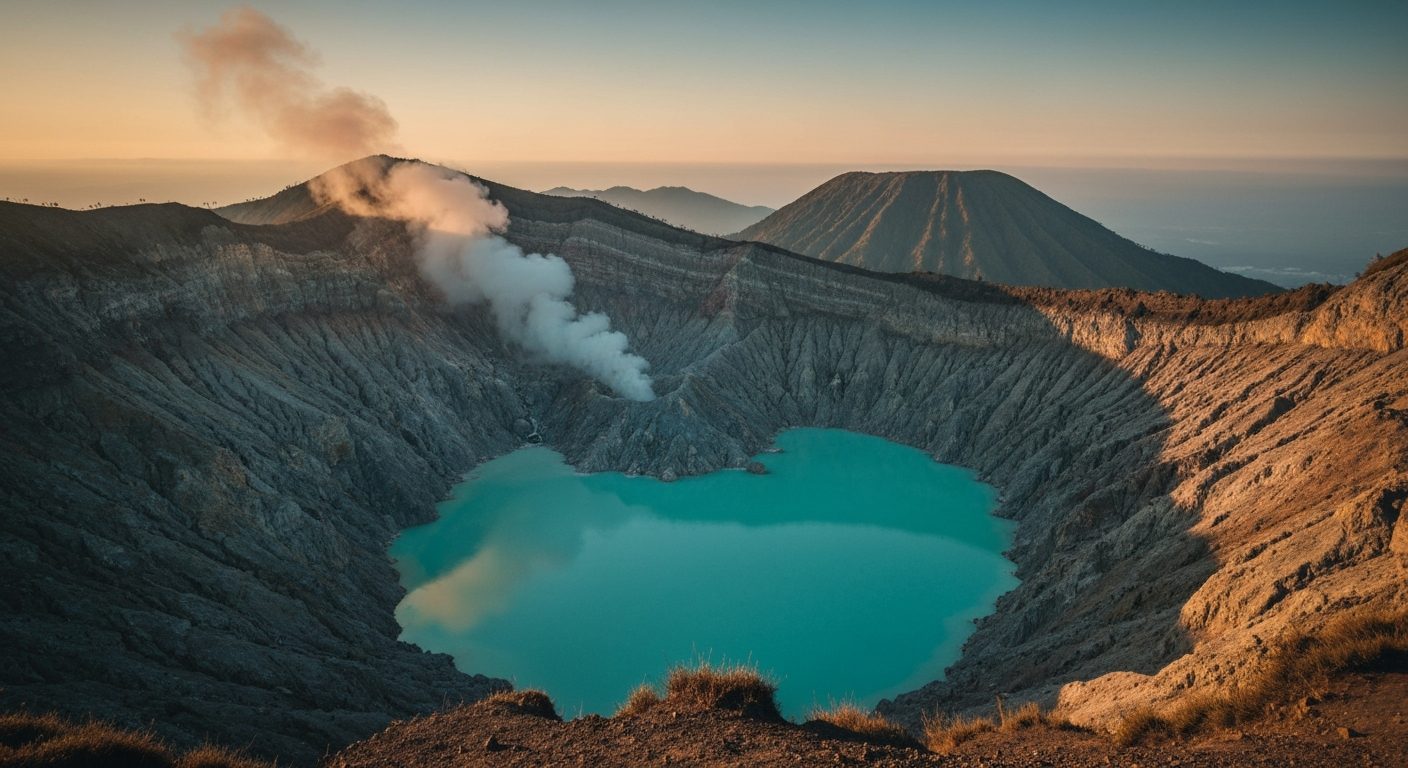
An ijen tumpak sewu bromo tour is a multi-day East Java trip that links Kawah Ijen’s blue fire, Tumpak Sewu waterfall, and Mount Bromo’s sunrise caldera in one continuous route. On this page, I’ll lay out exactly how the 3D2N ijen tumpak sewu combo tour and the 4-day versions work in real life: hours, transfers, sleep, safety, and what you actually see in the dark.
I’m Daniel, Blue Fire Photography & Safety Editor at Ijen Blue Fire Tours, run by Bali Premium Trip. I shoot, guide, and sanity-check these routes with our licensed East Java teams several times each season, and this page is written from that on-the-mountain perspective.
—
What this Ijen–Tumpak Sewu–Bromo page will help you decide
- Is a 3 day East Java tour Bromo Ijen Tumpak Sewu enough, or do you need the 4-day?
- Should you start your bromo ijen tumpak sewu itinerary from Malang, Surabaya, Banyuwangi, or Bali?
- How much driving is involved each day, and when do you actually sleep?
- How private guiding works: what Bali Premium Trip arranges, what’s handled by local jeep drivers and porters.
- Which extras fit: Milky Way photography, Baluran “Africa of Java”, Alas Purwo, or simply more rest.
If you want to jump straight into planning with a human, you can always plan your trip or message our Bali Premium Trip team on WhatsApp at +62 811 2859 0000.
—
Overview: Core routes for an Ijen Tumpak Sewu Bromo trip
Most travellers end up choosing one of three patterns:
- 3D2N Ijen Tumpak Sewu Bromo Tour (start Malang or Surabaya)
- Pace: Fast. Two pre-dawn wake‑ups in a row.
- Focus: All three icons with minimal days off your calendar.
- Typical flow:
- Day 1: Malang/Surabaya → Tumpak Sewu → village stay near Lumajang.
- Day 2: Tumpak Sewu area (if not done day 1) → Bromo area.
- Day 3: Bromo sunrise → transfer to Banyuwangi or back to Surabaya/Malang.
- Ijen can be done at the start or end depending on where you’re coming from. I’ll spell out both options below.
- Ijen Tumpak Sewu Bromo 4 Day Tour (start Surabaya, Malang, or Banyuwangi)
- Pace: More balanced. Three early mornings, but with more recovery.
- Focus: Better timing for light at the waterfall and crater, more margin for weather, and time to actually sit with the view.
- Bali to Kawah Ijen Blue Fire and Bromo 4 Day Tour (via Ketapang ferry)
- Pace: Similar to the 4-day route above, but anchored to Bali.
- Focus: Seamless coast‑to‑coast: hotel pickup in South Bali or Ubud, ferry across the strait, East Java loop, finishing either back in Bali or in Surabaya/Malang.
For most first‑timers, the decision is:
- Short on days and reasonably fit? The ijen tumpak sewu combo tour 3D2N works, as long as you accept less sleep and less lingering.
- Want a safer margin for weather, photos, or travelling with kids/parents? The 4-day is kinder on the body and the mood.
—
How Bali Premium Trip operates these combo tours
Bali Premium Trip is the operator behind Ijen Blue Fire Tours. You book directly with our own reservations team at transparent, published ranges; there’s no third‑party markup.
For an ijen and tumpak sewu tour combined with Bromo, we arrange:
- Private vehicle and driver throughout (modern MPV or similar, typically 2–5 guests per car; larger groups get minibuses).
- Licensed local guides at Ijen, Bromo, and Tumpak Sewu.
- All required park entry tickets and village fees.
- 4×4 jeep at Bromo and, where needed, motorbike transfers to Tumpak Sewu trailheads.
- Accommodation in practical, well‑located guesthouses or mid-range hotels near each site.
- Safety kit for Ijen (gas masks and basic headlamps), plus briefings on sulfur exposure, midnight temperature, and trail etiquette.
We don’t own park concessions, crater access, or national park jeeps. Those are operated by local communities and park authorities; we work with vetted, licensed partners we use ourselves when we’re not guiding.
Indicative cost (last verified June 2026):
- 3D2N Bromo Ijen Tumpak Sewu package from Malang or Surabaya: roughly US$280–480 per person for 2–4 travellers, depending on season, hotel category, and exact route.
- 4-day Ijen Tumpak Sewu Bromo tour or Bali–Java–Bali loop: roughly US$360–650 per person for 2–4 travellers, similar variables.
These are ranges, not quotes. For a firm plan, plan your trip or reach us via WhatsApp.
—
3D2N Ijen Tumpak Sewu Bromo Tour: Fast-track combo
There are two main 3D2N structures:
- Version A: Start in Malang/Surabaya → Tumpak Sewu → Bromo → Ijen → out via Banyuwangi or back inland
- Version B: Start in Banyuwangi (Ijen first) → Tumpak Sewu → Bromo → finish in Surabaya/Malang
Both cover the same three highlights. The difference is where you land and where you want to end.
Typical 3D2N outline (Malang/Surabaya start)
This works well if you fly into East Java first.
Day 1: Malang/Surabaya – Tumpak Sewu – Lumajang area
- 05:00–07:00 – Pickup at your Malang or Surabaya hotel or airport.
- 07:00–10:30 – Drive to Tumpak Sewu area (~140–180 km, roads are paved but narrow and winding near the end).
- 10:30–11:30 – Early lunch and gear check at a village warung or homestay.
- 11:30–15:00 – Guided visit to Tumpak Sewu waterfall:
- Steep descent on concrete steps, bamboo ladders, and sometimes very wet rock.
- Allow ~30–45 minutes down, a full hour or more at the base, then an hour back up with photo stops.
- Trails can be muddy; sandals are risky. Use shoes with grip and be ready for your feet to get wet.
- 15:00–17:00 – Short drive to a nearby guesthouse around Lumajang or back toward Malang line depending on your route.
- Evening – Dinner, pack for early departure. Usually lights out by 21:00 is wise.
You’ll feel the quads after Tumpak Sewu. This is one reason the 4‑day route is gentler; on 3D2N you move straight on.
Day 2: Lumajang – Bromo area – Cemoro Lawang / Tosari
- 03:00–04:00 – Wake up, quick breakfast.
- 04:00–07:00 – Drive toward Bromo area. Expect 3–4 hours with a mix of main roads and rural sections.
- 07:00–09:00 – Check in or drop bags at a Bromo‑area hotel (Cemoro Lawang, Tosari, or similar at ~2,000–2,200 m altitude).
- Midday – Rest. This is your only real chance for a nap in the 3D2N structure.
- 15:00–16:00 – Jeep pickup for the afternoon Bromo program (some travellers prefer sunrise next day only; others add an afternoon caldera visit):
- Sea of sand drive.
- Short climb up Mount Bromo itself (about 250 steps from horse parking to crater rim).
- 18:00–20:00 – Dinner and early sleep. You’ll be up around 03:00 again.
If you’re a photographer and want a ijen crater Milky Way mount bromo photo tour angle, this is the night we sometimes do a Milky Way session from viewpoints above the caldera, timing around moon phase; it means less sleep, which is why I generally recommend this only on 4-day itineraries.
Day 3: Bromo sunrise – transfer to Ijen / Banyuwangi
- 03:00–04:00 – Pickup by jeep at your lodge.
- 04:00–05:00 – Climb to a Bromo sunrise viewpoint such as Penanjakan, King Kong Hill, or Seruni, depending on crowd and weather. Short hike but chilly: ~5–10°C with wind in dry months.
- 05:00–07:00 – Sunrise colours over the Tengger caldera and, on clear mornings, Semeru in the background.
- 07:00–09:00 – Jeep back to lodge, breakfast, quick shower.
- 09:30–17:00+ – Long transfer toward Banyuwangi/Ijen area or back to Surabaya/Malang, depending on your exit plan. Bromo–Banyuwangi is ~7–8 hours including lunch and basic stops.
Notice what’s missing in this tight 3D2N sketch: no Ijen crater visit yet. A true 3D2N with all three highlights usually needs Ijen either:
- Pre‑Day 1: a midnight Ijen trek before the combo officially starts, or
- Post‑Day 3: you stay a 3rd night near Ijen and hike the crater at midnight or dawn, then exit.
That’s why for most guests wanting a full ijen and tumpak sewu tour plus Bromo, I recommend calling it a 4‑day East Java itinerary, even if you technically compress some nights.
—
Ijen Tumpak Sewu Bromo 4 Day Tour: What the extra day buys you
Adding just one more day changes the feel of the trip. You get time to:
- See the blue fire up close instead of rushing just the sunrise.
- Let your legs recover between Tumpak Sewu ladders, Bromo caldera sand, and Ijen’s 280 m crater rim descent.
- Sleep more than 4–5 hours a night.
Here’s a clear 4‑day template many travellers follow.
4-Day Route Example: Surabaya/Malang → Tumpak Sewu → Bromo → Ijen → Banyuwangi or Bali
Day 1 – Malang/Surabaya – Tumpak Sewu
Roughly as described above for Day 1 of the 3D2N, but with a softer pace:
- Lunch not rushed.
- Option for a second smaller waterfall nearby if water conditions allow.
- Overnight at a simple but comfortable homestay close to the falls so you cut back on driving.
Day 2 – Tumpak Sewu area – Bromo
- Morning – Option to revisit the waterfall in different light, or visit the panoramic viewpoint above the amphitheatre of falls, which feels very different to the base view.
- Late morning–afternoon – Transfer to Bromo area (4–6 hours depending on where you stayed).
- Late afternoon – Check into your lodge, walk the village, acclimatise to the cooler air.
- Night – Early sleep, or optional Milky Way shooting session from a quiet ridge if skies are clear and the moon is right.
Day 3 – Bromo sunrise – Probolinggo/Bondowoso/Banyuwangi transit
- Pre‑dawn – Classical Bromo sunrise sequence with jeep and viewpoint hike as outlined earlier.
- After breakfast – Drive east toward Ijen region.
- Some routes stop overnight in Bondowoso (shorter drive to Ijen base the next night).
- Others head straight to Banyuwangi and a coastal or hillside hotel.
- Afternoon/Evening – Early dinner, gear and gas‑mask briefing for the Ijen night trek.
Day 4 – Kawah Ijen blue fire – exit to Bali or back to Java cities
- ~00:30–01:30 – Hotel pickup, drive to Paltuding trailhead (if you stay near Banyuwangi, it’s about 1.5–2 hours).
- 02:00–03:30 – Steady climb to the crater rim (~3 km, 500 m ascent; most walkers take 60–90 minutes with pauses).
- 03:30–04:30 – Optional guided descent ~280 m into the crater to observe the blue fire from safe designated areas, if trail and gas conditions are acceptable to park officials that night.
- 04:30–06:00 – Climb back to the rim and stay for sunrise over the turquoise lake and sulfur vents.
- 06:00–07:30 – Walk back down to the parking area.
- 07:30–09:30 – Breakfast at homestay or local warung, rest.
- Late morning onward – Transfer to:
- Ketapang ferry for Bali (crossing is ~45 minutes, but we always plan 2–3 hours door to door with ticketing and queues).
- Or drive back to Surabaya/Malang (~7–9 hours), depending on your onward flights.
This is the backbone of both the ijen tumpak sewu bromo 4 day tour and the blue fire crater bromo waterfall tour Bali when starting from Java.
—
Bali to Kawah Ijen Blue Fire and Bromo 4 Day Tour (via ferry)
If you’re based in Bali, you can do the whole circuit without booking separate internal flights.
How the Bali–Java–Bali route works
- Day 1 – Bali to Banyuwangi (Ijen base)
- Pickup from South Bali, Canggu, or Ubud area, usually 08:00–10:00.
- Drive ~4–5 hours to Gilimanuk harbour, then ferry (~45 minutes) across to Ketapang in East Java.
- Short drive (30–60 minutes) to Banyuwangi or Licin region hotel.
- Early night; Ijen blue fire session starts around midnight.
- Day 2 – Kawah Ijen blue fire – transfer toward Tumpak Sewu
- Follow the Ijen schedule from the 4-day outline above (midnight trek, blue fire, sunrise, descent).
- Late morning or early afternoon, drive west toward the Tumpak Sewu/Lumajang area (allow 6–8 hours with stops; Java roads are slower than they look on a map).
- Overnight near the waterfalls.
- Day 3 – Tumpak Sewu – Bromo
- Early breakfast and descent to Tumpak Sewu as described earlier, with time at the base and any adjacent falls that are safe and open.
- Afternoon transfer to Bromo area (3–5 hours).
- Evening prep for sunrise next morning.
- Day 4 – Bromo sunrise – exit to Surabaya/Malang or back to Bali
- Classical Bromo sunrise morning.
- After breakfast, you choose your exit:
- Drive north to Surabaya (about 3–4 hours from Bromo area) or Malang (2–3 hours, traffic allowing).
- Or turn back east and loop down toward the Bali ferry again, then overland to your Bali hotel (this is a long travel day, often 10–12 hours including the crossing, but some travellers prefer it over flights).
This bali to kawah ijen blue fire and bromo 4 day tour keeps the pace moving but allows you to both see the blue fire and properly enter the canyon at Tumpak Sewu.
—
Optional add‑ons: Baluran, Alas Purwo, Milky Way and more
If you have 4–5 days, or you want to tune the trip around wildlife, surf, or night sky, there are a few common customisations we plan often.
Ijen tour with Baluran National Park
Baluran, often described as the “Africa of Java,” is a savannah‑style lowland park near Situbondo, roughly 2–3 hours drive from Banyuwangi. It works well in two cases:
- As a half‑day stop between Bromo and Ijen, breaking up the long transfer.
- As an extra day after your Ijen crater visit before heading back to Bali or Surabaya.
Expect:
- Dry savannah landscapes with acacia trees and open plains.
- Resident deer, macaques, wild cattle, and birdlife; sightings vary by season and time of day.
- Short boardwalks to mangrove areas and beaches.
For an ijen tour with baluran national park, we usually add 1 full day, which pushes a 4-day loop to 5 days.
Ijen tour with Alas Purwo
Alas Purwo National Park sits on the Blambangan Peninsula, close to Java’s southeastern tip. It’s remote forest and coast: good for those who like quiet trails and surf breaks like G‑Land, not for travellers wanting only viewpoints.
We sometimes add ijen tour with alas purwo as:
- A post‑Ijen extension for guests who prefer to stay on Java’s wild coast instead of going straight back to Bali.
- A slow‑down day after three consecutive early mornings of Ijen, Bromo, and Tumpak Sewu.
Roads into the park can be rough; travel time from Banyuwangi to main Alas Purwo access points is usually 2–3 hours one way, plus time in the park.
Milky Way and night‑sky photography
If you’re thinking of an ijen crater milky way mount bromo photo tour, the key variables are:
- Moon phase and cloud cover.
- Your willingness to trade some sleep for night‑sky time.
Common patterns:
- Bromo Milky Way from one of the high viewpoints, shooting the caldera under the Milky Way arch between about midnight and 03:00.
- Ijen Milky Way from the rim area before blue hour, often combined with a later descent for the blue fire when park staff open the inner trail.
We tune these to your camera experience and fitness. Sometimes it’s better to focus on one location at night rather than both; three ultra‑short nights in a row can make the final day feel heavy.
—
Honest comparison: 3D2N vs 4-Day vs extra add‑ons
Below is a practical comparison you can scan quickly.
| Option | Typical Duration | Best For | Key Trade‑offs |
|---|---|---|---|
| 3D2N Ijen–Tumpak Sewu–Bromo | 3 calendar days, 2 nights | Time‑poor, fit travellers used to early rises | Less sleep, tighter drives, limited linger time at viewpoints; Ijen often at start or end with an extra night anyway |
| 4-Day Ijen–Tumpak Sewu–Bromo | 4 calendar days, 3 nights | Most first‑timers, photographers, mixed‑age groups | More flexible pacing; still 2–3 pre‑dawns; slightly higher cost |
| Bali–Java–Bali 4-Day | 4 days including ferry transfers | Travellers based in Bali, no domestic flights | Long overland days; ferry timing can vary; cleaner logistics than separate DIY segments |
| 4–5 Day with Baluran / Alas Purwo | 4–5+ days | Wildlife/coast/landscape enthusiasts | Extra driving and cost; more varied scenery and slower days to recover |
—
Where to start: Surabaya, Malang, Banyuwangi, or Bali?
Each starting point has its own logic.
Start from Surabaya
- Pros:
- Major international and domestic hub; easier flights.
- Good for a bromo ijen tumpak sewu package from malang or Surabaya variant routing Bromo first or last.
- Cons:
- Longer initial drives to either Bromo (3–4 hours) or Tumpak Sewu (~5 hours).
Start from Malang
- Pros:
- Closer to Tumpak Sewu and Bromo than Surabaya; less car time on day 1.
- Pleasant cooler city to recover from long flights before heading into the mountains.
- Cons:
- Fewer direct flights from outside Indonesia compared to Surabaya.
Start from Banyuwangi
- Pros:
- Direct access to Ijen (trailhead is roughly 1.5–2 hours from many Banyuwangi hotels).
- Ideal for those crossing from Bali late in the day; forms the start of a bali to kawah ijen blue fire and bromo 4 day tour or the end of a Java loop.
- Cons:
- Longer drives westward to reach Bromo and Tumpak Sewu afterwards.
Start from Bali
- Pros:
- No need to change islands mid‑trip; one pickup from your villa/hotel.
- Works well with a simple “coast to volcano to coast” flow.
- Cons:
- Two long transfer days across the strait; ferries can run late in peak seasons or in rougher sea conditions.
If you’re unsure, think about your last stop as well. For example:
- Planning to fly home from Jakarta or abroad? Ending near Surabaya usually lines up better with flights.
- Heading back to relax in Ubud or Canggu? Ending in Banyuwangi and crossing to Bali makes sense.
If you want a neutral brain on this decision, plan your trip and tell us your arrival and departure airports; we’ll sketch a route that reduces zig‑zagging.
—
Fitness, safety, and real‑world comfort on this combo
These itineraries combine three different types of movement: canyon descent, crater ascent, and highland viewpoints. You don’t need to be an athlete, but you do need realism.
Terrain and exertion by site
- Kawah Ijen
- Ascent: ~3 km up, 3 km down, 500 m vertical gain on a wide but steep track.
- Crater descent: ~280 m down and back up on rocky paths; this part is optional and contingent on gas and trail conditions.
- Challenge: Altitude (~2,386 m at the rim), sulfur fumes, cold at night (can feel near freezing with wind in July–August).
- Mount Bromo
- Jeep does most of the initial climbing.
- A short but sandy walk to viewpoints.
- 200–250 steps from the base to Bromo’s crater rim; railing on one side only.
- Cold mornings; dust masks helpful when the jeeps kick up sand.
- Tumpak Sewu
- Steep stairs, ladders, and sometimes wet rock descents to the base of the falls.
- Trails can be slippery; falls risk if rushing or wearing poor footwear.
- Humid river canyon climate; you will sweat and probably get at least calf‑deep in water.
Gas masks, sulfur, and night cold at Ijen
Every Ijen trek we arrange includes:
- Industrial‑style gas masks with replaceable filters (we check them ourselves each week).
- Simple headlamps at the minimum; I strongly prefer guests bring or request more powerful ones for photography.
- Pre‑ascent briefings on wind direction, what to do if sulfur plumes shift toward you, and why we often wait at the rim for the safest window to go down.
If park staff or sulfur levels make the descent into the crater inadvisable on a given night, we stay on the safer rim. The blue fire can still sometimes be seen from above, but it won’t be as close; that call is always made in favour of your lungs, not your Instagram.
Honest gear checklist
You don’t need technical climbing gear. You do need the right layers and shoes:
- Footwear: Closed shoes with grip; trail runners or light hiking shoes are ideal.
- Clothes:
- Base layer: moisture‑wicking shirt.
- Mid layer: fleece or warm sweater.
- Outer: windproof shell; Ijen and Bromo can feel much colder than their actual temperature because of wind and fatigue.
- Hands/head: Light gloves and a beanie or buff; tripods are hard to handle with numb fingers.
- Bag: Small daypack for water, snacks, camera, and spare layers.
- Optional but helpful:
- Trekking poles (especially for the Ijen descent or Tumpak Sewu steps).
- Light rain jacket; showers can blow in even in drier months.
—
Photography specifics: making the most of low light
If you’re planning this trip partly for images, you’ve chosen well. The ijen crater milky way mount bromo photo tour combination plus Tumpak Sewu brings three very different light environments.
Kawah Ijen: blue fire and sulfur miners
- Blue fire: You’ll be working at high ISO and wide open apertures. Typical setups I see:
- Full‑frame: ISO 6400–12800, f/1.4–2.8, shutter 1/10–1/30 s from a stable stance or monopod.
- APS‑C/MFT: ISO 6400–10,000, f/1.4–2.0, similar shutter speeds.
- Safety note: Tripods at the very edge of the active vents can be a trip hazard in crowds and shifting gas; we’ll show you where there’s space to set up without blocking the path.
Mount Bromo: caldera sunrise
- Pre‑dawn: Great for star fields if skies are clear.
- Sunrise: Low, warm light on the ridges and smoke plume, often with layered haze. A telephoto (70–200 mm) helps compress the scene and pick out jeep trails and horse lines on the sea of sand.
Tumpak Sewu: waterfall amphitheatre
- Early to mid‑morning brings shafts of light through the trees and constant mist. Lens cloths are as important as lenses themselves; wide angles (14–24 mm on full‑frame) work well to capture the entire horseshoe of falls.
- Protect gear in a dry bag or at least a rain cover; everything is damp near the base.
If you’re bringing more than one body/lens or doing specialised night work, tell us ahead of time. We can often tweak wake times or positions within the standard itinerary to give you a bit more of the right light without disrupting safety.
—
Practical FAQs and planning next steps
Below is a quick fact list you might be wondering about.
- Group size
- Most private ijen tumpak sewu bromo tours run with 2–6 guests; larger families and small groups can be accommodated with extra vehicles.
- Best months
- Drier months (roughly May–October) tend to give clearer sunrise views and firmer trails, but you trade some of the lushest green at Tumpak Sewu. Wet season (November–April) can mean heavier flows at the falls, more mud, and higher cloud chances at the volcanoes.
- Approximate distances
- Surabaya–Bromo: ~120–140 km. Bromo–Tumpak Sewu area: ~120–150 km. Bromo–Banyuwangi/Ijen region: ~260–300 km. These may sound short, but road quality and traffic mean drives often take 4–8 hours.
- Indicative budget
- For two travellers on a private basis, expect roughly US$560–1,300 total for a 3D2N or 4‑day circuit, excluding flights, based on June 2026 checks. Solo travellers pay more per person; groups of four often pay less per person.
To turn one of these sketches into your trip, you can plan your trip or send our Bali Premium Trip reservations team a message on WhatsApp at +62 811 2859 0000 with:
- Your arrival and departure cities and dates.
- How many people and their approximate ages.
- Any priority (blue fire photography, minimal driving, wildlife add‑ons, etc.).
We’ll respond with route options that match your window, not just a one‑size‑fits‑all template.
—
FAQs
Is the 3D2N ijen tumpak sewu combo tour enough to see all three highlights properly?
It’s technically possible to touch Ijen, Tumpak Sewu, and Bromo in 3D2N, but it feels rushed and often needs an extra night on one side for the Ijen trek. Most guests who care about blue fire, sunrise, and proper time at Tumpak Sewu are happier with a 4‑day itinerary.
Do I have to go down into the Ijen crater to see the blue fire?
No. On some nights you can see the blue flames from the rim area, though they are farther and smaller. The descent offers a closer view but depends on trail conditions and sulfur levels; park staff may restrict access without notice, and we follow their guidance.
How dangerous is Tumpak Sewu for people afraid of heights?
The main path includes steep stairs and basic ladders, some next to exposed drops. There are handholds, but the mix of water and mud can feel intimidating. If you have significant vertigo, you may prefer the upper viewpoint only; we can decide together on the day after you see the start of the trail.
Can children or older travellers do an Ijen Tumpak Sewu Bromo tour?
Yes, with adjustments. We’ve guided families with children and travellers in their 60s and 70s, but we slow the pace, sometimes skip the crater descent at Ijen, choose gentler paths at Tumpak Sewu, and usually recommend the 4‑day rather than 3D2N format.
How far in advance should I book an Ijen Bromo tour from Surabaya or Bali?
For dry‑season trips and public holidays, booking 1–3 months ahead is sensible to secure good accommodation and reliable jeeps. Outside peak dates, a couple of weeks’ notice often works, though last‑minute blue fire requests from Bali can sometimes be arranged if guides and gas masks are available.