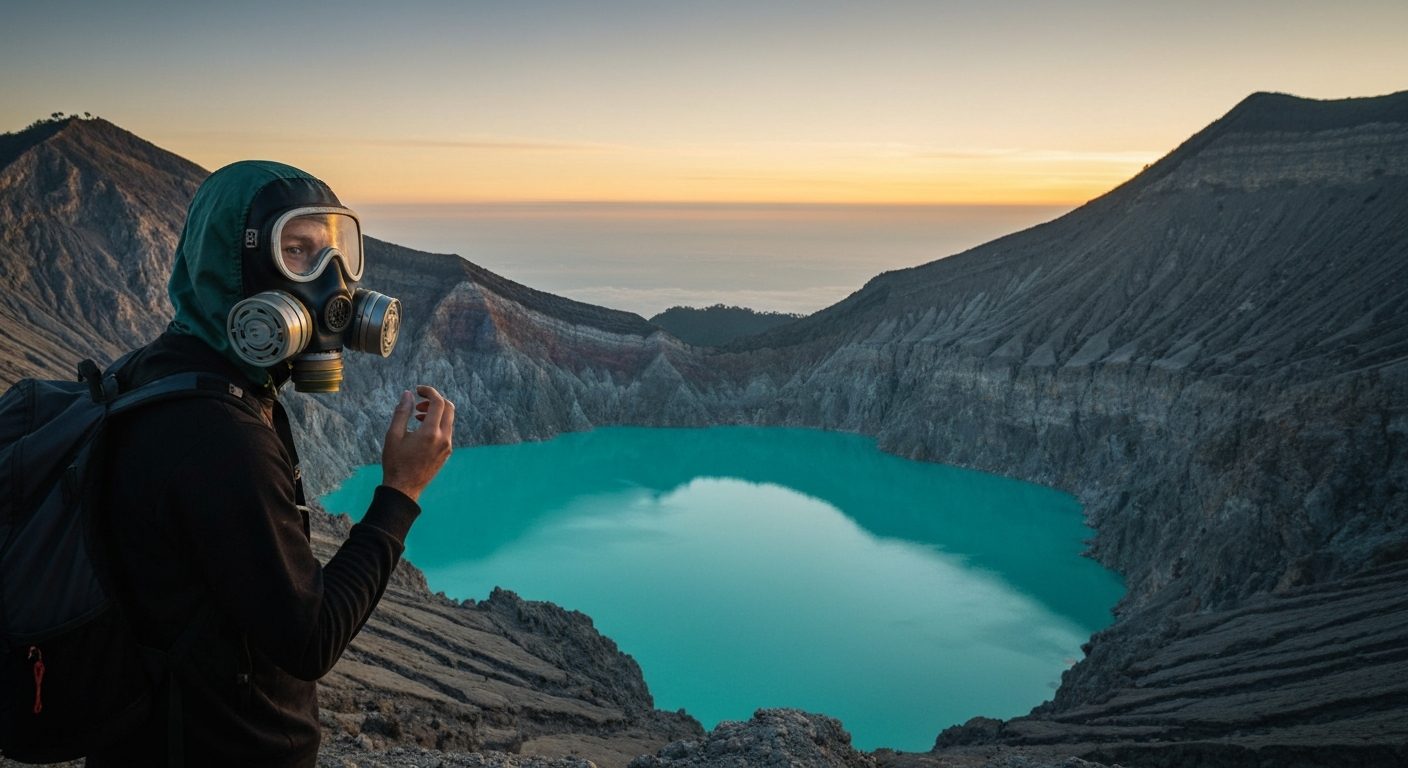
As the East Java Routes & Logistics Researcher at Ijen Blue Fire Tours, my focus is always on the ground truth. This ijen sulfur gas mask safety guide offers an independent expert perspective on navigating Kawah Ijen’s unique, challenging environment, specifically concerning sulfur gas and the essential role of proper respiratory protection. It is crucial to understand that the information presented here is for general guidance only and should not be considered medical advice. Always consult a licensed physician before embarking on physically demanding activities, particularly if you have pre-existing health conditions such as asthma, heart disease, respiratory issues, or if you are pregnant. All in-crater decisions regarding safety and exposure must ultimately be deferred to your licensed on-ground guide, whose expertise is paramount.
The Invisible Threat: Understanding Sulfur Gas and Toxic Fumes at Kawah Ijen
Kawah Ijen is a marvel, a place where the earth breathes out a spectacular, otherworldly blue flame. Yet, this beauty comes hand-in-hand with an inherent environmental hazard: volcanic gases. The primary concern is sulfur dioxide (SO2), a colorless gas with a pungent, irritating odor, often described as smelling like burnt matches. But it’s not the only gas present; a complex mixture of volcanic emissions creates a dynamic and potentially harmful atmosphere within the crater.
What is Sulfur Dioxide (SO2) and Why is it Dangerous?
Sulfur dioxide is a common volcanic gas, produced when sulfur-rich magma degasses. At Kawah Ijen, this gas emanates from cracks and vents in the crater floor, sometimes under immense pressure, and then reacts with the oxygen in the air. When you descend into the crater to witness the blue fire, you are entering an active fumarolic area, directly exposed to these emissions.
Inhalation of SO2 can cause immediate irritation to the eyes, nose, throat, and lungs. Symptoms can range from mild discomfort—such as watery eyes, coughing, and a burning sensation—to more severe reactions like shortness of breath, wheezing, and chest tightness. For individuals with existing respiratory conditions, like asthma, exposure can trigger severe attacks. Prolonged or high-concentration exposure can lead to more serious health issues, though typically, a guided visit is managed to prevent this. The key is understanding that your body’s reaction can vary based on individual sensitivity, duration of exposure, and the concentration of gas in the air at any given moment.
The Unpredictable Nature of Crater Winds and Gas Plumes
Perhaps the most challenging aspect of ijen sulfur gas danger is its variability. Kawah Ijen’s crater is a dynamic environment, constantly influenced by wind direction and strength. A light breeze can shift a dense plume of gas from one side of the crater to another in mere seconds. One moment, the air might seem clear; the next, you could be enveloped in a thick cloud of sulfur.
This ijen crater wind direction toxic gas exposure variability means that conditions can change rapidly. Our licensed guides are trained to monitor these shifts, reading the wind and the behavior of the gas plumes. They will guide you to safer areas, instruct you when to don your mask, and, if necessary, decide to retreat from an area that becomes too hazardous. Your ability to see the blue fire, and indeed your overall safety, is intricately linked to these atmospheric conditions. Patience and adherence to your guide’s instructions are absolutely critical.
Other Fumes Present: A Complex Mixture
While sulfur dioxide is the most prominent concern, Kawah Ijen’s volcanic activity also releases other gases, including hydrogen sulfide (H2S), carbon dioxide (CO2), and hydrochloric acid (HCl). Hydrogen sulfide, known for its rotten-egg smell, is highly toxic even at low concentrations, though typically it’s present in lower, less immediately hazardous levels than SO2 in the tourist-accessible areas. Carbon dioxide, while generally harmless at ambient concentrations, can displace oxygen in confined spaces, contributing to ijen crater low oxygen sulfur dioxide levels in certain pockets. The combination of these gases creates a complex respiratory challenge. A proper respirator is designed to filter out these various particulate and gaseous hazards, offering broad protection in this unique environment.
The Essential Respirator: Why an Ijen Sulfur Gas Mask is Non-Negotiable
Your safety at Kawah Ijen, especially during the pre-dawn descent to witness the blue fire, hinges significantly on effective respiratory protection. This isn’t just about comfort; it’s about safeguarding your health against the volcanic gases that make Ijen so unique.
Is a Gas Mask Mandatory for Kawah Ijen Blue Fire Tour?
While the park authorities do not enforce a strict “no mask, no entry” rule for the entire trail up to the crater rim, if you intend to descend into the crater for the blue fire, a proper gas mask is, effectively, mandatory for your safety. Attempting the descent without one is extremely ill-advised and puts you at severe risk of respiratory distress, eye irritation, and potentially more serious health consequences. Bali Premium Trip, as your tour operator, considers it essential equipment for anyone participating in the blue fire descent. Therefore, for all our guided tours that include the blue fire experience, a suitable gas mask is provided and its use is strongly encouraged, if not directly instructed, at critical points. Our guides will ensure you have one and know how to use it.
Distinguishing Respirators from Basic Masks
It is vital to understand the difference between a simple cloth or surgical mask and a proper gas respirator.
- Cloth/Surgical Masks: These are designed primarily to filter out large particulate matter, prevent the spread of droplets, or offer minimal protection against dust. They offer virtually no protection against fine particulate sulfur dust, and absolutely none against noxious gases like sulfur dioxide. They are entirely inadequate for the Kawah Ijen crater environment.
- Particulate Respirators (e.g., N95, KN95): These masks are effective at filtering out airborne particles (dust, aerosols), but they do not provide protection against gases or vapors. While they might help with some of the sulfur dust, they will not protect your lungs from SO2.
- Gas Respirators (Half-face or Full-face with Cartridges): These are the only appropriate protective devices for Kawah Ijen. They consist of a tight-fitting facepiece and replaceable filter cartridges designed specifically to absorb or neutralize specific gases and vapors, in addition to filtering particulates.
What Type of Gas Mask for Kawah Ijen?
The ideal gas mask for Kawah Ijen is a half-face respirator with multi-gas/vapor cartridges (often labeled as ABEK or P3 filters, or combinations thereof).
- Half-face vs. Full-face: A half-face respirator covers the nose and mouth, requiring separate eye protection (goggles). A full-face respirator covers the entire face, offering integrated eye protection. For Ijen, a half-face respirator with good sealing capabilities, paired with well-fitting eye goggles, is generally sufficient and more comfortable for most trekkers.
- Filter Cartridges: Look for cartridges rated for acid gases (like SO2) and particulates. Activated charcoal is a key component in these filters, absorbing the gases. The P3 rating indicates high efficiency for filtering very fine particulates. Bali Premium Trip ensures that the masks provided are equipped with appropriate, high-quality filters suitable for the Kawah Ijen environment. These filters have a limited lifespan once exposed to air and especially to contaminants, so fresh filters are crucial for each tour.
-
Key Gas Mask Safety Practices for Kawah Ijen
-
- Ensure a Tight Seal: The mask is only effective if it forms a tight seal around your face. Any gaps allow gas to seep in. Your guide will assist you in checking the fit.
- Breathe Through the Mask: Consciously inhale and exhale only through the mask’s filters when in gas plumes.
- Don’t Remove Prematurely: Resist the urge to pull your mask down to talk or take photos when in a gassy area. Wait until your guide confirms it’s safe.
- Combine with Eye Protection: Even with a half-face mask, your eyes are vulnerable. Wear protective goggles to prevent irritation from sulfur particles and gases.
- Listen to Your Guide: Your guide’s instructions are paramount. They have local knowledge and experience in reading crater conditions.
Ijen Night Hike: Practical Gas Mask Safety and Exposure Precautions
The pre-dawn trek to the blue fire is an memorable experience, but it demands vigilance and proper use of your safety equipment. Understanding how to use your gas mask effectively and how to react to changing conditions is crucial for a safe and enjoyable journey.
Preparing Your Mask: Fit and Seal Checks
Before you even begin the descent into the crater, your guide from Bali Premium Trip will provide you with your gas mask and conduct a thorough briefing. This isn’t just a formality. It’s an essential safety step. You will be shown how to:
- Adjust the Straps: Ensure the mask sits comfortably but firmly on your face.
- Perform a Positive Pressure Seal Check: Cover the exhalation valve (usually a small flap) with your hand and gently exhale. If air leaks out from around the edges of the mask, adjust the straps until a tight seal is achieved.
- Perform a Negative Pressure Seal Check: Cover the intake ports (where the filters attach) with your hands and inhale gently. The mask should suck inward slightly and stay there. If air leaks in, readjust.
A properly fitted mask is your first line of defense. Without a good seal, gases will bypass the filters, rendering the mask ineffective.
When and Where to Wear Your Mask
Your guide will advise precisely when to don your mask. Generally, you’ll put on your gas mask as you begin the steep descent into the crater, well before you encounter the thickest gas plumes. The blue fire area, where the sulfur miners work, is consistently the zone of highest gas concentration. However, due to ijen crater wind direction toxic gas exposure variability, plumes can drift unexpectedly.
- Proactive Use: It’s always better to put your mask on a moment too early than a moment too late. If your guide instructs you to wear it, do so immediately.
- Reactive Use: If you suddenly smell strong sulfur or feel irritation in your eyes or throat, put your mask on and goggles immediately, even if your guide hasn’t explicitly instructed you. Then, signal your guide.
- Eye Protection: Always wear goggles in tandem with your mask in the crater. Sulfur particles and gases can irritate your eyes severely, causing them to water and making it difficult to see, which is dangerous on a steep, uneven path in the dark.
Recognizing and Responding to Ijen Sulfur Gas Danger
Even with a mask, you might occasionally catch a whiff of sulfur, especially if a particularly dense plume shifts suddenly. Here’s how to respond to ijen sulfur exposure precautions:
- Stay Calm: Panic can lead to hyperventilation, which increases gas inhalation. Take slow, deep breaths through your mask.
- Signal Your Guide: Use a pre-arranged signal (e.g., a tap on the shoulder, a flashlight signal) to alert your guide if you’re experiencing discomfort or difficulty.
- Follow Instructions: Your guide might direct you to move to a different spot, perhaps slightly uphill or to the side, to escape the plume. They might instruct you to temporarily move away from the main path.
- Retreat if Necessary: If symptoms persist or worsen, or if your guide deems the conditions too hazardous, they will initiate a retreat to a safer, higher elevation. Trust their judgment implicitly. This might mean you don’t get as close to the blue fire as others, but your health is paramount.
Understanding Ijen Crater Low Oxygen Sulfur Dioxide Levels
It’s true that active volcanic craters can sometimes have areas with reduced oxygen due to the displacement by volcanic gases like CO2 and SO2. While Kawah Ijen’s blue fire area is generally open enough that severe oxygen depletion (anoxia) is not the primary concern for visitors, the combination of high SO2 levels and potentially lower oxygen can exacerbate respiratory stress. The physical exertion of the hike itself, combined with the altitude (the crater rim is at 2,386m), already places demands on your respiratory system.
Your gas mask protects you from the SO2, but it doesn’t provide oxygen. If you feel dizzy, lightheaded, or unusually short of breath even with your mask on, it could be a sign of either gas exposure or oxygen deprivation. Alert your guide immediately. They are trained to assess the situation and guide you to safety. This is another reason why individuals with existing respiratory or cardiovascular conditions must exercise extreme caution and consult a doctor first.
Your Safety Net: How Bali Premium Trip Manages Toxic Gas Exposure
At Bali Premium Trip, we believe that an extraordinary adventure should never compromise safety. Our approach to Kawah Ijen’s unique challenges is built on meticulous planning, quality equipment, and the invaluable expertise of our local guides. We want you to focus on the wonder of the blue fire, confident that your well-being is our top priority.
Does Ijen Tour Include Entrance Permit and Gas Mask?
Yes, absolutely. When you book a private night trek with Bali Premium Trip, your comprehensive tour package is designed to be seamless and safe. This includes:
- Entrance Permits: All necessary park entrance permits are secured on your behalf. This ensures smooth access and compliance with local regulations.
- Gas Masks: A high-quality, properly fitted gas mask with fresh, appropriate filter cartridges is provided for every participant embarking on the blue fire descent. This is not an optional extra; it’s a fundamental component of your safety equipment.
- Licensed Local Guides: You will be accompanied by an experienced, licensed East Java guide who possesses deep local knowledge and is trained in safety protocols for the Ijen crater.
- Headlamps: Essential for dark, rugged terrain, headlamps are also part of your provided gear.
This comprehensive provision ensures that you have the correct equipment and expert guidance from the moment you begin your ascent, eliminating guesswork and potential risks associated with sourcing your own gear. For example, a typical 2-day/1-night private Ijen tour from Bali, including ferry transfers, land transport, accommodation, entrance permits, and a licensed guide with provided safety gear, might range from US$300-500 per person, based on accommodation choice and group size, last verified June 2026. This indicative price range underscores the value of a fully supported and safety-conscious experience.
The Indispensable Role of Our Licensed Local Guides
Our guides are the cornerstone of your ijen night hike gas mask safety. They are not merely escorts; they are seasoned mountain companions with extensive experience navigating Kawah Ijen’s challenging environment.
- Expert Knowledge: They understand the terrain, the best routes, and, critically, how the gas plumes behave.
- Safety Protocol Adherence: Guides strictly follow established safety protocols, including managing group movements, ensuring proper mask usage, and communicating potential hazards.
- Dynamic Decision-Making: They constantly assess wind direction, gas density, and the well-being of each trekker. If conditions change, they make immediate decisions to ensure safety, even if it means altering the itinerary or retreating.
- Communication: They are your direct link to safety. Clear communication is maintained throughout the trek, using pre-arranged signals in noisy or gassy areas.
- First Aid Training: Our guides have basic first aid training to assist with minor injuries or discomfort.
Briefing and Equipment Checks: Our Pre-Trek Protocol
Before you even set foot on the trail, your Bali Premium Trip guide will conduct a comprehensive pre-trek briefing. This isn’t just a quick chat; it’s a vital safety session covering:
- Route Overview: What to expect on the trail, including difficult sections.
- Gas Mask Instruction: Detailed guidance on how to fit, wear, and troubleshoot your gas mask, including seal checks.
- Safety Signals: Explaining communication signals to use in the dark or when gas plumes obscure vision.
- Emergency Procedures: What to do in case of an emergency, and how to stay with the group.
- Health Check: A final check on your physical readiness and any concerns you might have.
This thorough preparation ensures everyone understands the risks and knows how to use the provided safety equipment effectively.
Prioritizing Your Well-being: Retreating When Necessary
One of the most important aspects of our safety philosophy is the willingness to retreat. If gas conditions become too intense, visibility drops significantly, or any member of the group shows signs of severe distress, your guide will make the decision to move to a safer location, or even to ascend out of the crater entirely. This decision is non-negotiable and made solely for your protection. It might be disappointing to miss a closer view of the blue fire, but your health and safety are always more important than any photo opportunity. Our guides are empowered to make these calls, and trekkers are expected to comply without question.
Health Considerations and Ijen Blue Fire Health Risks
While Kawah Ijen offers an incredible adventure, it’s not without its physical demands and potential health risks. Being honest about your health and preparing accordingly is paramount for a safe experience.
Pre-existing Conditions: Asthma, Heart, and Respiratory Illnesses
This is a critical point. Individuals with pre-existing conditions such as asthma, chronic obstructive pulmonary disease (COPD), bronchitis, other respiratory illnesses, or heart conditions (e.g., angina, heart failure, high blood pressure) should exercise extreme caution. The combination of physical exertion, altitude, and exposure to sulfur dioxide can exacerbate these conditions significantly.
- Ijen blue fire health risks asthma: For asthmatics, SO2 is a known trigger for bronchospasm, leading to severe breathing difficulties. Even with a gas mask, some irritation may occur, and the physical stress of the hike can also be a factor.
- Heart Conditions: The strenuous uphill hike, followed by a steep descent and ascent, at an altitude of over 2,000 meters, places considerable strain on the cardiovascular system.
- Recommendation: If you have any of these conditions, it is absolutely essential to consult your licensed physician before considering a Kawah Ijen trek. Discuss the specific environment, the physical demands, and the gas exposure. Your doctor can advise if it is safe for you and what precautions you should take, such as carrying rescue inhalers or specific medications.
Pregnancy and Kawah Ijen
Pregnant individuals are strongly advised against descending into Kawah Ijen’s crater. The risks associated with sulfur dioxide exposure, even with a mask, are not fully understood for fetal development. Furthermore, the uneven terrain, darkness, physical exertion, and potential for slips or falls pose additional hazards. It is simply not worth the risk.
Altitude Sickness at Kawah Ijen’s Crater Rim (2,386m)
While Kawah Ijen isn’t as high as some major peaks, the crater rim sits at an elevation of 2,386 meters (7,828 feet). For individuals coming from sea level, particularly from Bali, this altitude can still induce mild altitude sickness symptoms.
- Symptoms: These can include headache, nausea, dizziness, fatigue, and shortness of breath.
- Prevention: Hydrate well, ascend gradually if possible (though often Ijen is a direct ascent), and avoid alcohol and heavy meals before the trek.
- Action: If you experience severe symptoms, inform your guide immediately. They will assess whether you need to descend to a lower altitude.
General Fitness and Acclimatization
The hike to Kawah Ijen is moderately challenging. The trail to the crater rim is a continuous uphill climb, roughly 3 kilometers long, taking about 1.5 to 2 hours. The descent into the crater to see the blue fire is steep, rocky, and often slippery, covering approximately 800 meters one way. You then have to climb back out.
- Fitness Level: You should be in good physical condition, capable of sustained uphill walking and navigating uneven terrain in the dark. Regular exercise, including hiking or stair climbing, in the weeks leading up to your trip will be beneficial.
- Acclimatization: While full acclimatization might not be possible for a short trip, ensuring you are well-rested before the trek and staying hydrated can help mitigate the effects of altitude and exertion.
For those planning to combine Ijen with other East Java adventures, such as Mount Bromo or Tumpak Sewu Waterfall, ensure your itinerary allows for adequate rest between strenuous activities. Bali Premium Trip can help you plan a multi-day itinerary that balances adventure with recovery. Don’t hesitate to plan your trip with us via WhatsApp for a personalized itinerary that considers your fitness and comfort.
Beyond the Mask: Comprehensive Preparation for Your Ijen Adventure
While the gas mask is a critical piece of safety equipment, a successful and comfortable Kawah Ijen trek requires broader preparation. Thinking about every detail, from what you wear to what you carry, contributes significantly to your overall experience.
Essential Gear: Clothing, Footwear, and Headlamps
- Layered Clothing: Kawah Ijen’s summit can be very cold, especially in the pre-dawn hours, with temperatures often dropping to 5-10°C (40-50°F). As you hike, you’ll warm up. The key is layers: a base layer, a fleece or insulated mid-layer, and a windproof/water-resistant outer shell. You can shed layers as you warm up and add them back as you cool down. Don’t forget a warm hat and gloves.
- Sturdy Footwear: The trail is rocky, uneven, and often slippery, particularly on the descent into the crater. Hiking boots with good ankle support and excellent grip are essential. Avoid sneakers or sandals at all costs.
- Headlamp: Crucial for dark trail. Your Bali Premium Trip tour provides headlamps, but having a small backup or ensuring your phone’s flashlight is charged is always a good idea. Make sure the batteries are fresh.
Hydration and Sustenance on the Trail
- Water: Carry at least 1.5-2 liters of water per person. Dehydration can exacerbate altitude sickness and fatigue.
- Snacks: Energy bars, nuts, or fruit can provide a much-needed boost during the trek. While local vendors might sell some snacks at the top, it’s best to bring your own reliable sources of energy.
- No Open Food in Crater: Avoid eating inside the gassy areas of the crater, as this would require removing your mask.
Respecting the Environment and Local Guidelines
- Leave No Trace: Pack out everything you pack in. Do not leave any trash on the mountain. Kawah Ijen is a protected natural environment, and it is everyone’s responsibility to keep it pristine.
- Stay on Marked Paths: Deviating from the marked trails can be dangerous due to unstable ground, steep drops, and unknown gas pockets.
- Respect the Miners: The sulfur miners work under extremely harsh conditions. Be respectful of their work and space. Do not interfere with their operations, take photos without permission, or block their path. A small, respectful donation or purchase from them (like a carved sulfur souvenir) can be a meaningful gesture, but always prioritize safety and your guide’s instructions.
- Photography: Be mindful when taking photos. Avoid using flash directly into people’s faces, especially the miners, and never compromise your safety or the safety of others for a photo.
By following these guidelines and trusting the expertise of your Bali Premium Trip guide, you are setting yourself up for an incredible, safe, and truly memorable experience at Kawah Ijen. The blue fire is a sight that few get to witness, and with the right preparation, it can be one of the highlights of your Indonesian adventure.
Frequently Asked Questions About Ijen Gas Mask Safety
Is it possible to visit Kawah Ijen without a gas mask?
While you can reach the crater rim without a gas mask, descending into the crater to see the blue fire and experience the active fumaroles without one is extremely dangerous and strongly discouraged. A proper gas mask is essential for protection against sulfur dioxide and other toxic gases. Bali Premium Trip tours that include the blue fire descent always provide appropriate gas masks.
What happens if I feel unwell due to gas exposure during the Ijen trek?
If you start to feel unwell (e.g., severe coughing, eye irritation, nausea, difficulty breathing) even with your mask on, immediately alert your licensed guide. They are trained to assess the situation, move you to a safer area with better air quality, and, if necessary, assist you in retreating from the crater. Your guide’s decision is final and for your safety.
How long do the gas mask filters last for a Kawah Ijen tour?
The lifespan of gas mask filters depends on the concentration of contaminants and the duration of exposure. For a typical Kawah Ijen blue fire tour, which involves a few hours of exposure within the crater, the high-quality filters provided by Bali Premium Trip are more than sufficient. We ensure fresh, properly sealed filters are used for each trek to guarantee maximum protection.
Can children join the Kawah Ijen blue fire tour?
Due to the physical demands, the challenging terrain, the pre-dawn timing, and the presence of toxic gases, Kawah Ijen’s blue fire descent is generally not recommended for young children. Adolescents who are physically fit and mature enough to follow strict safety instructions may be considered, but a physician’s consultation for their specific health is still advised.
What if I wear glasses? Can I still use the provided gas mask and goggles?
Yes, most half-face gas masks and accompanying goggles are designed to accommodate glasses. Your guide will help you adjust the mask and goggles to ensure a comfortable and secure fit that still maintains a proper seal and allows you to see clearly.
Ready to experience the electric-blue flames of Kawah Ijen with the assurance of expert guidance and comprehensive safety measures? Let Bali Premium Trip handle all the logistics, from permits and transfers to providing your essential safety gear and licensed guides. Plan your trip with us today, or reach out via WhatsApp for personalized itinerary planning.