To experience the Kawah Ijen blue fire, an ijen night hike before sunrise is not just recommended, it’s essential. This unique natural phenomenon is only visible in the hours of complete darkness, making a midnight trek the only way to witness it. As the I’ve guided countless visitors up this volcano, often timing our ascent to reach the blue flames just as they burn brightest against the predawn black.
This guide provides an honest account of what to expect on your ijen midnight trek, from the moment you leave the trailhead to the memorable sight of the electric-blue fire and the subsequent reveal of the turquoise crater lake at dawn. We’ll cover the practicalities: the start times, the trail’s demands, the gas masks, the sulfur, and the cold. My goal is to equip you with the knowledge to approach this adventure with confidence and proper preparation.
Why the Ijen Night Hike Requires a Midnight Trek Start Time
The primary draw to Kawah Ijen after dark is its mesmerizing blue fire, a sulfur gas combustion that ignites into vibrant blue flames. This spectacle is entirely dependent on the absence of light. Once the faintest hint of dawn touches the sky, the blue fire fades, becoming invisible against the increasing ambient light. This dictates a very specific schedule for the ijen night hike midnight trek start time.
The Blue Fire Window: Darkness is Key
To see the blue fire in its full glory, you need to be in the crater basin when it’s still profoundly dark. Typically, this means departing from the Paltuding trailhead between 12:00 AM and 2:00 AM. This timing allows for the approximate 2-to-3-hour climb to the crater rim, followed by the descent into the sulfur basin, all while ensuring you arrive well before the first light begins to bleed into the eastern sky, usually around 4:30 AM to 5:00 AM.
This tight window ensures maximum visibility of the blue flames, which can reach heights of up to five meters. The deeper the darkness, the more intense and expansive the blue fire appears. It’s a race against the sun, but a rewarding one.
What to Expect: The Ijen Night Hike from Paltuding to the Crater Rim
The journey to Kawah Ijen begins at the Paltuding ranger post, situated at an elevation of approximately 1,850 meters above sea level. This is the official starting point for all treks. Even in the dead of night, you’ll find a buzz of activity here as groups prepare for their ascent.
The Initial Ascent: Pacing and Gradient
From Paltuding, the trail immediately begins its climb. The path is well-defined but unpaved, consisting mostly of compacted earth, small rocks, and volcanic sand. It’s a steady uphill climb for about 3 kilometers to reach the crater rim, which sits at around 2,380 meters.
The first kilometer is arguably the steepest, a relentless incline that can test your endurance from the outset. Many trekkers find themselves stopping frequently to catch their breath here. After this initial push, the gradient eases somewhat, becoming more undulating with flatter sections interspersed with gentler climbs.
- Distance: Approximately 3 km one-way from Paltuding to the crater rim.
- Elevation Gain: Around 530 meters from Paltuding (1,850m) to the rim (2,380m).
- Average Time: 1.5 to 2.5 hours, depending on fitness and pace.
Your guide will set a sustainable pace, emphasizing slow and steady progress. Rushing only depletes your energy reserves faster and increases the risk of stumbling in the dark. Headlamps are indispensable; the trail is completely unlit, and navigating uneven terrain requires clear visibility of every step.
The Darkness and the Cold
The ijen night hike is conducted in absolute darkness, illuminated only by the beams of headlamps. The lack of ambient light amplifies other senses and creates a unique atmosphere. You’ll hear the crunch of gravel underfoot, the distant calls of other trekkers, and the occasional rustle of unseen nocturnal life.
Temperatures at Paltuding can be cool, but as you gain elevation, the cold intensifies significantly. On the crater rim, especially around 3:00 AM to 5:00 AM, temperatures can drop to 5°C (41°F) or even lower, sometimes accompanied by strong winds. Layered clothing is crucial: a base layer, a fleece or warm jacket, and a windproof outer shell are highly recommended. Gloves, a warm hat, and a scarf are also essential to protect against the chill.
Gas Mask Checkpoints and Sulfur Awareness
As you approach the upper sections of the trail, you’ll encounter informal checkpoints where local guides or park officials may remind you about the necessity of gas masks. These are not merely optional accessories; they are vital safety equipment for anyone planning to descend into the crater or spend extended time on the rim, where sulfur fumes can drift.
Sulfur gas (sulfur dioxide, SO2) is a natural byproduct of volcanic activity at Kawah Ijen. It has a distinct, pungent smell often described as rotten eggs. Exposure can cause irritation to the eyes, nose, and throat, leading to coughing, shortness of breath, and headaches. For individuals with respiratory conditions, it poses a more serious risk.
Your licensed guide will provide you with a gas mask and demonstrate its proper use. It’s important to keep it readily accessible and don the mask as soon as you detect the smell of sulfur, or when your guide advises. This is a critical aspect of kawah ijen night hike safety.
The Descent into the Sulfur Basin: A Demanding Path
Reaching the crater rim is only the first part of the ijen crater blue fire night hike. To truly witness the blue fire up close, you must descend into the crater basin itself. This descent is a different kind of challenge.
The Crater Descent: Technical and Uneven
The path down into the crater is much steeper and more rugged than the main trail from Paltuding. It’s roughly 800 meters from the rim down to the blue fire viewing area, a distance that can take 30 to 45 minutes to navigate carefully. The trail is loose, rocky, and often slippery with volcanic sand and dust. In the dark, it requires extreme caution.
- Distance: Approximately 800 meters one-way from the rim down to the blue fire site.
- Elevation Drop: Around 200-250 meters from the rim to the blue fire viewing area.
- Average Time: 30-45 minutes descent, 45-60 minutes ascent back to the rim.
Your guide’s role here is paramount. They know the safest lines down and will assist you over particularly tricky sections. Keep your headlamp focused on your immediate path and take small, deliberate steps. The air quality in the basin is also significantly poorer due to the concentrated sulfur fumes, making consistent gas mask use mandatory.
The Sulfur Miners: A Glimpse into Hardship
In the basin, you will encounter the sulfur miners. These resilient individuals work through the night and into the day, chipping away at solidified sulfur deposits and carrying heavy loads (often 70-90 kg) up the crater wall and back down to Paltuding. Their work is incredibly arduous and dangerous.
Respect their space and their labor. While it’s natural to be curious, avoid obstructing their path or taking photos without permission. Their presence is a stark reminder of the raw, untamed nature of Ijen and the human connection to its resources.
The Blue Fire Experience: An Ethereal Spectacle
After the demanding descent, the reward is immediate and profound. The ijen crater blue fire night hike culminates in this unique phenomenon.
Witnessing the Electric Blue Flames
At the bottom of the crater, near the active vents, the ground glows with an unearthly, electric-blue light. It’s not molten lava, but rather the combustion of sulfuric gases that emerge from cracks in the volcano at high pressure and temperature. Upon contact with oxygen in the air, they ignite, creating flames that can flicker, dance, and occasionally surge upwards.
The intensity of the blue fire varies. On some nights, it’s a constant, low glow across a wide area. On others, it erupts in dramatic bursts. No matter its intensity, it is an alien, captivating sight – a primal light show that feels utterly disconnected from the world above. Take a moment to absorb it, to feel the heat and smell the sulfur (even through your mask), and to simply be present.
- What is the Blue Fire?
- The blue fire at Kawah Ijen is a natural phenomenon caused by the combustion of sulfuric gases. These gases emerge from cracks in the volcano at temperatures up to 360°C (680°F). When they come into contact with the oxygen-rich air, they ignite, producing a bright blue flame. The phenomenon is often called “blue lava” but it is, in fact, burning gas, not molten rock.
- When is it Visible?
- The blue fire is only visible in complete darkness. As soon as the sun begins to rise, or even with significant moonlight, the blue flames become invisible to the naked eye. This is why an Ijen night hike before sunrise is mandatory to witness it.
- How High Do the Flames Get?
- The flames can vary significantly in height and intensity, from a low flicker to bursts reaching up to five meters (16 feet) into the air, depending on gas pressure and atmospheric conditions.
- Is it Safe to Get Close?
- While it’s possible to get relatively close, your guide will ensure you maintain a safe distance. The gases are corrosive, and prolonged exposure can be harmful. Always wear your gas mask in the crater basin and follow your guide’s instructions precisely.
The Sunrise Payoff: Kawah Ijen’s Turquoise Crater Lake
As the blue fire begins to dim with the first hints of dawn, it’s time to begin the ascent back to the crater rim. This return climb is often more challenging than the descent, requiring fresh energy from tired legs. However, the true reward of the ijen sunrise crater rim tour unfolds as you reach the top again.
The Reveal: A Lake of Acidic Beauty
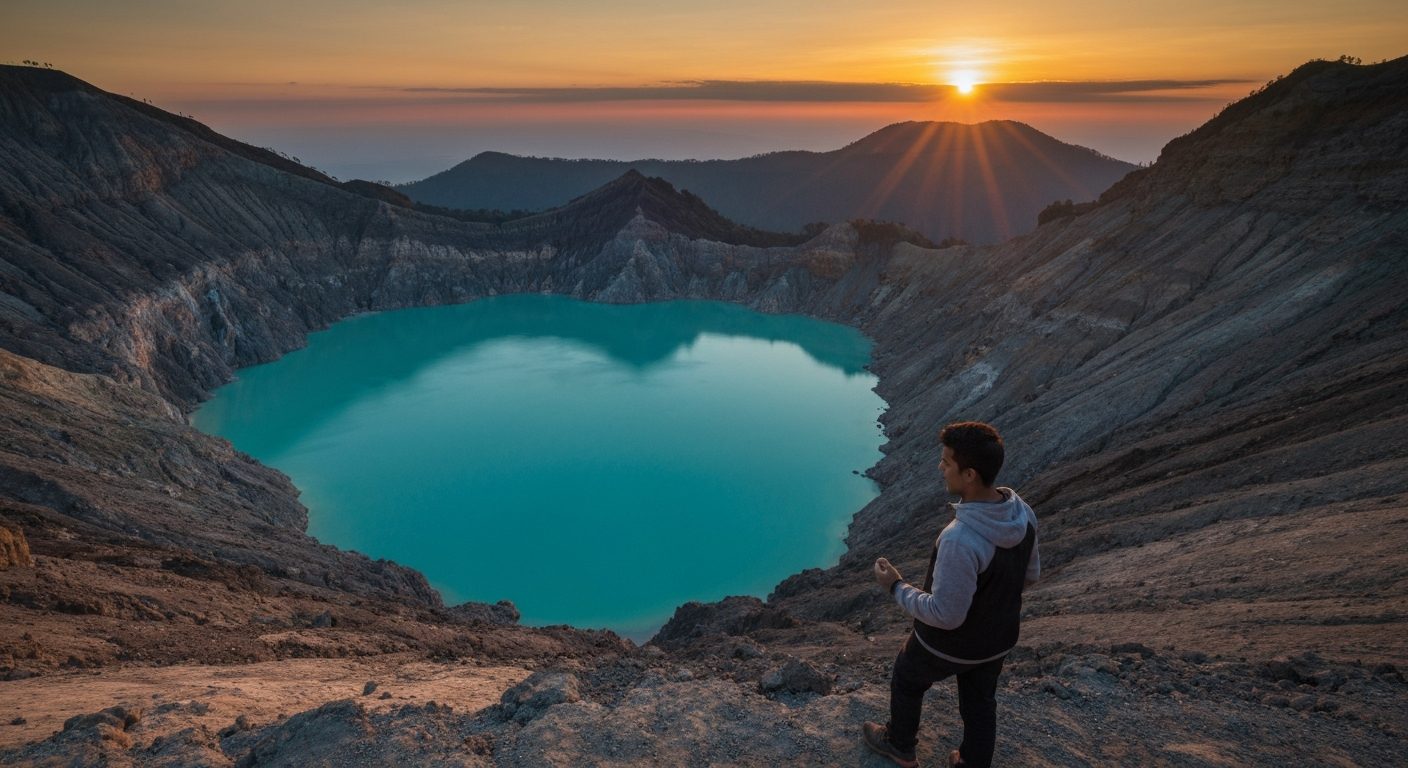
The sky shifts from deep indigo to soft pastels, then vibrant oranges and pinks. As the sun crests the horizon, it slowly illuminates the vast caldera of Kawah Ijen, revealing its most iconic feature: a sprawling, intensely turquoise crater lake. This is the world’s largest highly acidic lake, approximately one kilometer wide, with a pH of less than 0.5. Its vibrant color is due to the high concentration of sulfuric acid and dissolved minerals.
This moment, watching the colors unfold and the landscape transform from an inky blackness into a vivid, almost surreal panorama, is truly memorable. The raw, powerful beauty of the volcano becomes visible, a stark contrast to the dark, intimate experience of the blue fire. From the rim, you can see the entire expanse of the lake, the fumaroles constantly releasing gas, and the distant peaks of other volcanoes in the East Java landscape. This is the ultimate payoff for your ijen night hike difficulty.
Ijen Crater Night Hike Safety: Essential Guidance
While the Kawah Ijen trek is a popular adventure, it’s crucial to approach it with a strong understanding of ijen crater night hike safety. This is an active volcano, and proper preparation and adherence to guidelines are paramount.
Your Licensed Guide: More Than Just a Companion
Your licensed local guide is your most important asset on this trek. They possess intimate knowledge of the trail, the volcano’s current conditions, and safety protocols. They will:
- Navigate the dark trails: Guiding you safely over uneven terrain.
- Monitor gas conditions: Advising when to wear your mask and ensuring you use it correctly.
- Provide assistance: Helping you over difficult sections and offering support if you feel unwell.
- Communicate park regulations: Ensuring you adhere to all local rules for your safety and the preservation of the site.
Always stay with your guide and follow their instructions without question.
Physical Preparation and Health Considerations
The ijen night hike difficulty is moderate to challenging. It involves a significant uphill climb at altitude, followed by a steep descent and ascent. You should have a reasonable level of fitness and no serious heart or respiratory conditions. If you have any health concerns, consult your doctor before planning this trek.
Altitude sickness is generally not a major concern at Ijen’s elevations for most people, but the strenuous activity can still be taxing. Pace yourself, hydrate, and communicate any discomfort to your guide immediately.
Essential Gear Checklist
- Headlamp with spare batteries: Absolutely essential for visibility.
- Gas Mask: Provided by your guide; ensure it fits properly.
- Layered Clothing: Warm base layers, fleece/jacket, windproof outer shell. Temperatures drop significantly.
- Sturdy Trekking Shoes: Good grip is crucial for the loose, uneven terrain.
- Gloves, Hat, Scarf: To protect against the cold and sulfur dust.
- Small Backpack: For water, snacks, and extra layers.
- Water and Snacks: Stay hydrated and energized.
- Personal Medications: If you require any.
Park regulations and volcano status can change based on seismic activity. Your guide and tour operator will have the most up-to-date information regarding accessibility and safety. The ultimate decision on whether to proceed with the descent into the crater will always rest with your guide, based on real-time conditions.
Planning Your Ijen Night Hike: Booking with Bali Premium Trip
Embarking on the Kawah Ijen night trek is an extraordinary experience that benefits greatly from expert planning and local operational support. Our dedicated team at Ijen Blue Fire Tours works directly with Bali Premium Trip to arrange and operate these private night treks, ensuring a seamless and safe adventure for you.
When you book with us, you are booking directly with Bali Premium Trip’s reservations team. This means transparent, published rates with no third-party markup. We pride ourselves on arranging high-quality, vetted services for your journey. While Bali Premium Trip operates the overall trip, we partner with licensed local East Java guides and reliable park jeeps to handle the specific logistics of your volcano experience. Our commitment is to provide a well-organized and memorable journey from start to finish.
A typical 2-day/1-night Kawah Ijen package, including transfers from Bali or Banyuwangi, accommodation, park fees, and a licensed local guide, might range from approximately US$150 to US$300 per person (last verified June 2026, indicative and varies by season, accommodation level, and group size). This provides a general idea of the investment for a comprehensive experience.
Ready to witness the electric blue fire and the world’s most acidic crater lake? Planning your trip is straightforward. We can assist you with all arrangements, from transport to accommodation and, of course, your expert guide for the volcano.
Plan your trip to Kawah Ijen with Bali Premium Trip today, or reach out via WhatsApp for personalized planning assistance.
Frequently Asked Questions About the Ijen Night Hike
What is the best time of year to do the Ijen night hike?
The dry season, typically from April to October, offers the most favorable conditions for the Ijen night hike. During these months, the weather is generally clearer, and the trails are less muddy, making for a safer and more comfortable trek. The blue fire and sunrise views are also less likely to be obscured by rain or dense fog.
Is the Ijen night hike suitable for children or older adults?
The Ijen night hike involves a challenging ascent and a steep, rocky descent into the crater. While there’s no official age restriction, it requires a good level of physical fitness and stamina. For children, it’s generally not recommended for those under 12-14 years old due to the strenuous nature, cold temperatures, and sulfur gas exposure. Older adults should assess their fitness carefully and consult with their doctor, ensuring they are comfortable with the physical demands and potential health risks associated with altitude and sulfur.
Can I trek Ijen without a guide?
While it is technically possible to enter the park without a guide during daylight hours, for the ijen night hike before sunrise and descent into the crater, hiring a licensed local guide is not just strongly recommended, it’s practically essential for safety. The trails are dark, unmarked in places, and the gas conditions can be unpredictable. Your guide provides crucial navigation, safety oversight, and gas mask management, especially when descending into the sulfur basin where the blue fire is visible.
How long does the entire Ijen night hike experience take?
From the moment you depart Paltuding trailhead, the entire experience typically takes 6 to 8 hours. This includes approximately 1.5 to 2.5 hours for the ascent to the crater rim, 1 to 1.5 hours for the descent into the crater and blue fire viewing, 1 hour to ascend back to the rim for sunrise, and another 1.5 to 2 hours for the descent back to Paltuding. Add travel time to and from your accommodation, and it becomes a full overnight adventure.
What happens if the blue fire is not visible or the crater is closed?
Visibility of the blue fire is highly dependent on gas activity and atmospheric conditions. While a night hike maximizes your chances, nature is unpredictable. If conditions are unsafe (e.g., high gas concentration, increased volcanic activity), park authorities may close the crater basin or even the entire trek. In such cases, your guide will advise on the safest alternative (e.g., viewing from the rim only). Your safety is always the priority, and closures are made for that reason. Flexible planning and understanding that nature dictates the experience are key.
For more detailed planning or to book your guided Ijen night trek, don’t hesitate to contact us at Bali Premium Trip. We’re here to help you prepare for an incredible journey.