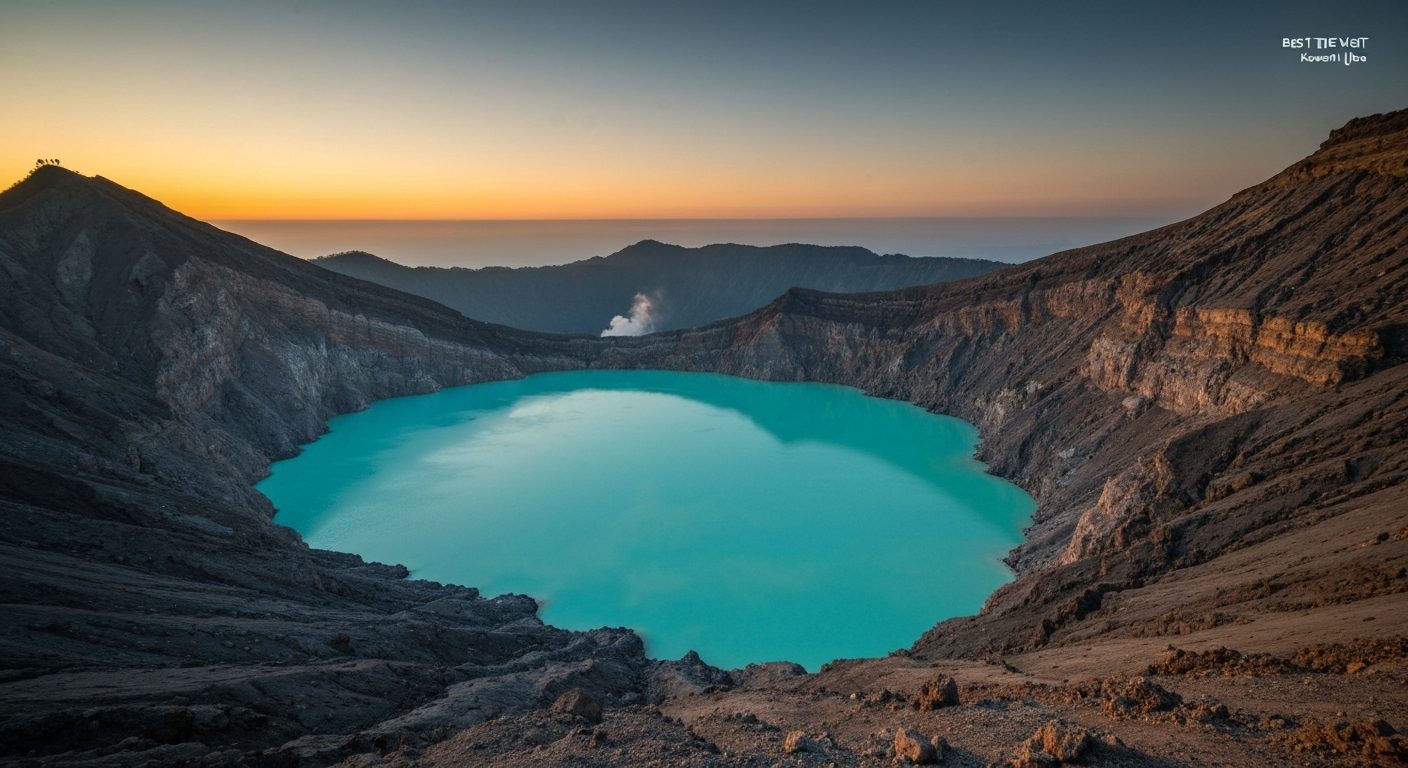
The best time to visit Kawah Ijen blue fire is the dry season months with clear pre‑dawn skies and manageable wind, especially June–September. You can still see the flames in other months, but rain, cloud and gas often shorten viewing time and make the trail tougher.
As Kawah Ijen Trek & Volcano Editor at Ijen Blue Fire Tours, I’ve walked that path to the crater rim more than a hundred times. I’ve frozen on windy ridges in July, sweated through a humid November climb, and waited in the dark for the first electric-blue flames to show through a gap in sulfur smoke. This guide is exactly what I tell guests who ask, “So, which month should I pick for 2026?”
Before we break 2026 down month by month, it helps to understand how East Java’s seasons actually feel on your lungs and legs at 2,300+ meters.
—
Dry vs Rainy Season at Ijen (What It Really Means on the Trail)
Most travelers hear that the “ijen crater dry season April October” is best and stop there. The reality is more nuanced.
East Java seasons in one view
- Dry season (mainly April–October)
- Less rain, generally clearer pre‑dawn skies, cooler nights. Trails are firmer, blue fire visibility more reliable, but some months are windier and colder.
- Rainy / monsoon season (mainly November–March)
- Frequent showers, higher humidity, clouds can sit in the crater. Some nights are perfectly clear; others, the lake and blue fire vanish into mist.
- Usual hike window
- Most treks start around 00:30–01:30 from the Paltuding gate to reach the crater rim by 03:00–04:00, then descend into the sulfur basin only if conditions are safe.
- Trail distance & altitude
- ~3 km from gate to rim (one way) with 500–550 m elevation gain; crater rim around 2,300–2,400 m above sea level.
Compared with Bali’s coastal heat, the rim feels cold and thin-aired. On a July night you can see your breath; in February, the humidity can make your shirt cling even while you shiver in the wind.
—
Key Factors That Decide “Best Time” for Ijen Blue Fire
Instead of chasing a perfect month, think in terms of conditions. For each period we weigh:
1. Ijen blue fire visibility & weather
For most guests, the best season Ijen blue fire visibility weather means:
- As little rain as possible in the hours before midnight
- Light to moderate wind (enough to move gas, not enough to sandblast your face)
- Clear or patchy skies to let the crater breathe
The blue fire burns year‑round where super‑hot sulfuric gases emerge and ignite. What you see depends on:
- Gas direction: If the wind blows smoke straight at the viewing path, your guide may limit time in the basin.
- Moisture in the air: Humid, misty air scatters the light and can dull the flames.
- Moon phase and cloud: Brighter moons can wash out the faintest edges of the blue flame, but they also make the trail safer. I don’t advise planning a whole trip just around the moon — weather matters more.
2. Trail safety & sulfur conditions
During heavier rains (especially December–February):
- The first kilometer of trail turns slick, especially the steeper concrete section.
- Loose sand and small stones wash into “marbles” under your shoes.
- In the basin, wet rocks = slippery and sulfur mud sticks to soles.
In dry months:
- Traction is better but dust increases, which means more coughing without a mask.
- Sulfur smell can feel sharper on dry, cool nights.
Either way, a proper gas mask (not a simple cloth) and clear guidance on “do we descend today, or stay on the rim?” matter more than the calendar.
3. Crowds vs solitude
Ijen is not empty anymore, especially on weekends and Indonesian public holidays. A rough pattern:
- Peak crowds: July–August, Christmas–New Year, Idul Fitri (moves each year)
- Moderate: April–June, September, October
- Quieter: Most weekdays in February–March and some early‑December nights
Our private night treks (arranged by Bali Premium Trip with licensed East Java guides) always move at your pace, but fewer people means:
- More space at the rim railing
- Less queueing to descend to the basin
- Easier photo angles without dozens of headlamps in frame
4. Where you’re starting from (Bali, Banyuwangi, Surabaya)
For 2026 planning, also consider:
- From Bali (popular route):
- Drive from south or central Bali to Gilimanuk ferry port: usually 3.5–5 hours depending on traffic.
- Public ferries to Ketapang (Java): operate 24/7 with ~45–60 minutes crossing time.
- From Banyuwangi:
- Hotel to Paltuding gate: usually 60–90 minutes by car.
- From Surabaya:
- Longest overland approach: 7–9 hours by car or a mix of train plus car.
Most visitors joining Ijen Blue Fire Tours from Bali choose to leave Bali in the late afternoon, cross by evening ferry, sleep a few hours in Banyuwangi, then begin the midnight drive to the trailhead.
—
Month-by-Month: Ijen Blue Fire – When to Visit in 2026
Visibility and comfort don’t change exactly on the 1st of each month, but this framework reflects how 2026 is likely to feel, based on East Java’s usual pattern.
To keep this clear, here’s a quick comparison first.
| Month 2026 | Overall rating* | Weather pattern | Blue fire visibility | Crowds | Photo conditions (lake) |
|---|---|---|---|---|---|
| Jan | Fair for flexible travelers | Wet, humid | Hit‑or‑miss | Low–moderate (peak holidays) | Often cloudy |
| Feb | Fair | Wet but easing | Variable | Lower | Mixed; some clear breaks |
| Mar | Good if you accept some rain | Transitional | Improving | Moderate | Some very clear sunrises |
| Apr | Very good | Start of drier spell | More consistent | Moderate | Often clear after sunrise |
| May | Very good | Dryer, cool nights | Reliable most nights | Moderate | Great balance of light & cloud |
| Jun | Excellent | Dry, cooler | Among best | Moderate–high | ijen june september clearest visibility best photo |
| Jul | Excellent but busy | Dry, windier, cold | Usually very good | High | Clear, crisp colors |
| Aug | Excellent but busy | Dry, still windy | Usually very good | High | Clear, strong contrast |
| Sep | Excellent | Dry, slightly warmer | Very good | Moderate | Superb for photos |
| Oct | Good–very good | Getting more humid | Good, some cloud | Moderate | More haze possible |
| Nov | Fair–good | Rains returning | Variable | Lower–moderate | Mixed; sometimes moody skies |
| Dec | Fair for flexible plans | Wettest months around | Hit‑or‑miss | High (holidays) | Cloudy, dramatic when clear |
*No rating is a guarantee; Kawah Ijen is an active volcano and conditions can change quickly. Always check current status close to your travel date.
Now let’s go month by month in more detail.
—
January 2026 – Peak rains, flexible expectations
January is usually one of the wettest months on the Kawah Ijen calendar. Showers can fall in the afternoon, evening, or right in the middle of the night hike. Trails get slippery in sections, especially on the steeper second kilometer.
Blue fire & visibility: You can see the blue fire in January, but you should treat it as a bonus rather than a certainty. On some nights, wind and cloud clear briefly and we enjoy 15–30 minutes of good visibility in the basin. On others, constant drizzle or thick low cloud make it unsafe or pointless to descend; we stay on the rim instead.
Crowds from Bali: Early January (New Year holidays) can be busy with domestic and regional visitors coming via the Ketapang ferry after Bali. After the first week, numbers usually drop. This can be a reasonable time for guests who dislike crowds and don’t mind walking in a poncho.
Good for you if… you are already in East Java, can accept that the crater lake or blue fire might be hidden, and care more about experiencing an active volcano in moody weather than perfect photos.
February 2026 – Still wet, but some clear windows
February often feels slightly kinder than January. Rains are still frequent, especially in the afternoon and evening, but we start to see more pre‑dawn breaks.
Blue fire: On nights with no recent heavy rain, gas plumes can be thinner and flames stand out better. On heavily humid nights, the smoke hangs in the basin and our gas masks work harder.
Crowds & pricing: Outside of major holidays, visitor numbers are lower than July–August. If you can handle some rain, you may find a narrower range of hotel and transport prices. Private treks arranged by Bali Premium Trip in this shoulder time can sometimes fall towards the lower end of an indicative range, around US$120–200 per person (last verified June 2026) for a Banyuwangi‑based night trek, depending on group size and inclusions. Exact quotes always depend on your dates and route.
March 2026 – Transition towards the dry
By March, East Java edges out of the wettest weeks. I still pack rain protection on every March climb, but we see more nights where the stars appear during the ascent.
Visibility: This can be a rewarding month if you are patient. I often brief guests: “We have a decent chance, but please come for the volcano first, and the blue fire second.” The crater lake’s turquoise color frequently shows well after sunrise, with broken clouds framing it.
From Bali: If you’re planning the best month to see Ijen blue fire from Bali in shoulder season, March is a fair option. You’ll want some flexibility in your Bali itinerary, in case a night of heavy weather pushes the hike one day earlier or later.
April 2026 – Start of the “ijen crater dry season April October”
April is typically the point when most visitors start to enjoy the benefits of the upcoming dry season. Trails dry out more quickly after showers, and overnight rain becomes less frequent.
Blue fire & lake: Visibility improves. More nights allow safe descents into the sulfur basin, and the lake’s turquoise color usually appears clearly once the first rays of sunlight drop into the crater.
Comfort: Night temperatures are cool but not yet sharply cold. On the rim, expect something in the “two layers and a windbreaker” range rather than thick down jackets for most people.
Crowds: Moderate. Many international travelers have not yet begun their mid‑year vacation period, so April can be a smart choice for those who like a balance between fair weather and a bit more space on the trail.
May 2026 – One of the most balanced months
May is one of my personal favorites. It feels like the dry season has settled in, but the peak‑season crowds are still building.
Weather & visibility: Nights are drier, humidity is lower, and clear pre‑dawn skies are common. For many guests, this is the best season Ijen blue fire visibility weather combination: good chance of flames visible in the basin, manageable gas, and reliable lake views at sunrise.
From Bali & Banyuwangi: Travel plans are straightforward. Roads between Bali and Gilimanuk are usually fine, and the ferry crossings to Ketapang are less affected by high seas than sometimes seen in peak monsoon months.
June 2026 – Beginning of the clearest period
June sits at the front of the sweetest window for Ijen. Dry conditions, cool nights, and more stable high‑pressure systems often give clearest skies.
ijen june september clearest visibility best photo: That phrase sums up what many photographers and serious hikers aim for. In June, the air inside the crater can feel crisp after sunrise, giving higher contrast between the sulfur walls and the milky turquoise lake. In the dark, blue fire often stands out brightly against the black rock.
Crowds: Some increase as schools in parts of the world begin mid‑year breaks, but June is usually a little quieter than July and August. If you want the best time to visit Kawah Ijen blue fire in 2026 and also avoid the very busiest weeks, June is an excellent candidate.
July 2026 – Excellent visibility, colder and busier
July is one of the clearest months for both the blue fire and the crater lake. It’s also one of the coldest and busiest.
On the trail: Expect low temperatures on the rim before sunrise. I routinely see guests wearing gloves and hats in July. The wind can be strong enough to sting your ears, especially on exposed sections near the rim.
Blue fire: When the wind direction cooperates, July nights can deliver some of the sharpest blue fire views of the year. But if the wind is wrong, the same dry air can drive sulfur clouds straight up the path. Your guide will judge in real‑time whether a descent into the basin is safe.
Crowds: Domestic and international holiday periods overlap here. The path up from Paltuding can feel like a small moving river of headlamps. This is where a private night trek, with your own pace, matters. Bali Premium Trip arranges licensed East Java guides who know quieter pauses and viewpoints along the rim.
August 2026 – Peak dry, peak activity
Conditions in August are broadly similar to July: very dry, often clear, cold on the rim, and popular.
Photographers: If your main goal is to capture both the flames and the crater lake in one morning, August can work extremely well. The lake’s color pops after sunrise under a deep blue sky, and strong side‑light emphasizes the textures of the crater walls.
Logistics from Bali: Because this is such a popular time, book your ferry‑linked itinerary early. Even though public ferries run all night, accommodation in Banyuwangi close to the Ijen trailhead can fill quickly for key dates. Private overnight packages with transport, hotel and Ijen climb can range widely — very roughly from about US$180–350 per person (last verified June 2026) based on hotel level, group size and extra stops such as Baluran or waterfalls.
September 2026 – Often the sweet spot
If I had to pick one month as the “safest bet” answer to ijen blue fire when to visit 2026, September would be on my shortlist.
Why:
- Dry season still in full effect.
- Nights a touch less icy than July–August.
- Skies stay remarkably clear many mornings.
- Crowds ease a bit compared with school‑holiday peaks.
The blue fire is usually as bright as in June–August, and we often get those clean, camera‑friendly horizons after sunrise. For many guests, this becomes “best month to see Ijen blue fire from Bali” because conditions are forgiving for first‑time night hikers.
October 2026 – Warm, slightly hazier, still good
October often brings a little more warmth and humidity, plus the first hints that the rains will return. It is still part of what people refer to as ijen crater dry season April October, but you may feel a change in the air.
On the hike: Nights are less sharply cold. You may sweat slightly more on the ascent, but many find this more comfortable than July’s chill. The sky at sunrise can carry a thin haze, softening the lake’s color slightly.
Blue fire: Usually still good, but with a few more nights of cloud or low fog compared to August–September. Overall this is a solid month if your travel dates can’t fit into June–September but you still want mostly dry trails.
November 2026 – Rains building, mixed results
By November, the monsoon pattern is typically re‑establishing. Showers start to appear more often in the afternoons and evenings, and we sometimes feel the first proper downpours on the trail.
Visibility: Some November nights are clear and quiet, offering almost dry‑season quality views. Others bring cloud and drizzle that push us to keep the hike on the rim or shorten blue fire viewing time. If you ask “can you see ijen blue fire in rainy season?” the honest answer is yes — but not every night, and not always safely from the basin.
From Surabaya & wider Java: Overland trips become a little less predictable due to showers affecting driving conditions. From Bali, ferry operations usually continue, but light rain is more common during the crossing or drive.
December 2026 – Wet season, high vacation demand
December combines rising rainfall with a spike in domestic and international vacations, especially around Christmas and New Year.
Conditions: Trails can be damp or muddy in places, and low cloud in the crater is frequent. Some mornings still clear beautifully, and those can deliver very atmospheric lake views with heavy cloud walls above. But in terms of reliability, this is not the strongest month.
Blue fire: ijen blue fire best season weather this month is only for guests who fully accept uncertainty. Good gas mask protocol is critical, and our guides watch the direction of the gas carefully before considering any descent into the basin.
—
Dry Season vs Rainy Season for Ijen Blue Fire: Honest Pros and Cons
Dry season (approx. April–October)
- Pros
- Higher chance of clear pre‑dawn skies and crater views
- More consistent opportunities to descend into the sulfur basin
- Better photography, especially June–September
- Firm, less slippery trails underfoot
- Cons
- Colder, especially July–August (more layers needed)
- More dust, more people on the path
- Peak months (July–August) can feel crowded at key viewpoints
Rainy / monsoon season (approx. November–March)
- Pros
- Fewer visitors overall (except major holidays)
- Greener landscapes on the approach drives
- Occasional dramatic cloudscapes above the lake
- Cons
- Higher risk of cloud or fog hiding the lake and blue fire
- Slippery sections and more uncomfortable hiking in rain gear
- Greater chance that guides will restrict descent into the basin
—
Planning Your Ijen Night Trek by Departure Point
From Bali
Most of our guests start in south or central Bali (Denpasar, Ubud, Canggu, Sanur). For 2026, a simple way to think about best month to see Ijen blue fire from Bali is:
- “I want the best odds and I’ll plan ahead” – Aim for June–September.
- “I prefer fewer crowds and can accept some rain” – Consider March, April, October, or early November.
- “My only free time is over Christmas / New Year” – We can still arrange a trek; you just need flexible expectations about visibility and a clear safety briefing.
Bali Premium Trip handles your cross‑island transport, ferry arrangements and Banyuwangi hotel so you don’t have to piece this together with separate drivers and offices. You book directly with our own reservations team at transparent, published rate ranges, without third‑party markups; we then arrange licensed local guides, park permits and vehicles on the Java side.
From Banyuwangi
If you are already on the Java side, your window opens wider. Shorter transfer times mean we sometimes watch the forecast and shift the hike by one night to dodge the worst weather. This flexibility is valuable in shoulder or rainy seasons.
From Surabaya or other Java cities
For guests coming from Surabaya, Malang or Yogyakarta, travel time is longer. Here, picking the best time to visit Kawah Ijen blue fire becomes more important, simply because you invest more time reaching Banyuwangi. For these routes, I strongly recommend sticking to April–October if blue fire and lake visibility are high priorities.
—
Safety, Gas Masks and Seasonal Considerations
Regardless of month, an Ijen night trek is not a casual evening stroll. The descent to the sulfur basin, in particular, requires:
- Stable footing on steep, rocky terrain in the dark
- Comfort moving while wearing a gas mask
- Ability to climb back up from the basin without rushing
How seasons change the “feel” of the climb
- Dry, cool months (June–September):
- Easier footing, but dry throats and more coughing without masks.
- Gas can feel sharper in the nose, especially on windy nights.
- Cold on the rim — gloves and a hat make a real difference.
- Wet, humid months (Dec–Feb):
- Slippery rocks, slower group pace.
- Gas sometimes sits lower and longer in the basin.
- Rain‑hoods or ponchos can trap heat on the climb.
Our Bali Premium Trip‑arranged guides carry proper gas masks and monitor current park advisories. If conditions are not safe for a basin descent on your night — regardless of season — we stay at the rim. From there you can often still see the blue glow, and you always get a vantage over the lake as dawn breaks, if weather allows.
—
How to Use This Guide for Your 2026 Trip
To choose your Ijen window:
- Decide your main priority: blue fire, crater‑lake photography, or simply experiencing an active volcano.
- Match it to a month bracket:
- Highest reliability: June–September.
- Balanced, fewer crowds: April–May, October.
- Flexible, volcano‑first mindset: November–March.
- Factor in your wider Indonesia route, especially Bali stays and flights.
- Leave some margin. Even in July, a single storm can close a trail for safety.
If you’d like help lining your dates up with 2026 conditions, transportation from Bali or Java, and a realistic night‑by‑night plan, you can plan your trip directly with our Bali Premium Trip team — we’re happy to talk options over WhatsApp before you commit to any booking.
—
FAQs: Best Time to Visit Ijen Blue Fire in 2026
What is the single best month to see Ijen blue fire in 2026?
No month can guarantee visibility, but based on typical patterns, June–September offer the clearest combination of dry weather, stable skies and strong crater‑lake color. Among those, many visitors find September the best balance between visibility and crowd levels.
Can you see Ijen blue fire in rainy season?
Yes, the blue fire burns year‑round, including in the rainy season. The challenge is visibility and safety: rain, fog and poor wind direction can fill the basin with thick gas and cloud, limiting how close we can get or how long we stay. Expect more variability and be prepared that guides may keep the hike on the rim only on some wet‑season nights.
Is the Ijen trail open every day of the year?
No. Kawah Ijen is an active volcano managed by Indonesian authorities, and the trail may close temporarily due to high volcanic activity, severe weather, maintenance or public safety concerns. This can happen in any month. Always check current Kawah Ijen status with your operator shortly before your trek date; Bali Premium Trip monitors official advisories and adjusts itineraries accordingly.
How cold does it get on the Ijen crater rim?
Temperatures on the rim before sunrise can feel close to single digits Celsius, especially in July and August, with wind making it feel colder. Many guests are comfortable with a light base layer, a warm mid‑layer and a windproof shell, plus a hat and thin gloves. In shoulder and rainy seasons, it may feel milder but still cool compared with Bali’s coast.
How far in advance should I book an Ijen night trek for peak season?
For June–September — especially July and August — aim to confirm your private trek at least several weeks in advance, and earlier if your dates overlap major holidays. This allows time to secure preferred hotel options in Banyuwangi and to coordinate transport from Bali or other parts of Java. To check current availability and match your dates to likely 2026 conditions, you can plan your trip with our reservations team via email or WhatsApp. We’ll walk you through realistic options rather than over‑promising on visibility or comfort.