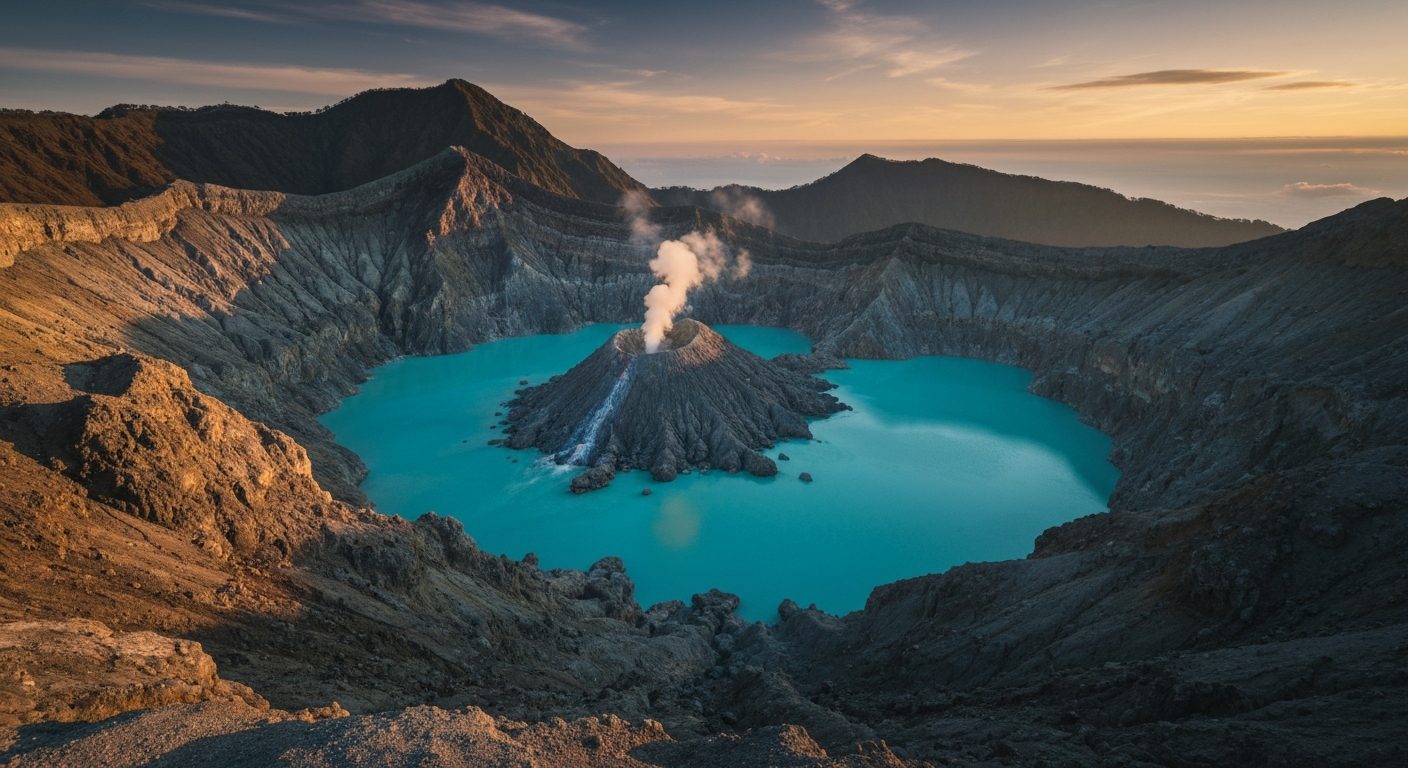
How long is Ijen blue fire hike? Most trekkers spend about 1.5–2 hours hiking 3 km up to the crater rim, then add another 30–45 minutes to descend into the crater to see the blue fire. With time at the flames and sunrise, your full Ijen crater night trek usually runs from around midnight until 7–8 am.
As Kawah Ijen Trek & Volcano Editor for Ijen Blue Fire Tours at Bali Premium Trip, I’ll walk you through the real timeline: the climb, the descent into the sulfur basin, how long you actually spend near the flames, and what time to start so you do not miss the short window before dawn.
—
How long is the Ijen blue fire hike, door to door?
Let’s start with the full picture, from hotel pickup to return.
For most guests on our private trips arranged by Bali Premium Trip:
- Total experience time (hotel to hotel):
• From Banyuwangi: ~7–8 hours overnight
• From North/West Bali: ~10–12 hours overnight (including ferry crossings)
- On-foot Ijen hike duration:
• Crater rim ascent (Paltuding to rim, 3 km): ~1.5–2 hours
• Descent from rim to blue fire: ~30–45 minutes down
• Time at the blue flames: ~20–40 minutes (conditions-dependent)
• Climb back up from crater floor to rim: ~45–60 minutes
• Walk along rim + descent to parking: ~1–1.5 hours
So ijen crater total trek time midnight to sunrise is usually 4–5 hours of actual hiking, with short rests and photo stops mixed in.
These are real-world ranges I see on the trail. Very fit hikers can move faster; larger or slower groups may add 30–60 minutes. The mountain sets the rules: weather, gas levels, and park rangers can also change the pace.
—
Ijen hike duration: hour‑by‑hour timeline
Below is a typical ijen crater total trek time midnight to sunrise schedule, assuming you’re staying in Banyuwangi. I’ll use a 1:00 am pickup as an example.
00:30–01:30 – Transfer to Paltuding (trailhead)
- From Banyuwangi town/hotel: ~45–60 minutes by car
- From Licin areas closer to Ijen: ~30–40 minutes
Bali Premium Trip arranges your private car and driver. Roads are paved but winding; some sections are narrow and dark. You don’t walk yet — try to rest.
01:30–01:45 – Arrival, gear check, permits
At the Paltuding parking area (about 1,850 m), your local licensed guide handles:
- Park entry and tickets
- Gas mask fitting (we arrange these for you)
- Quick briefing on the route and safety
- Last chance for a warm drink or toilet stop at simple warungs
Temperature often sits between 5–12°C before dawn. I usually tell guests: put on all your layers here, then open your jacket while climbing if you get warm.
01:45–03:15 – 3 km night climb to the crater rim
This is the heart of the ijen blue fire trek 1.5 to 2 hours climb.
Distance and elevation:
- Distance: ~3 km from Paltuding to the main rim viewpoint
- Elevation gain: ~450 m (from ~1,850 m to ~2,300 m)
Realistic timing:
- Fast pace, few stops: ~1–1.25 hours
- Average fit hiker, with breaks: ~1.5–2 hours
- Slower groups or many photo stops: up to ~2.5 hours
Trail profile:
- First 1 km: Gradual to moderate incline on a wide, sometimes dusty track. You’ll warm up quickly.
- Middle 1.5 km: Steeper, especially around the concrete sections. Many guests do short “10 steps, 10 seconds rest” cycles here.
- Final 0.5 km: Gradient eases off near the rim, and the path widens again. You start to smell sulfur when the wind shifts.
This is not a technical climb. No scrambling, no ropes. But the grade is honest, and at night, the darkness and cool air can make it feel tougher. I’ve guided hikers from 10 to 70+ years old — the key variable is pacing, not age.
—
From rim to blue fire: descent time into the crater
Reaching the rim is only part one. To stand near the electric-blue flames, you continue down an additional path inside the crater.
03:15–04:00 – 30–45 min descent to crater floor
This is the ijen blue fire descent time to crater floor, and it’s very different from the wide upper trail.
Key points:
- Time: ~30–45 minutes down, depending on crowding
- Distance: ~600–700 m from the main rim to the sulfur work area / blue fire zone
- Terrain: Rocky, uneven volcanic path; some sections are sandy or slippery, especially if dusty or damp
- Gradient: Steeper than the main ascent; you’ll often use hands for balance
You will:
- Wear your gas mask or keep it ready — sulfur gas gets stronger as you descend
- Follow your guide closely; we choose lines that avoid loose rocks and give space to local sulfur miners
- Move one at a time across narrower spots to keep it safe
For many guests, this section is the most mentally demanding part of the trek, especially in the dark with gas blowing through. I won’t sugarcoat that. But with a calm guide, conservative pace, and patience, most reasonably fit hikers manage it well.
If at any point gas levels spike or you feel uncomfortable, you can stop at a higher viewpoint and watch the flames from a distance. Your guide’s call here is final; safety comes first.
—
How long do you spend at the blue fire?
Blue fire is visible only in darkness. As dawn approaches, the flames appear to fade, even though the gas combustion continues.
04:00–04:40 – 20–40 minutes at the flames
On an average night:
- Approach & positioning: 5–10 minutes to move into a safe viewing spot
- Active viewing and photos: 15–30 minutes, depending on gas, crowds, and comfort
- Contingency: Some nights, rangers or guides may shorten time due to wind direction or heavy fumes
Conditions that affect how long the Ijen blue fire experience lasts:
- Wind: If gas blows directly toward visitors, we may need to retreat higher, reducing viewing time.
- Crowds: On weekends and holidays, managing people in tight spaces takes extra time.
- You: If your eyes or lungs feel irritated, we move you higher up immediately; we never force anyone to remain close.
From very close range, the flames look like waves of blue alcohol fire rolling around the sulfur vents. You hear miners chipping rock. You smell the sulfur — a mix of rotten egg and burnt match. Your mask filters much of it, but not all.
Expect your guide to be strict here. No stepping off the line for “just one photo”, no touching the sulfur pipes, and no pushing forward through the crowd. The crater floor is an industrial worksite, not an amusement park.
—
Climbing back out and catching sunrise
Once you’ve had your time with the flames, the focus shifts to getting everyone safely back to the rim and into position for sunrise over the turquoise lake.
04:40–05:30 – 45–60 min climb back to rim
The climb out is shorter in distance but can feel longer because:
- Your legs are already tired from the initial ascent
- You’re still wearing the gas mask for the first part
- There are continuous short, steep switchbacks
Typical timing:
- Strong hikers: ~35–45 minutes
- Average pace: ~45–60 minutes
- Slower groups or frequent stops: up to ~1 hour 15 minutes
I always remind guests here: slow, steady, no rush. The sky will start to pale, but you still have time to make sunrise on the rim.
05:30–06:30 – Sunrise and lake viewing from the rim
Back on the rim, you can finally switch focus from footing to the view.
- First light: Around 05:00–05:30 (varies slightly across the year)
- Sunrise: Typically around 05:30–06:00 in East Java
From the rim you see:
- The milky turquoise acidic lake, one of the world’s largest of its kind
- Sulfur plumes rising from the vents you just visited
- Layers of East Java’s mountains and, on clear mornings, Bali’s outline to the east
Your guide will lead you to one or two viewpoints along the rim, depending on time and your energy.
Total rim time is often around 30–60 minutes: enough for photos, a snack, and a quiet moment to actually absorb where you are.
—
Descent back to the parking area
06:30–07:30 – 1–1.5 hour hike down to Paltuding
The return trail is the same 3 km path, but now:
- You see the road, forest, and sulfur carts that passed you in the night.
- Knees, rather than lungs, become the limiting factor.
Descent timing:
- Fast, continuous pace: ~45–60 minutes
- Average pace with gentle steps: ~1–1.25 hours
- If you have sensitive knees or prefer to move slowly: up to ~1.5 hours
Poles help a lot here. Many guests who “never use trekking poles” end the morning saying their knees are grateful they had them.
Back at Paltuding, you usually arrive between 07:00 and 08:00, depending on your overall pace and how long you lingered at sunrise.
—
What time to start Ijen blue fire hike?
The core planning question is: what time to start Ijen blue fire hike so you:
- Reach the crater floor while it’s fully dark
- Still have enough time to climb back up for sunrise
- Avoid rushing on steeper sections
Here’s how we think about start times in practice.
Recommended Ijen night trek 1 am start time duration
For guests staying in or near Banyuwangi, a typical schedule with our private treks is:
- 00:30–01:30: Pick up from hotel
- 01:30–01:45: Arrive at Paltuding, gear check
- 01:45–03:15: Ascent to crater rim
- 03:15–04:00: Descent into crater
- 04:00–04:40: Time at blue fire
- 04:40–05:30: Climb back to rim
- 05:30–06:30: Sunrise and lake viewing
- 06:30–07:30: Descent to parking and drive back
That aligns with an ijen night trek 1am start time duration from town that reliably fits into the darkness window.
Ijen blue fire 2 am departure time scheduling
A 2 am departure from Banyuwangi town is possible, but it leaves much less buffer:
- Any delay (traffic, slow ticket line, gear issues) cuts into your viewing time at the flames.
- Slower hikers may have to choose between more time at blue fire or a relaxed sunrise.
Who might consider a 2 am departure?
- Very fit hikers who are comfortable keeping a consistent pace up and down
- Guests staying closer to Ijen (e.g., mountain homestays) with a shorter drive to Paltuding
If you tell our team in advance that you’re strong hikers and want the latest viable start, we’ll plan an ijen blue fire 2am departure time scheduling that still respects safety margins.
Midnight starts and earlier options
From North/West Bali — Lovina, Pemuteran, or Menjangan areas — you need extra time for:
- Drive to Gilimanuk port
- Ferry crossing to Java
- Drive from Ketapang port to Banyuwangi / directly to Ijen (depending on plan)
That’s why midnight or even 23:00 pick-ups from Bali are common. It sounds extreme, but you often spend part of that time sitting in the car or on the ferry, not walking.
Our planning rule at Bali Premium Trip is simple:
We schedule your pickup backward from the time we want you at the crater floor (~04:00), then add extra buffer for food, traffic, or weather.
If you’d like help choosing the right start for your fitness level and hotel location, contact our team via email or WhatsApp — we’ll map out an exact schedule for your date and season:
plan your trip.
—
Is the Ijen blue fire hike difficult?
Many guests ask not just ijen crater hike how long to the top, but how hard it feels.
Physical effort vs. technical difficulty
- Technical level: Low. The upper trail is non-technical; the crater descent is rough but manageable with care.
- Cardio demand: Moderate to high for non-hikers, especially on the steep middle section of the ascent.
- Altitude: Rim at ~2,300 m — enough for some people to feel slightly short of breath, but far below classic high-altitude thresholds.
Who usually finds it okay:
- People who do some regular walking or light exercise
- Hikers used to 2–3 hour day hikes with moderate hills
- Children and older adults with no significant mobility or heart issues, if paced slowly
Who may struggle:
- Those with poor knee health (especially on the descent)
- Guests with uncontrolled asthma or severe respiratory issues — sulfur gas can trigger problems
- Anyone with significant heart or circulation conditions without medical clearance
Our guides tailor the pace. You set how often we stop, not the other way around.
—
Key facts at a glance: Ijen hike duration & timing
- Total on-foot hiking time
- Approx. 4–5 hours (average group)
- Ascent: Paltuding to rim (3 km)
- Typically 1.5–2 hours; elevation gain ~450 m
- Descent: rim to crater floor
- 30–45 minutes down; ~600–700 m distance, steep and rocky
- Time at blue fire
- About 20–40 minutes, depending on gas and conditions
- Climb back: crater floor to rim
- 45–60 minutes for most hikers
- Rim sunrise viewing
- 30–60 minutes, depending on weather and your energy
- Descent: rim back to parking
- 1–1.5 hours over 3 km
- Typical hotel pick-up (Banyuwangi)
- Around 00:30–01:30
- Typical hotel return (Banyuwangi)
- Around 07:30–09:00
—
Private Ijen night treks with Bali Premium Trip
Ijen Blue Fire Tours is part of Bali Premium Trip. You book directly with our reservations team — no third-party markups, no hidden brokers.
On our private Ijen night treks, we:
- Arrange licensed local East Java guides we know personally
- Handle national park permits and night entry
- Provide gas masks and basic headlamps
- Coordinate private transfers from Bali or Banyuwangi, including ferries for Bali departures
Indicative pricing (last verified June 2026):
- From Banyuwangi:
Roughly US$60–120 per person for a small private group, depending on final group size, services included, and season
- From Bali (Lovina / Pemuteran region):
Often around US$110–200 per person, including round-trip transport, ferry, guide, and park fees, again depending on group size and options
These are broad ranges, not quotes. Exact costs shift with fuel, park regulations, and your group details. You’ll always see a clear breakdown from our team before confirming.
We also arrange any third-party services we do not own — such as local jeeps when needed — through vetted, licensed partners in East Java, and we pass their official rates directly to you.
To get a precise itinerary and current price for your dates, send us a message or WhatsApp our team via plan your trip.
—
Practical pacing tips from the trail
After more than a hundred rim crossings, here’s what helps guests most:
1. Think in segments, not the whole night
Instead of “I have 5 hours of hiking ahead”, focus on:
- Car to trailhead
- Trailhead to rim (3 km)
- Short break
- Rim to blue fire and back
- Sunrise stroll
- Downhill return
Breaking it up reduces mental fatigue.
2. Use micro-breaks on the steep middle section
On the climb up:
- Walk 20–30 steps
- Pause 10 seconds, shake your legs, deep breath
- Repeat
Many guests find this more efficient than long sit-down breaks that let their muscles cool.
3. Accept that gas and weather may change the schedule
Some nights, wind lets us stay longer at the flames. Other nights, gas pushes us to a higher viewpoint fast. That can shorten your time at blue fire but keeps lungs and eyes safer.
Flexibility is part of every responsible Ijen itinerary.
—
FAQs: Ijen hike duration and timing
How long does it take to hike to the top of Ijen crater?
From the Paltuding parking area to the crater rim, most hikers take about 1.5–2 hours to cover the 3 km trail and gain roughly 450 m of elevation.
How long is the full Ijen blue fire hike from start to finish?
The full night trek usually involves about 4–5 hours of actual hiking, plus short rests, from around 01:30 at the trailhead to 07:00–08:00 back at Paltuding, not including your car transfers.
What time should I start the Ijen blue fire hike to see the flames?
For most guests staying in Banyuwangi, we recommend a 00:30–01:30 hotel pickup. That gets you onto the trail by around 01:45, at the crater floor around 04:00, and back on the rim for sunrise.
Can I see the blue fire if I start hiking after 3 am?
Starting the hike after 3 am risks reaching the crater floor too late, as the blue flames fade with the first light. For reliable viewing, plan to already be inside the crater between about 03:30 and 04:30.
Is the Ijen blue fire hike suitable for beginners?
Yes, many first-time hikers complete it, but it is a real effort: a 3 km night climb, a steep rocky descent into the crater, and sulfur gas exposure. With a slow pace, a licensed guide, and no serious health issues, most reasonably fit beginners manage it safely.
For a detailed plan tailored to your hotel location, fitness, and travel dates, contact our Bali Premium Trip reservations team via email or WhatsApp: plan your trip.