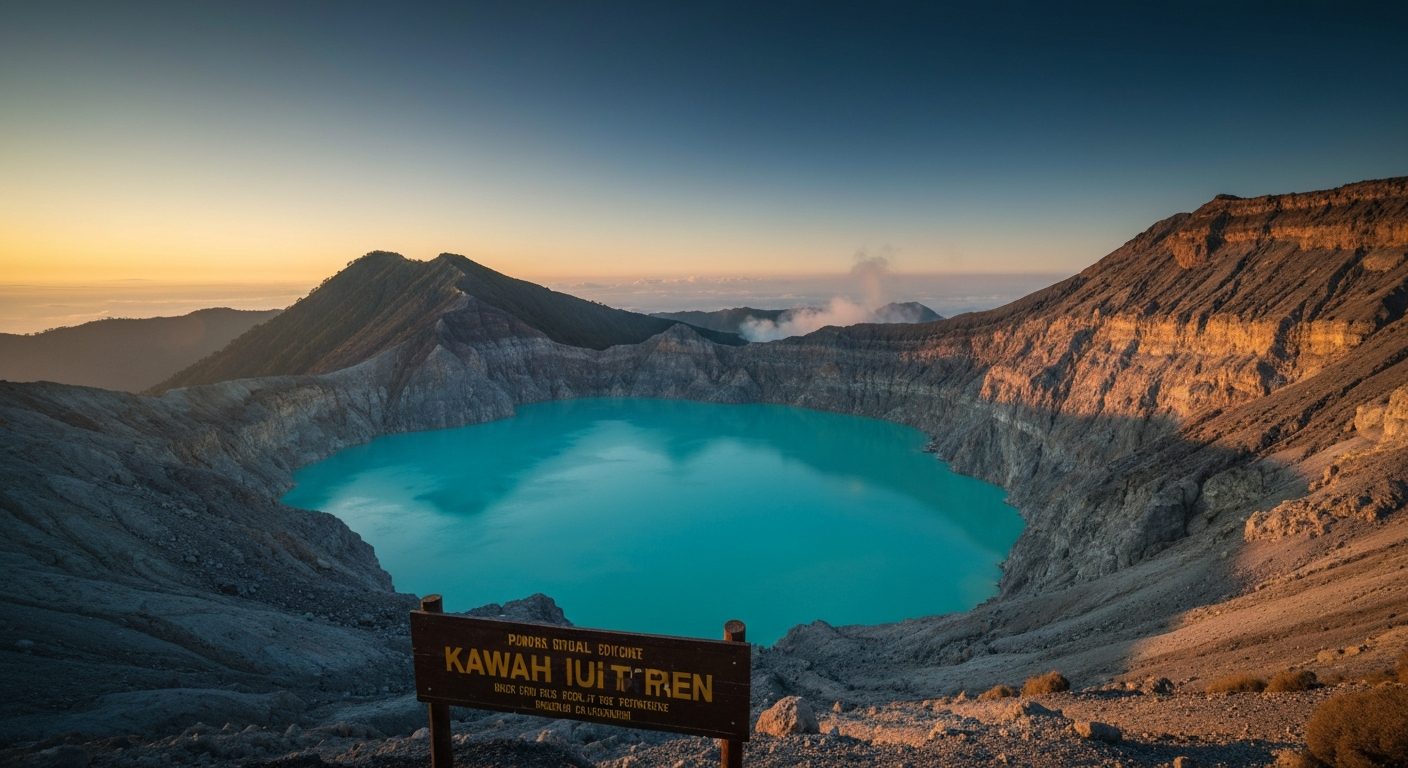
Understanding the kawah ijen entrance fee ticket price is the first step in planning your visit to this extraordinary East Java volcano. This comprehensive guide outlines every potential cost you might encounter in 2026, ensuring you know exactly what cash to bring and how a structured tour package simplifies the process.
I’m a guide on this desk, and my work involves mapping every route into Ijen. From the Ketapang ferry crossing to the winding roads from Banyuwangi and Bondowoso, or the longer journey from Surabaya, I track the ground truth. This means knowing ferry timings, permit rules, entrance fees, and even the first-Friday crater cleanup closures. My goal is to equip you with current, reliable information. What follows is an honest breakdown of the financial side of your Kawah Ijen experience.
Visiting Kawah Ijen is an immersive journey into a landscape unlike any other. It demands preparation, not just for the physical climb and the unique environmental conditions, but also for the various fees that ensure your access and safety. Let’s walk through them.
Kawah Ijen Entrance Fee: The Core Ticket Cost (2026)
The primary expense for any visitor is the entrance ticket to the Kawah Ijen Nature Park. This fee supports the park’s maintenance, conservation efforts, and the local community. It’s crucial to understand that there are different rates based on your nationality and the day of your visit. These rates are set by the Indonesian government and are subject to change, though they tend to be relatively stable year-to-year. The prices listed below are indicative, based on rates last verified in June 2026. Always be prepared for minor adjustments at the gate.
Foreign Visitor Rates
For international visitors, the kawah ijen entrance ticket price is typically higher than for domestic tourists. This is a common practice in many Indonesian national parks and protected areas.
- Weekday Rate: Expect to pay approximately IDR 100,000 – IDR 110,000 per person (around US$6.50 – US$7.50).
- Weekend & Public Holiday Rate: The price increases on weekends and national public holidays, usually to IDR 150,000 – IDR 165,000 per person (around US$9.75 – US$11.00).
Domestic Visitor Rates (Indonesian Citizens)
Indonesian citizens benefit from a significantly lower entrance fee, encouraging local tourism.
- Weekday Rate: Typically around IDR 5,000 – IDR 7,500 per person (around US$0.35 – US$0.50).
- Weekend & Public Holiday Rate: This rises slightly to IDR 7,500 – IDR 10,000 per person (around US$0.50 – US$0.70).
These fees are collected at the Paltuding entrance gate, the starting point for the trek. Payment is usually made in Indonesian Rupiah (IDR), often in cash, though some gates are increasingly accepting card payments. Carrying small denominations of Rupiah is always a good practice.
The Blue Fire Permit: Kawah Ijen Night Hike Essentials
The draw of Kawah Ijen for many is its rare electric-blue flames, visible only in the dark before dawn. Accessing the crater floor to witness this phenomenon requires specific timing and adherence to kawah ijen blue fire permit requirements. This isn’t a separate permit fee in itself but rather a window of opportunity tied to your main entrance ticket and regulated by park authorities.
Blue Fire Viewing Window and Rules
The park gates at Paltuding typically open around 1:00 AM or 2:00 AM, allowing trekkers to begin their ascent. The critical window for descending into the crater to see the blue fire is generally from 2:00 AM to 4:00 AM. After this, as dawn approaches, visibility of the blue fire diminishes, and park rangers may restrict access to the crater floor for safety reasons related to sulfur gas and mining activity.
- Check-in: You’ll present your entrance ticket at a secondary checkpoint before descending into the crater. This confirms your eligibility and ensures you have a guide, which is strongly recommended for the descent.
- Safety Briefing: Rangers or your guide will often provide a brief safety overview, emphasizing the dangers of sulfur fumes and the uneven terrain.
- No Separate Fee: There is no additional ijen permit fee specifically for the blue fire, beyond your regular park entrance ticket. However, the timing is strictly enforced. Arriving too late means missing the blue fire, even if you have a valid entrance ticket.
Remember, the blue fire is a natural phenomenon. While it’s reliably present, its visibility can be affected by weather conditions, wind direction, and gas density. Trust your local guide’s advice on safety and timing.
Ijen Parking Fee: Motorbike, Car, Vehicle Cost
If you’re arriving at Paltuding independently, whether by motorbike, private car, or minibus, you’ll need to account for parking fees. The parking area at Paltuding is relatively spacious but can fill up quickly during peak season or on weekends.
The ijen parking fee motorbike car vehicle cost is usually paid upon entry to the parking lot. These fees are collected by local attendants and contribute to the maintenance of the parking facilities.
- Motorbike: Expect to pay around IDR 5,000 – IDR 10,000 (around US$0.35 – US$0.70).
- Car (Sedan/SUV): Typically IDR 10,000 – IDR 20,000 (around US$0.70 – US$1.35).
- Minibus/Van: For larger vehicles, the fee is generally IDR 20,000 – IDR 30,000 (around US$1.35 – US$2.00).
These are one-time fees for the duration of your visit, whether you stay for a few hours or overnight if you’re combining Ijen with another activity.
Essential Add-ons & Optional Costs: Beyond the Mount Ijen Entrance Fee
While the entrance and parking fees are mandatory, several other costs are highly recommended or entirely optional, depending on your preferences and physical condition. These add-ons significantly enhance safety and comfort, and most travelers opt for at least some of them.
Licensed Local Guides: Safety and Insight
While not strictly mandatory for the main trail to the crater rim, hiring a licensed local guide is strongly advised, especially if you plan to descend into the crater for the blue fire. For solo travelers or small groups, the kawah ijen entrance ticket price and guide cost often becomes a package deal.
- Why a Guide?
- Safety: Guides know the terrain intimately, especially the challenging descent into the crater, which is steep, rocky, and often slippery. They can navigate the sulfur fumes and the paths used by miners.
- Navigation: In the dark, the trail can be disorienting. A guide ensures you stay on the correct path.
- Cultural Insight: They provide context to the sulfur mining operations, local life, and the geology of the volcano.
- First Aid: Many are trained in basic first aid and can assist in emergencies.
- Gas Mask Expertise: They ensure your gas mask is fitted correctly and guide you on its proper use in areas with high sulfur concentration.
- Cost: If not included in a tour package, a local guide typically charges IDR 100,000 – IDR 200,000 (around US$6.50 – US$13.50) for a small group (1-4 people). This cost is usually per group, not per person. Always ensure your guide is licensed and experienced. When you book a private tour with us, a vetted, licensed East Java guide is always included.
Gas Mask Rental: Non-Negotiable Protection
This isn’t an optional extra; it’s a vital piece of safety equipment. The sulfur fumes at Kawah Ijen, especially on the crater floor and along the rim, can be potent and dangerous. Exposure can cause respiratory irritation, coughing, and difficulty breathing.
- Rental Cost: Gas masks can be rented at the Paltuding entrance or sometimes from your tour operator. Expect to pay IDR 30,000 – IDR 50,000 (around US$2.00 – US$3.50) for a rental.
- Importance: Do not attempt to descend into the crater or spend extended time on the rim without a proper gas mask. Your guide will instruct you on when and how to wear it. Breathing the sulfur dioxide directly can be very uncomfortable and even harmful.
The “Ojek Gerobak” (Trolley): A Ride Up the Mountain
For those who may struggle with the uphill trek to the crater rim, a unique local service is available: the “Ojek Gerobak” or mountain trolley. Operated by local porters, these carts are essentially modified stretchers on wheels, pushed and pulled by two to three men.
- Service: They can take you from Paltuding to the crater rim, or a significant portion of the way. It’s an option to consider if you have mobility challenges, are feeling unwell, or simply want to conserve energy.
- Cost: This service is entirely optional and can be quite expensive, reflecting the intense physical effort involved. Prices are often negotiable and depend on your weight, the distance covered, and the time of day. Expect to pay anywhere from IDR 600,000 – IDR 1,000,000 (around US$40 – US$65) for a round trip. A one-way trip is proportionally less. This is one of the more significant optional expenses.
- Support Local: While costly, it’s a direct way to support the local community, especially the former sulfur miners who operate these trolleys.
Total Cost Transparency: Your Kawah Ijen Budget Table (2026)
To help you plan your budget, here’s a consolidated table of indicative costs for visiting Kawah Ijen. These figures represent costs per person for the entrance fee, and per item/group for others, based on rates last verified June 2026. Remember, exchange rates fluctuate, and prices can vary slightly.
| Item/Service | Foreign Visitor (Weekday) | Foreign Visitor (Weekend/Holiday) | Domestic Visitor (Any Day) | Notes |
|---|---|---|---|---|
| Park Entrance Fee | IDR 100,000 – 110,000 (~US$6.50-7.50) | IDR 150,000 – 165,000 (~US$9.75-11.00) | IDR 5,000 – 10,000 (~US$0.35-0.70) | Mandatory. Paid at Paltuding gate. |
| Local Guide Cost | IDR 100,000 – 200,000 (~US$6.50-13.50) | Recommended, especially for crater descent. Cost is per group. Often included in tour packages. | ||
| Gas Mask Rental | IDR 30,000 – 50,000 (~US$2.00-3.50) | Essential for safety, especially for blue fire viewing. | ||
| Parking Fee (Motorbike) | IDR 5,000 – 10,000 (~US$0.35-0.70) | Per vehicle. | ||
| Parking Fee (Car) | IDR 10,000 – 20,000 (~US$0.70-1.35) | Per vehicle. | ||
| Parking Fee (Minibus) | IDR 20,000 – 30,000 (~US$1.35-2.00) | Per vehicle. | ||
| Ojek Gerobak (Trolley) | IDR 600,000 – 1,000,000 (~US$40-65) | Optional, round trip. Highly variable and negotiable. | ||
This table focuses on the direct costs at Ijen. It does not include transportation to Paltuding, accommodation, food, or personal expenses. These are important to factor into your overall travel budget.
How a Private Tour Package Simplifies Costs and Logistics
For many travelers, especially those coming from Bali or other parts of East Java, booking a private tour package is the most convenient and often the most cost-effective way to experience Kawah Ijen. Our private night treks, arranged and operated by Bali Premium Trip, are designed to fold most of these individual fees into a single, transparent price.
When you book with us, your package typically includes:
- Round-trip transportation from your starting point (e.g., Bali, Banyuwangi, Surabaya).
- Kawah Ijen entrance fees (both weekday and weekend rates are factored in).
- Licensed East Java guide for the Ijen trek. Our guides are vetted, experienced, and prioritize your safety.
- Gas mask rental.
- Sometimes, accommodation and meals are included, depending on the package duration (e.g., 2-day/1-night or 3-day/2-night options).
This means you don’t have to worry about managing individual payments at the gate, negotiating with local vendors, or ensuring you have the right local currency. It streamlines your experience, allowing you to focus on the adventure itself. Our Bali Premium Trip reservations team offers transparent, published rates, ensuring no third-party markups. We arrange all third-party services, such as park jeeps and permits, directly with licensed local partners.
A typical private tour package from Banyuwangi (e.g., 1-night/2-day) might range from US$150-300 per person, while a multi-day trip starting from Bali that includes transport, accommodation, and multiple sites like Bromo and Tumpak Sewu could be US$350-700 per person, depending on group size and specific inclusions. These are indicative figures and vary by season and itinerary.
Planning Your Trip: Key Considerations
Knowing the costs is just one piece of the puzzle. Here are a few more details to help you prepare for your Kawah Ijen adventure.
First-Friday Crater Cleanup Closures
Kawah Ijen is a working sulfur mine, and its environment requires regular maintenance. The park authorities typically close the entire Kawah Ijen area to tourists on the first Friday of every month for a comprehensive cleanup and maintenance. Always check the official schedule or confirm with your tour operator if your visit falls on or near the first Friday. This closure is firm; there is no alternative access.
Best Time to Visit
The dry season, from April to October, generally offers the most favorable conditions for trekking, with clearer skies and less rain. However, Kawah Ijen is a year-round destination. During the wet season (November to March), trails can be muddier, and visibility might be reduced, but the blue fire remains. Weekdays are generally less crowded than weekends.
What to Bring
The midnight climb to Ijen is cold. Temperatures near the crater rim, at an altitude of approximately 2,386 meters (7,828 feet), can drop to 5-10°C (41-50°F).
- Warm layers: Jacket, hat, gloves, scarf.
- Sturdy hiking shoes: The trail is rocky and uneven.
- Headlamp or flashlight: Essential for the pre-dawn trek.
- Small backpack: For water, snacks, and personal items.
- Water and snacks: No shops are available on the trail.
- Personal medications: If needed.
The trek from the Paltuding parking area to the crater rim is about 3 kilometers and takes approximately 1.5 to 2 hours, depending on your fitness level. The descent into the crater is another 30-45 minutes on a much steeper, rockier path. It’s a challenging but deeply rewarding experience.
Kawah Ijen is an active volcanic site, and safety is paramount. Follow your guide’s instructions, especially regarding gas masks and staying on designated paths. The sulfur miners work under incredibly harsh conditions; respect their space and livelihood.
Ready to see the blue flames for yourself? Let us handle the logistics.
Plan your trip with Bali Premium Trip today. Our team is also available via WhatsApp to discuss your ideal Kawah Ijen adventure, providing tailored advice and transparent pricing for an memorable experience.
Frequently Asked Questions About Kawah Ijen Costs
Is the Kawah Ijen entrance fee included in most tour packages?
Yes, reputable tour packages, especially those offered by operators like Bali Premium Trip, typically include the Kawah Ijen entrance fee (both the base ticket and any applicable weekend surcharges) as part of their comprehensive pricing. This simplifies your planning and ensures you don’t have unexpected costs at the gate.
Do I need a separate permit for the blue fire at Kawah Ijen?
There isn’t a separate permit fee specifically for the blue fire. Your standard Kawah Ijen entrance ticket grants you access to the park. However, access to the crater floor to view the blue fire is only permitted during a specific window, usually from 2:00 AM to 4:00 AM, and it is highly recommended to have a licensed guide for this descent for safety reasons.
Can I pay the Kawah Ijen entrance fee with a credit card?
While some tourist sites in Indonesia are increasingly accepting card payments, it’s always best practice to carry Indonesian Rupiah (IDR) in cash for the Kawah Ijen entrance fee, parking, and any optional services like gas mask rental or the “Ojek Gerobak.” Cash is widely accepted and often preferred by local vendors.
What is the typical cost for a private Kawah Ijen tour from Banyuwangi?
A private Kawah Ijen tour from Banyuwangi, which often includes transportation, a licensed guide, and park entrance fees, can range from US$150 to US$300 per person for a 1-night/2-day itinerary. This range is indicative and depends on factors like group size, specific inclusions (e.g., accommodation), and the season. Booking directly with Bali Premium Trip ensures transparent, published rates.
Are there any hidden costs I should be aware of for Kawah Ijen?
This guide aims for total cost transparency. The main costs are the park entrance fee, parking, guide (if not included in a tour), and gas mask rental. The “Ojek Gerobak” (trolley) is an optional but potentially significant expense if you choose to use it. Beyond these, factor in personal expenses like food, drinks, and any souvenirs. If you book a comprehensive package, most of these key costs are covered.