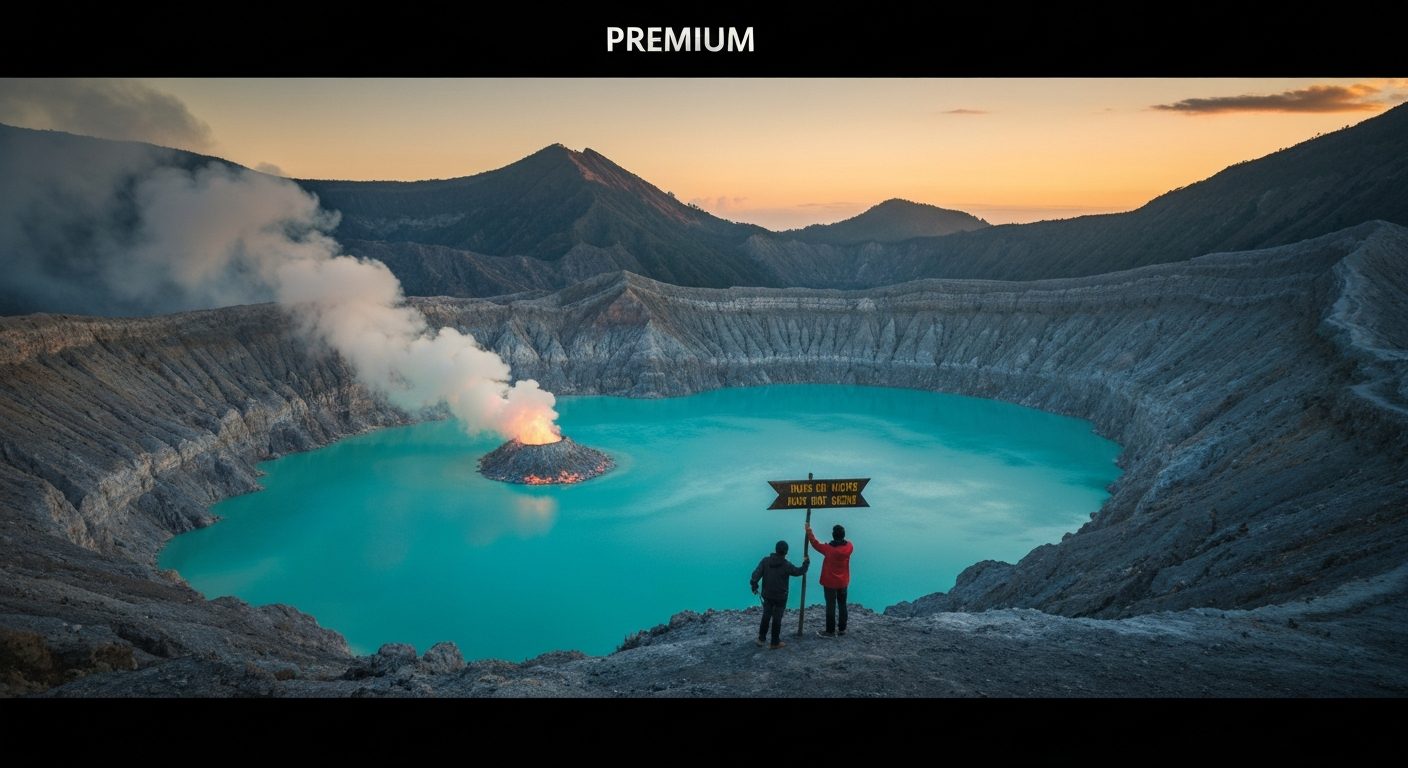
As the I spend my days mapping every route into Ijen, tracking ground conditions so your journey is built on current truth, not guesswork. A crucial piece of that planning involves understanding exactly when the Ijen Crater is closed for first-Friday cleanup, managing expectations around visitor numbers, and park’s rules. This guide helps you pick the right day for your trek.
For those eager to witness the electric-blue flame and the turquoise crater lake, knowing the operational hours and potential closures is paramount. Beyond the standard nightly access window, there are specific, regular closures, and then the unpredictable ones. Let’s break down what you need to know to ensure a smooth, safe, and memorable Ijen experience.
Understanding Kawah Ijen Crater Closures
Kawah Ijen, like any natural wonder, has its operational rhythms and necessary periods of rest or maintenance. These closures can significantly impact your travel plans, so understanding them is the first step in successful itinerary building.
The “Bersih-Bersih”: Ijen Crater Closed First Friday Month Maintenance
The most predictable and regular closure is the “Bersih-Bersih” (cleanup) operation. Typically, the Ijen Crater is closed on the first Friday of every month for maintenance. This isn’t an arbitrary closure; it’s a vital initiative for the preservation of the crater environment and the safety of its visitors and the local community.
During this period, park rangers and local volunteers conduct thorough cleaning and maintenance activities. This includes clearing debris from the trails, inspecting safety infrastructure, and generally ensuring the pristine condition of the area. It’s a necessary pause that benefits everyone, ensuring the sustainability of this unique ecosystem. If your travel dates coincide with the first Friday, be prepared to adjust your itinerary. There is no access to the crater during these times, and it’s strictly enforced.
Unforeseen Closures: Weather and Volcanic Activity
While the first-Friday cleanup is scheduled, other closures can happen without warning. Kawah Ijen is an active volcano, and its status can change. Volcanic activity, even minor increases, can lead to immediate closures for visitor safety. The park authorities closely monitor gas levels, seismic activity, and general volcanic stability.
Severe weather also prompts closures. Heavy rain can make the trails treacherous, increasing the risk of slips and falls, especially during the pre-dawn hours. Strong winds, fog, or lightning can also lead to temporary access restrictions. These closures are for your safety. They are not negotiable. We always recommend confirming the current status with our Bali Premium Trip reservations team or directly with the park authorities closer to your travel date.
Standard Nightly Access Window
Under normal circumstances, Kawah Ijen operates with a specific access window designed to allow for the blue fire viewing. Visitors are generally permitted to enter the park from 2:00 AM. This early start is crucial for reaching the crater floor before dawn, when the blue flames are most visible. The trails remain open until around 12:00 PM, after which visitors are expected to descend. The gates close entirely in the late afternoon for the night, reopening the following morning at 2:00 AM.
This window ensures trekkers can experience the blue fire and the sunrise from the rim, while also providing a structured operational period for the park. It allows time for the blue fire trek and for hikers to reach the rim for the sunrise, before descending in daylight. Adhering to these timings is essential, not just for your experience, but for the safety and management of the park.
Navigating Crowds at Kawah Ijen
The allure of Ijen’s blue fire draws many. Understanding visitor patterns can significantly enhance your experience, allowing you to choose a time that aligns with your preference for solitude or a more social atmosphere.
Ijen Crater Weekday vs Weekend Crowds Prices
There’s a noticeable difference in visitor numbers and, consequently, the atmosphere, between weekdays and weekends. Weekends, particularly Saturday mornings, see a significant increase in both local and international tourists. This means more people on the trails, at the blue fire viewing spots, and along the crater rim.
The impact of Ijen Crater weekday vs weekend crowds extends to pricing. Entrance fees for foreign visitors are typically higher on weekends and national holidays. For example, a weekday foreign visitor ticket might be around IDR 100,000 (approximately US$6-7, last verified June 2026), while a weekend ticket could be IDR 150,000 (approximately US$9-10, last verified June 2026). These prices are indicative and subject to change by park authorities.
- Weekday Experience:
- Generally quieter. Trails are less congested. More space at key viewing points. Lower entrance fees. Ideal for those seeking a more contemplative experience.
- Weekend Experience:
- Significantly busier. Expect queues for permits, more people on the trail, and crowded viewing areas. Higher entrance fees. Suitable for those who don’t mind a lively atmosphere.
Peak vs. Low Tourist Season
Beyond the weekly rhythm, annual tourist seasons also dictate crowd levels. The peak tourist season in Indonesia typically runs from July to August and again during the Christmas and New Year holidays (late December to early January). During these times, Kawah Ijen experiences its highest visitor numbers, regardless of the day of the week.
The low season, generally outside these peak periods, offers a much calmer experience. May, June (before the main European summer holidays), September, and October can be excellent months to visit, often combining good weather with fewer crowds. The shoulder seasons can offer a balance, with moderate visitor numbers and generally favorable conditions.
When considering Ijen Crater weekday vs weekend crowd tourist season dynamics, always layer the two. A weekday in low season will be the quietest. A weekend in peak season will be the busiest. Plan accordingly based on your preference for solitude.
Is Ijen Hike Crowded? The Trek Up
The climb to the crater rim is approximately 3 kilometers long, with a significant elevation gain. While the trail is wide in most parts, sections can become bottlenecks when many people are trekking simultaneously. Starting the trek around 2:00 AM means a continuous stream of headlamps snaking up the mountain. On busy nights, the pace can be dictated by the group ahead, making for a slower ascent.
The initial section of the trail is a steady uphill. It is a challenging, but rewarding, hike. While it won’t feel like a shoulder-to-shoulder crush, the presence of many trekkers is undeniable, particularly during peak times. If you prefer a more solitary experience, aiming for a weekday in the low season is your best strategy. Our Bali Premium Trip guides are skilled at navigating these conditions, often knowing alternative pacing strategies to optimize your experience.
Ijen Crater Rim Crowd Dynamics
The true bottleneck often occurs at the crater rim and on the descent path to the blue fire viewing area. Once you reach the rim (elevation ~2,386 meters), you’ll join others observing the blue fire from above or making their way down into the crater. The path down to the sulfur mining area is steep, rocky, and narrow. Here, Ijen Crater rim crowd numbers can feel more pronounced.
Space around the blue fire itself is limited. Everyone wants the best vantage point for photos. Sulfur miners are also actively working in this area, sharing the narrow paths. Patience and awareness are essential. After viewing the blue fire, the ascent back to the rim for sunrise also sees a concentrated flow of people. From the rim, the views of the turquoise lake and surrounding landscape are expansive, offering more space to spread out, though popular photo spots will still draw small groups.
Kawah Ijen Visitor Rules and Informal Limits
To ensure safety, preserve the environment, and manage the visitor experience, Kawah Ijen has a set of formal rules and informal capacity considerations. These are critical for anyone planning a visit.
Permit System and Mandatory Guides
Entry to Kawah Ijen requires a permit, which is typically purchased at the park entrance. For foreign visitors, this usually involves showing your passport. The park operates a “one-entry-per-ticket” system, meaning your ticket is valid for a single entry on the specified date.
Crucially, all visitors to Kawah Ijen are required to be accompanied by a licensed local guide. This is not merely a recommendation; it’s a park regulation. Guides provide essential safety oversight, navigate the trails, offer insight into the local culture and geology, and ensure you adhere to park rules. They are particularly vital on the treacherous descent into the crater for blue fire viewing, where gas masks are mandatory and hazards abound. Our Bali Premium Trip tours always include vetted, licensed East Java guides as part of your experience.
Safety Regulations and Equipment
Safety is paramount at Kawah Ijen. The active sulfur vents produce toxic gases, primarily sulfur dioxide. Therefore, gas masks are mandatory, especially if you plan to descend into the crater for the blue fire. Reputable tour operators, including Bali Premium Trip, provide high-quality gas masks as part of their package. Do not attempt to trek without one, or with an inadequate mask.
Other safety regulations include:
- No Entry After Dark (before 2 AM): Access is strictly controlled to the 2 AM opening.
- Stay on Marked Trails: Deviating from designated paths is dangerous due to uneven terrain, loose rocks, and potential gas pockets.
- Respect Miner’s Work Area: The sulfur miners are working in hazardous conditions. Give them space, do not obstruct their work, and avoid touching their equipment or the raw sulfur.
- No Littering: Pack out everything you pack in. Preserve the natural environment.
- Age Restrictions: While not strictly enforced for all, very young children or elderly individuals with health conditions might find the trek too challenging. Consult with your doctor and our team if you have concerns.
Kawah Ijen Visitor Limit (Informal Capacity)
While there isn’t a strict, officially published Kawah Ijen visitor limit or daily cap in the same way some other national parks operate, there are informal capacity considerations that influence the experience. The narrowness of the path into the crater, the limited space around the blue fire, and the bottleneck at the rim effectively create a natural limit to how many people can comfortably or safely occupy these spaces at any given time.
During peak times, park rangers and guides often manage the flow of people, sometimes holding groups back temporarily to prevent overcrowding in dangerous areas. This informal management ensures safety, even if it means short delays. The overall “capacity” you experience is therefore influenced by the sheer number of people present and the park’s efforts to keep everyone safe. Choosing a less crowded time will always provide a more spacious and less rushed experience.
Respecting the Environment and Local Miners
Kawah Ijen is not just a tourist attraction; it’s a living, working environment for the sulfur miners. These individuals undertake incredibly arduous and dangerous work, often carrying loads of up to 70-90 kilograms of sulfur up and down the crater several times a day. Their resilience and dedication are a humbling sight.
As visitors, it is imperative to treat them with respect. Do not photograph them without permission, do not offer money directly unless it’s a genuine gesture of appreciation for a service (e.g., carrying your bag for a short distance), and never interfere with their work. A simple “terima kasih” (thank you) goes a long way. Beyond the miners, the unique ecosystem of Ijen is fragile. Stick to the paths, do not disturb wildlife, and leave no trace of your visit.
Choosing Your Day: Best Day to Hike Ijen to Avoid Crowds
Now that you understand the factors influencing your Ijen experience, how do you pick the optimal date? It’s a balance of avoiding closures and minimizing crowds while aligning with your overall travel plans.
Date-Picking Decision Tool: Closures & Crowd Timing
Here’s a practical table to help you decide:
| Factor | Impact on Visit | Recommended Timing for Best Experience |
|---|---|---|
| First Friday Cleanup | Full closure of Kawah Ijen. No access. | Avoid the first Friday of any month. Plan your visit for other days. |
| Weather/Volcanic Status | Potential for sudden, short-notice closures. | Confirm status with Bali Premium Trip / park closer to travel. Consider visiting during dry season (May-October) for generally better weather. |
| Weekends (Sat/Sun) & Holidays | Significantly higher crowds, longer queues, potentially higher entrance fees. | Avoid if possible. If not, expect a more social, slower-paced experience. |
| Weekdays (Mon-Thu) | Generally fewer crowds, quicker entry, more space. Standard entrance fees. | Highly Recommended. Offers a more serene experience. |
| Peak Season (July-Aug, Dec-Jan) | Highest overall crowd levels, regardless of weekday/weekend. Hotels and transport busier. | Expect crowds. Book well in advance. |
| Shoulder Season (May-Jun, Sep-Oct) | Moderate crowds, often good weather. A good balance. | Recommended. Often ideal conditions without extreme crowds. |
| Low Season (Feb-Apr, Nov) | Lowest crowds, potentially more rain (especially Nov-Apr). | Recommended for solitude. Be prepared for potential rain. |
Synthesizing Your Choice: Open and Quiet
The best day to hike Ijen to avoid crowds and ensure it’s open is a weekday during the shoulder or low season, explicitly avoiding the first Friday of the month. For example, a Tuesday or Wednesday in May or September would likely offer the most peaceful and open experience. This strategy minimizes your risk of encountering closures while maximizing your chances for a less congested trek.
Of course, travel schedules are rarely perfectly flexible. If you must visit during a weekend or peak season, be mentally prepared for the crowds. Our experienced guides from Bali Premium Trip are adept at navigating these conditions, providing a structured and efficient experience regardless of the crowd level. They will ensure you have the best possible chance to witness the blue fire and the sunrise, even on busy mornings.
Booking Your Ijen Blue Fire Experience
Once you’ve considered the closures and crowd dynamics, the next step is to secure your journey. Ijen Blue Fire Tours is operated by Bali Premium Trip. You book directly with our Bali Premium Trip reservations team at transparent, published rates with no third-party markup. We specialize in crafting seamless Ijen adventures, taking care of all the complex logistics from Bali or elsewhere in East Java.
Our comprehensive packages typically include:
- Private, comfortable transportation from your pick-up point (e.g., Bali, Banyuwangi, Surabaya) to the Ijen trailhead.
- Vetted, licensed East Java guides who know the mountain intimately and prioritize your safety.
- All necessary permits and entrance fees.
- High-quality gas masks and headlamps for the trek.
- Accommodation near Ijen (for multi-day tours).
- Arrangement of other third-party services such as park jeeps, permits, and ferry crossings via our licensed local partners.
We handle the details so you can focus on the experience. Our team monitors park conditions daily, providing real-time updates on closures or changes to access. A 2-day/1-night Ijen trip from Bali, including private transport, guide, entrance fees, and basic accommodation, might range from US$280-480 per person, depending on group size, accommodation tier, and season (last verified June 2026). This is an indicative range, and exact quotes are provided directly by our reservations team.
Ready to plan your memorable journey to Kawah Ijen, free from logistical worries? Plan your trip with us today via our website or WhatsApp for personalized assistance.
Frequently Asked Questions
When does Kawah Ijen close for cleaning?
Kawah Ijen typically closes on the first Friday of every month for a scheduled “Bersih-Bersih” (cleanup and maintenance) operation. This closure is for the safety of visitors and the preservation of the crater environment. Always confirm the exact date with your tour operator or the park authorities closer to your travel date, as schedules can occasionally shift.
Are there visitor limits at Kawah Ijen?
While there isn’t an official, published daily visitor limit for Kawah Ijen, the narrowness of the trails, especially the descent into the crater, and the limited space around the blue fire area, create informal capacity limits. During peak times, park rangers and guides manage visitor flow to prevent overcrowding and ensure safety. Choosing a weekday during the low or shoulder season generally offers a less crowded experience.
What is the best time of day to see the blue fire?
The electric blue fire of Kawah Ijen is best viewed in complete darkness, typically between 2:00 AM and 4:00 AM. Visitors usually begin the trek from the park entrance around 2:00 AM to reach the crater floor and witness this phenomenon before the first light of dawn begins to obscure it. After viewing the blue fire, many trekkers ascend to the crater rim to watch the sunrise over the turquoise lake.
Do I need a guide for Ijen?
Yes, all visitors to Kawah Ijen are required to be accompanied by a licensed local guide. This is a park regulation put in place for your safety and to ensure adherence to park rules. Guides provide crucial assistance on the challenging terrain, especially when descending into the crater in the dark, and help manage encounters with sulfur gases. Our Bali Premium Trip tours always include experienced, licensed guides.
What are the entrance fees for Ijen Crater?
Entrance fees for Kawah Ijen vary based on whether you are a local or foreign visitor, and whether it’s a weekday or a weekend/national holiday. For foreign visitors, weekday fees are typically lower than weekend fees. As of our last verification (June 2026), indicative foreign visitor fees are around IDR 100,000 (US$6-7) on weekdays and IDR 150,000 (US$9-10) on weekends/holidays. These prices are subject to change by park authorities.
Planning your Kawah Ijen trek involves more than just picking a date; it’s about making informed choices to create the best possible experience. Understanding closures, crowd dynamics, and visitor rules allows you to approach this incredible natural wonder with preparation and respect. Our team at Bali Premium Trip is here to facilitate a smooth, safe, and truly memorable journey for you. Don’t hesitate to reach out. Plan your trip with us today via our website or WhatsApp for personalized assistance.