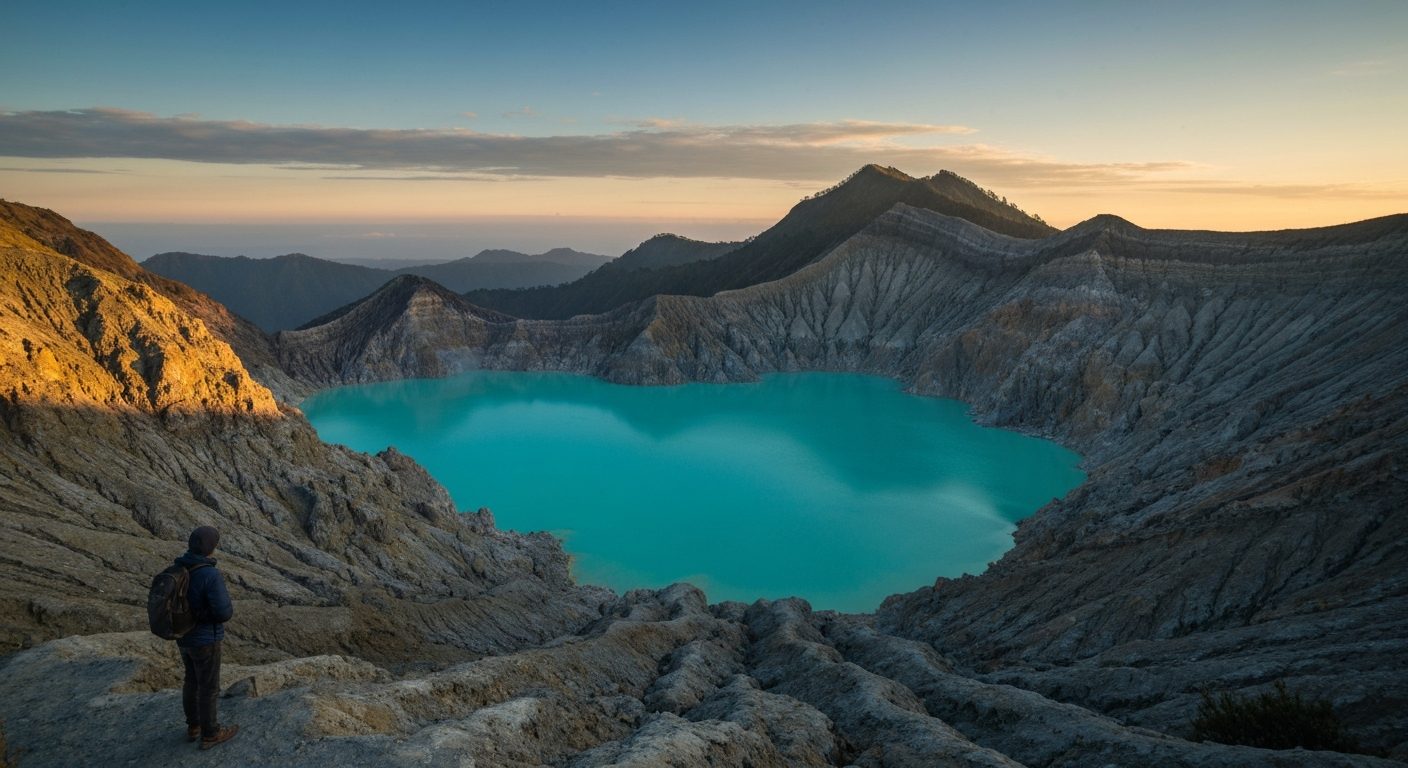
If you’re planning your first visit to Kawah Ijen, this is your definitive ijen blue fire beginner guide. We’ll walk you through everything you need to know about this extraordinary natural phenomenon, ensuring you approach your ijen crater tour first time with confidence and clarity.
As someone who has stood at the crater’s edge countless times, timed departures to the minute, and guided many through the pre-dawn chill, I understand the questions swirling in your mind. Is it truly worth the effort? How hard is the hike? What about the sulfur? This guide cuts through the noise, offering an honest, practical walkthrough from “should I even do this?” to a confident booking.
Our aim is simple: to equip you with the knowledge needed to experience Ijen’s electric-blue fire and turquoise crater lake safely and memorably. We arrange and operate private night treks with Bali Premium Trip, collaborating with vetted, licensed East Java guides who know these trails intimately.
What is the Ijen Blue Fire, Really?
Kawah Ijen isn’t just a volcano; it’s a living, breathing geological marvel. Deep within its crater, sulfur gases ignite upon contact with the oxygen-rich air, producing an ethereal, electric-blue flame. This isn’t lava; it’s burning sulfur. The spectacle is fleeting, visible only in the pitch-black hours before dawn, often between 2:00 AM and 4:00 AM. As the first light touches the sky, the blue fire fades, replaced by the stark beauty of the world’s largest acidic crater lake, a vast, iridescent turquoise expanse that can measure over 1 kilometer across.
This phenomenon draws adventurers from across the globe. Witnessing the blue fire means descending into the active crater, navigating rocky, uneven terrain, and moving through sulfur fumes. It’s an experience that engages all your senses: the cold mountain air, the distinct smell of sulfur, the distant clink of miners’ tools, and finally, the mesmerising glow that dances in the darkness.
Is Ijen Blue Fire Worth It for a First-Timer?
Many ask, is ijen blue fire worth it? My answer is consistently yes, but with a clear understanding of what it entails. It’s not a gentle stroll. It’s a challenging night hike, a physical and mental test. However, the reward is profound. Seeing the blue fire up close is a rare privilege, a moment that feels almost otherworldly. Then, as dawn breaks, the transition to the vibrant turquoise lake and the panoramic ijen crater sunrise views are equally spectacular.
For first-timers, the key is preparation and proper guidance. If you’re physically able to handle a moderate to challenging hike, are comfortable with altitude and cooler temperatures, and are willing to follow safety instructions diligently, then the experience is undeniably rewarding. It’s an adventure that stays with you, a vivid memory of nature’s raw power and beauty.
For those who prefer a less strenuous experience, consider a daytime trek to the crater rim. You won’t see the blue fire, but the views of the turquoise lake and the surrounding volcanic landscape are still magnificent and offer a more relaxed pace. However, to truly experience Ijen’s signature phenomenon, the midnight trek is essential.
How Hard is the Ijen Blue Fire Hike?
Understanding how hard is ijen hike is crucial for planning. The ijen blue fire difficulty is often rated as moderate to challenging, especially for those not accustomed to hiking or higher altitudes. It’s a multi-stage trek, each with its own demands.
The Ascent to the Crater Rim
Your journey typically begins from the Paltuding Ranger Post, located at an elevation of approximately 1,850 meters (6,070 feet) above sea level. From here, the trail to the crater rim is about 3 kilometers (1.9 miles) long. It’s a consistent uphill climb, gaining roughly 500-600 meters (1,640-1,970 feet) in elevation.
The path is well-defined but unpaved, consisting of compacted earth, loose gravel, and some rocky sections. It’s wide enough in most places to accommodate two-way traffic. The steepest sections are towards the beginning and again as you approach the rim. Expect to hike for approximately 1.5 to 2 hours to reach the crater rim, depending on your fitness level and pace. This part of the trek is done entirely in the dark, under headlamp light.
The Descent into the Sulfur Basin
This is arguably the most challenging and potentially risky part of the mount ijen hike. From the crater rim, you descend approximately 800 meters (0.5 miles) down a steep, winding, and extremely rocky path into the crater itself. This descent takes about 30 to 45 minutes.
The trail here is not maintained in the same way as the main ascent path. It’s a rough, uneven scramble over volcanic rock and boulders, often slippery with loose scree. Visibility can be poor due to darkness and sulfur fumes. This is where gas masks become essential, and where following your licensed guide’s instructions on footing and pacing is paramount. You’ll encounter sulfur miners making their way up and down with heavy loads, so spatial awareness is key.
The Return Journey
After witnessing the blue fire and the sunrise, you’ll retrace your steps. The climb back out of the crater to the rim is strenuous, especially after the exertion of the descent and the early start. Once at the rim, the 3-kilometer downhill trek back to Paltuding is much easier but can be hard on the knees. Total active hiking time, including the crater descent and ascent, typically ranges from 3 to 4 hours.
For ijen crater hike for beginners, proper physical preparation (even just regular walking in the weeks prior) and a positive, determined mindset are more important than being an elite athlete.
- Ijen Hike Difficulty Breakdown
-
- Overall Rating: Moderate to Challenging
- Path to Rim: Well-defined but consistently uphill; mixed terrain (dirt, gravel, rock).
- Descent into Crater: Steep, very rocky, uneven, potentially slippery; requires careful footing.
- Elevation Gain (Paltuding to Rim): ~500-600 meters (1,640-1,970 feet)
- Distance (Paltuding to Rim): ~3 kilometers (1.9 miles)
- Descent (Rim to Blue Fire): ~800 meters (0.5 miles) one-way
- Average Ascent Time (Paltuding to Rim): 1.5 – 2 hours
- Average Descent Time (Rim to Blue Fire): 30 – 45 minutes
- Average Total Active Hiking Time: 3 – 4 hours
- Key Challenges: Darkness, altitude, sulfur fumes, uneven terrain, cold temperatures.
Ijen Blue Fire Safety Tips: What You Must Know
Safety is not an afterthought; it’s the primary consideration for any ijen blue fire trek safety plan. The environment at Kawah Ijen is dynamic and can be unpredictable. Here are essential ijen blue fire safety tips for your journey.
Sulfur Gas and Gas Masks
The most significant safety concern inside the crater is sulfur gas. Kawah Ijen is an active volcano, continuously emitting sulfur dioxide (SO2) and hydrogen sulfide (H2S). These gases are potent, irritating to the respiratory system, eyes, and skin. Exposure can cause coughing, shortness of breath, burning eyes, and headaches. In high concentrations, it can be dangerous.
Your gas mask is non-negotiable. A high-quality, professional gas mask with proper filters will be provided by our licensed guides. You must wear it correctly and keep it on whenever instructed, especially during the crater descent and while near the blue fire. Even with a mask, you might occasionally catch a whiff of sulfur, particularly if the wind shifts. Always follow your guide’s instructions on when to put on or remove your mask, and how to position yourself to avoid dense plumes.
Altitude Sickness Concerns
The crater rim of Kawah Ijen stands at approximately 2,386 meters (7,828 feet) above sea level. While this isn’t extremely high altitude, some individuals may experience mild ijen blue fire altitude sickness symptoms, especially during exertion in the dark. Symptoms can include headache, nausea, dizziness, and shortness of breath.
To mitigate this:
- Acclimatise: If possible, spend a night in Banyuwangi (around sea level) or a higher elevation town like Sempol (closer to 1,200 meters / 3,900 feet) before your hike.
- Hydrate: Drink plenty of water before and during your trek.
- Pace Yourself: Listen to your body. Walk slowly and steadily. Don’t push too hard. Inform your guide immediately if you feel unwell.
- Avoid Alcohol: Refrain from alcohol consumption the day before your hike.
This is general planning information, not professional medical advice. Readers with heart, lung, or altitude concerns should consult a doctor before planning their trip.
Footing in the Dark
Most of the trek, particularly the descent into the crater, happens in complete darkness. Your headlamp is your lifeline for visibility. The terrain is rough: loose rocks, uneven steps, and volcanic scree. A misstep can lead to a fall.
- Wear Appropriate Footwear: Sturdy hiking shoes with good ankle support and grip are essential.
- Headlamp: Ensure your headlamp is fully charged or has fresh batteries.
- Walk Slowly and Deliberately: Watch every step. Don’t rush.
- Use Your Guide: Your licensed guide knows the path. Stick close and follow their lead, especially in challenging sections. They often carry additional lights and can assist with tricky footing.
Physical Preparation
While you don’t need to be a marathon runner, a reasonable level of fitness will significantly enhance your experience. Regular walking, especially uphill, in the weeks leading up to your trip will prepare your legs and lungs. If you’re a non-hiker or travelling with family, consider the youngest or least fit member of your group when assessing readiness. Remember, the journey back up from the crater is taxing after the initial exertion.
What Time to Start the Ijen Hike?
The crucial question for blue fire seekers is what time to start ijen hike. To witness the blue fire at its peak, you need to be inside the crater between 2:00 AM and 4:00 AM. This means a very early start.
Typically, your pickup from your accommodation in Banyuwangi or nearby areas will be around midnight to 1:00 AM. This allows enough time for the drive to the Paltuding Ranger Post, necessary preparations, and the ascent to the crater rim, followed by the descent into the crater.
- 12:00 AM – 1:00 AM: Pick up from your accommodation.
- 1:00 AM – 1:30 AM: Arrive at Paltuding Ranger Post, final preparations (headlamps, gas masks briefing).
- 1:30 AM – 3:00 AM: Begin the ascent to the crater rim.
- 3:00 AM – 3:30 AM: Descend into the crater to see the blue fire.
- 3:30 AM – 4:30 AM: Experience the blue fire, then begin ascent out of the crater.
- 4:30 AM – 5:30 AM: Witness ijen crater sunrise from the rim, enjoy the turquoise lake views.
- 5:30 AM – 7:00 AM: Descend back to Paltuding Ranger Post.
- 7:00 AM onwards: Drive back to accommodation or continue your journey.
This timeline is approximate and can vary based on group pace, weather conditions, and how long you wish to spend at each point. Your licensed guide will manage the precise timing on the night.
Your Step-by-Step Ijen Blue Fire Trek Plan
A well-planned trip removes much of the anxiety. Here’s a step-by-step guide for your ijen crater hike for beginners.
Before You Go: Packing Essentials
Packing smart is crucial for comfort and safety on a midnight volcano trek.
- Warm Layers: It gets cold at altitude, especially before dawn. A base layer, a fleece or insulated jacket, and a windproof/waterproof outer shell are ideal. Don’t underestimate the cold; temperatures can drop to 5-10°C (41-50°F) or lower at the rim.
- Sturdy Hiking Shoes: Non-negotiable. Good grip, ankle support, and closed-toe.
- Socks: Thick, moisture-wicking socks.
- Headlamp with Spare Batteries: Essential for visibility.
- Small Backpack: To carry water, snacks, extra layers.
- Water: At least 1.5-2 liters per person.
- Snacks: Energy bars, fruit, or anything to keep you going.
- Gloves: Optional but recommended for warmth and protecting hands on rocky sections.
- Hat/Beanie: To retain body heat.
- Face Covering/Buff: Can provide extra warmth and some protection from dust.
- Personal Medications: If you have any, carry them.
- Camera: To capture the incredible sights (protect it from sulfur fumes).
On the Night: From Pickup to Peak
- Midnight Pickup: Your Bali Premium Trip driver will pick you up from your accommodation at the pre-arranged time.
- Drive to Paltuding: Relax as you drive to the base camp. Use this time for a final rest.
- Briefing at Paltuding: Your licensed East Java guide will provide a detailed safety briefing, distribute gas masks, and ensure your headlamps are working. This is your chance to ask any last-minute questions.
- The Ascent: Begin the steady climb. Your guide will set a manageable pace. Focus on your breathing and footing.
- Reaching the Rim: Take a moment to catch your breath. Prepare for the descent.
- Descent into Crater: This is where the gas mask goes on. Follow your guide closely, navigate the rocks carefully, and watch for miners.
- The Blue Fire: Witness the incredible blue flames. Keep a respectful distance and follow your guide’s instructions on where to stand.
- Ascent from Crater: The challenging climb back to the rim.
- Sunrise & Lake View: As dawn breaks, remove your mask (if safe) and marvel at the turquoise crater lake and the surrounding landscape bathed in the first light. This ijen crater sunrise is truly spectacular.
- Descent to Paltuding: Enjoy the downhill walk, now with views of the path you climbed in the dark.
- Breakfast & Departure: Enjoy a well-deserved breakfast (often included in your tour) before being driven back to your accommodation or onward to your next destination.
Planning Your Ijen Crater Tour for the First Time
For those planning an ijen crater tour first time, getting the logistics right makes all the difference.
Choosing Your Guide and Operator
Choosing a reputable operator and a licensed, experienced guide is the single most important decision for your Ijen trek. Our tours are arranged and operated by Bali Premium Trip, a trusted partner with years of experience in facilitating safe and memorable journeys to East Java’s volcanoes. We work directly with vetted local guides who are not only fluent in English but also deeply knowledgeable about the mountain, its conditions, and its miners. They understand the nuances of ijen blue fire safety tips and can make real-time decisions to ensure your well-being.
When you book with us, you book directly with the Bali Premium Trip reservations team. There are no third-party markups, ensuring transparent, published rates. While we arrange third-party services such as national park jeeps, permits, and the services of your licensed local guide, these are all through our established and trusted local partners. This approach ensures you receive high-quality service and support from start to finish.
Indicative Trip Costs
The cost of an Ijen Blue Fire trek can vary significantly based on your starting point, the duration of your trip, and the inclusions. For a 2-day/1-night trip originating from Banyuwangi, focusing solely on Ijen, indicative prices might range from US$150-300 per person for a private tour (last verified June 2026). This typically covers private transport, licensed guide services, gas masks, headlamps, entrance fees, and sometimes basic meals.
If your itinerary includes transport from Bali or other major hubs like Surabaya, or extends to other destinations like Mount Bromo, a multi-day itinerary could range from US$300-600+ per person (last verified June 2026). These prices are indicative and will vary based on group size, accommodation level, and specific inclusions. We pride ourselves on transparent pricing, and our Bali Premium Trip reservations team can provide a precise quote tailored to your needs.
Ready to experience the magic of Kawah Ijen? Our team at Bali Premium Trip is here to help you plan every detail.
Plan your trip now, or reach out via WhatsApp for a personalized itinerary.
Frequently Asked Questions
Is it safe to go to Ijen Blue Fire?
Yes, it is safe to visit Kawah Ijen’s blue fire, provided you go with a licensed guide, follow all safety instructions, and are adequately prepared. The primary risks are related to sulfur gas exposure, the challenging terrain in the dark, and altitude. Your guide will provide essential safety equipment like gas masks and headlamps, and will navigate the path safely. Always adhere to their guidance, especially regarding gas mask usage and footing.
Do I need a gas mask for Ijen?
Absolutely. A professional gas mask with proper filters is essential and non-negotiable for the descent into the crater to see the blue fire. Sulfur gases (sulfur dioxide and hydrogen sulfide) are constantly emitted from the volcano, and exposure without protection can cause respiratory irritation, burning eyes, and other health issues. Your licensed guide will provide a suitable mask and instruct you on its correct use.
Can children hike Ijen?
While there’s no official age restriction, the Ijen blue fire trek is physically demanding and involves exposure to sulfur gas and altitude. It is generally not recommended for very young children (under 8-10 years old) or those who are not strong hikers. Families with older children should carefully assess their child’s fitness, maturity, and ability to follow strict safety instructions, especially regarding gas mask usage and navigating rough terrain in the dark. A licensed guide can offer advice based on your specific situation.
What is the best time of year to visit Ijen?
The dry season, typically from April to October, is generally considered the best time to visit Kawah Ijen. During these months, the weather is usually clearer, and the trails are less muddy, making for a safer and more enjoyable trek. However, Ijen can be visited year-round. The wet season (November to March) can bring rain, which might make trails slippery and obscure views, but treks still operate, often with fewer crowds. Your licensed guide will always assess conditions on the day.