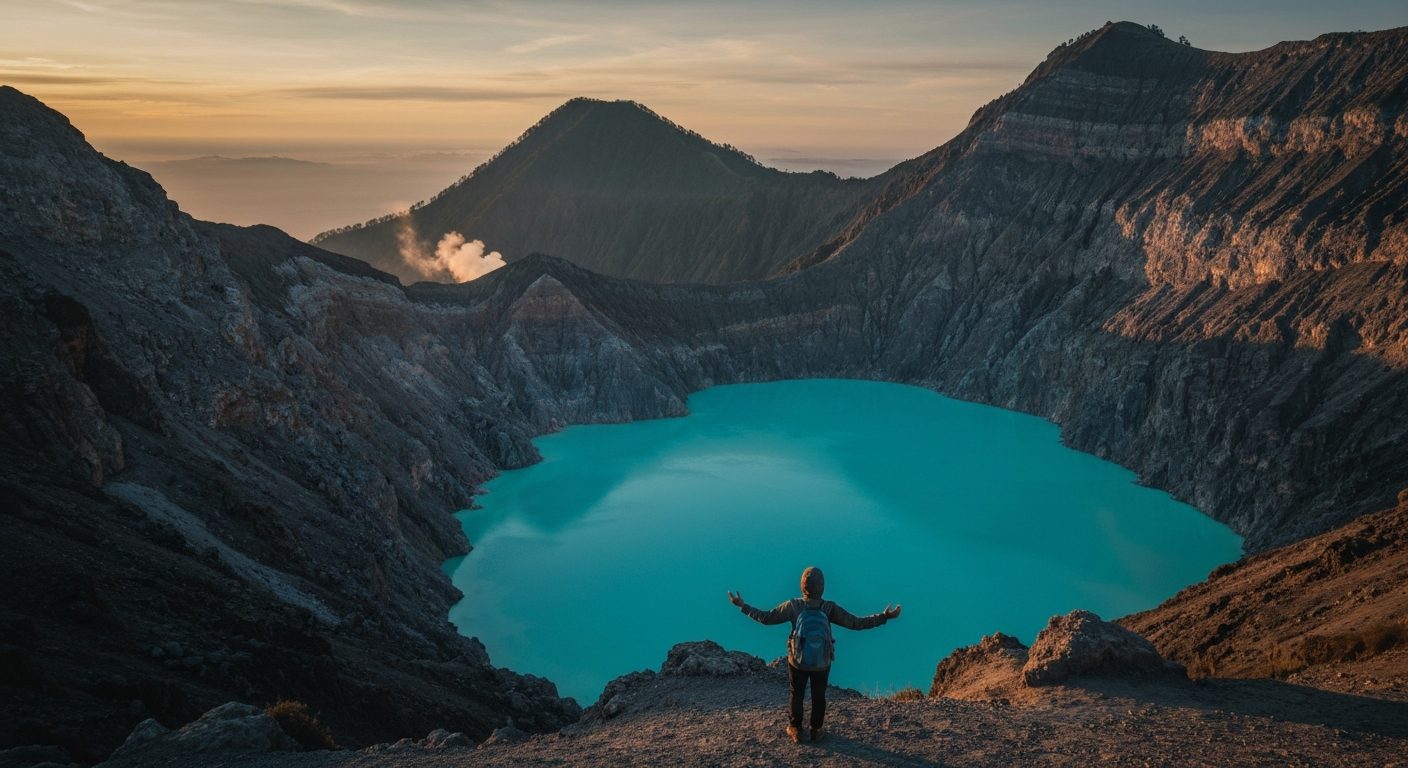
Understanding what to wear for your Kawah Ijen blue fire hike is crucial for a safe and comfortable experience. Packing the right gear and clothing layers ensures you are prepared for the cold pre-dawn temperatures, the steep ascent, and the unique conditions around the sulfurous crater, making your Ijen blue fire tour packing list what to bring a top priority before you even set foot in East Java.
Ijen’s electric-blue flames and turquoise crater lake are sights that draw travelers from across the globe. But this isn’t a stroll through a tropical garden. This is a demanding midnight trek to an active volcano summit at 2,386 meters (7,828 feet). Temperatures at the crater rim before dawn can drop to 3-10°C (37-50°F), and feel even colder with the wind chill. The air around the crater floor carries strong sulfuric fumes. Proper preparation isn’t just about comfort; it’s about safety. As your East Java Routes & Logistics Researcher, I’ve seen countless visitors arrive underprepared, shivering and uncomfortable, or worse, having to cut their experience short. This guide will walk you through everything you need, from head to toe, ensuring you’re ready for the mountain’s unique demands.
Why Your Ijen Packing List Matters: Beyond “Tropical Indonesia”
Many travelers picture Indonesia solely as a land of hot beaches and humid jungles. Kawah Ijen offers a stark contrast. The altitude, the pre-dawn start, and the volcanic environment create conditions far removed from Seminyak or Ubud. Ignoring these realities leads to discomfort and potential health risks. You need more than just a light jacket.
The Mountain’s Demands:
- Cold Temperatures: The ascent begins around 2:00 AM. At the summit, waiting for the sunrise, the wind can be biting.
- Steep, Uneven Terrain: The trail is well-maintained in parts, but it’s still a mountain path. Loose gravel, rocks, and steep inclines are common.
- Sulfuric Fumes: Descending into the crater to see the blue fire exposes you directly to concentrated sulfur dioxide. This requires specific protective gear.
- Darkness: Most of your hike, both up and down, happens in complete darkness. Visibility is minimal.
- Physical Exertion: The climb is strenuous, requiring a good level of fitness. Dressing appropriately helps manage body temperature and prevents overheating or excessive chilling.
The Three-Layer System: Your Best Defense Against Ijen’s Cold
For any cold-weather mountain trek, a three-layer clothing system is indispensable. This system allows you to adapt to changing temperatures and activity levels. As you ascend, your body generates heat. At the summit, while waiting, you’ll cool down quickly. Layers are key for managing your body temperature effectively. Think of it as an “ijen temperature what to bring jacket layers” strategy.
1. Base Layer (Wicking Layer)
This is the layer closest to your skin. Its primary job is to wick sweat away from your body, keeping you dry. A dry body stays warm. Cotton, while comfortable in warm weather, absorbs sweat and holds moisture, making you feel colder when you stop moving. Avoid cotton for your base layer.
- Recommendation: Long-sleeved thermal top and bottom made from merino wool or synthetic materials (polyester, polypropylene).
- Why: These materials are breathable, quick-drying, and excellent at moisture management.
2. Mid Layer (Insulation Layer)
The mid-layer provides warmth by trapping air. You can add or remove this layer depending on how cold it is and how much effort you’re expending.
- Recommendation: Fleece jacket or a lightweight down jacket/vest.
- Why: Fleece is breathable and insulates well even when damp. Down offers superior warmth-to-weight ratio but loses insulation when wet. For Ijen, a fleece is often sufficient and more practical if there’s light rain.
3. Outer Layer (Shell Layer – Windproof & Waterproof)
This is your protection against the elements: wind, rain, and snow (though snow is rare on Ijen, strong winds and rain are not). A good outer layer is both windproof and water-resistant or waterproof.
- Recommendation: A sturdy windbreaker or a waterproof rain jacket.
- Why: A ijen crater windbreaker layers gloves beanie essentials approach means your outer shell stops the wind from stripping away your body heat. During the wet season (December to February), a fully waterproof jacket is non-negotiable.
Head-to-Toe Ijen Blue Fire Tour Packing List
Head & Face: Crucial for Warmth and Protection
- Beanie or Warm Hat:
- A significant amount of body heat escapes through your head. A warm beanie is an absolute ijen crater beanie essentials item. It also protects your ears from the cold wind.
- Headlamp (with spare batteries):
- This is non-negotiable. The ascent begins in complete darkness. A headlamp keeps your hands free for stability and using trekking poles. Ensure it’s fully charged, and bring spare batteries or a power bank for recharging. This meets the ijen crater headlamp equipment requirements.
- Buff or Neck Gaiter:
- Versatile for protecting your neck, face, and even ears from cold and wind. Can also offer a light barrier against dust or mild fumes when you’re not wearing the gas mask.
Upper Body: The Layering Strategy in Action
- Base Layer:
- Long-sleeved thermal top (merino wool or synthetic).
- Mid Layer:
- Fleece jacket or a lightweight down jacket.
- Outer Layer:
- Windproof and waterproof jacket. A good quality shell will make a tremendous difference against the biting wind at the crater rim.
Hands: Don’t Forget Your Gloves
- Gloves:
- Your hands will get cold. Warm, insulated gloves are essential, especially for holding trekking poles or simply for comfort. Fleece or light waterproof gloves are ideal. They are an ijen crater gloves beanie essentials item.
Lower Body: Sturdy and Comfortable
- Base Layer:
- Thermal leggings or long johns (merino wool or synthetic).
- Hiking Pants:
- Wear comfortable, durable hiking pants. Avoid jeans, as they restrict movement, dry slowly, and become very cold when wet. Quick-drying synthetic hiking pants are best. If you only have thinner pants, consider waterproof overtrousers if rain is expected.
Feet: The Foundation of Your Hike
- Hiking Socks:
- Wear thick, moisture-wicking hiking socks. Merino wool socks are excellent for warmth and preventing blisters. Bring a spare pair in your backpack.
- Sturdy Closed Hiking Shoes or Boots:
- This is a critical item. You absolutely need proper ijen hiking boots needed. The trail is steep, uneven, and can be slippery (especially on the descent or if wet). Ankle support is highly recommended. Ensure your shoes have good grip and are broken in to prevent blisters. Absolutely no open-toed shoes, sandals, or flimsy sneakers.
Essential Gear for the Crater
- Gas Mask/Respirator:
- This is non-negotiable for safety, especially if you plan to descend into the crater to see the blue fire up close. Sulfur fumes are toxic and can cause severe respiratory irritation. Our local guides will provide these. You do not need to bring your own, but it’s important to understand *why* you need one – this answers “do you need a gas mask for ijen blue fire” definitively.
- Small Backpack:
- To carry your water, snacks, extra layers, and personal items. Keep it light and comfortable.
- Water Bottle or Hydration Pack:
- Stay hydrated. Bring at least 1.5 – 2 liters of water. The hike is strenuous, and you’ll be sweating even in the cold.
- Snacks:
- Energy bars, fruit, or nuts are perfect for quick boosts during the trek.
- First-Aid Kit (Personal):
- While guides carry a basic kit, bring any personal medications, blister plasters, pain relievers, and antiseptic wipes.
- Sunscreen & Sunglasses:
- Once the sun rises, the UV index at altitude can be intense. Protect your skin and eyes, especially if you stay for sunrise photos.
- Power Bank:
- For charging your phone, camera, or headlamp batteries. Cold temperatures can drain batteries faster.
- Camera (optional):
- A tripod can be useful for long-exposure blue fire shots, but remember you’ll be carrying it. Protect your gear from dust and fumes.
Season-by-Season Considerations: When to Pack That Raincoat
Indonesia has two main seasons: the dry season and the wet season. Kawah Ijen’s conditions can vary significantly between them.
Dry Season (May to October):
Generally clear skies and lower chance of rain. However, temperatures at night are still cold. The main concern will be wind chill at the crater rim and dust on the trails. A windproof outer shell is crucial. A light, packable rain jacket is still a good idea as unexpected showers can always occur in mountainous regions, but a heavy waterproof layer isn’t usually the primary focus.
Wet Season (November to April, peaking December-February):
This is when you absolutely must prioritize waterproof gear. Rain can range from light drizzles to heavy downpours, making trails slippery and rapidly increasing the cold. This is when your “ijen crater raincoat waterproof gear december february” strategy comes into play.
- Rain Jacket & Rain Pants: A fully waterproof and breathable jacket is essential. Consider waterproof hiking pants or waterproof overtrousers to wear over your regular hiking pants.
- Waterproof Backpack Cover: Protect your electronics and spare clothing inside your backpack.
- Dry Bags: Small dry bags are useful for keeping sensitive items like phones, cameras, and extra socks completely dry inside your backpack.
Regardless of the season, packing layers is always the smartest approach. The weather at high altitudes can change rapidly and unpredictably.
What Bali Premium Trip Provides vs. What You Bring
To ensure a smooth and safe experience, Bali Premium Trip, operating through our vetted, licensed East Java guides and local partners, handles several critical logistical elements. This means you can focus on preparing your personal gear without worrying about specific safety equipment like gas masks or navigation tools.
- Provided by Bali Premium Trip (via local partners):
-
- Licensed Local Guide: Your expert guide knows the mountain, the trails, and safety protocols. They lead the way and provide crucial local insights.
- Gas Mask/Respirator: Essential for protection against sulfuric fumes, especially when descending into the crater. Our guides will ensure you have the correct type and fit.
- Basic Headlamp: While we provide a basic headlamp, many trekkers prefer to bring their own more powerful headlamp with spare batteries for better visibility and reliability. It’s always good to have a backup.
- Entrance Fees & Permits: All necessary park entrance fees and permits are arranged and included in your tour package.
- Transportation: Depending on your itinerary, transportation to and from the Ijen trailhead (e.g., from Banyuwangi, Bondowoso, or Surabaya) is provided.
- What You MUST Bring Yourself:
-
- Personal Layered Clothing: As detailed above (base, mid, outer layers).
- Sturdy Hiking Boots/Shoes: With good grip and ankle support.
- Warm Hat/Beanie: To protect from the cold.
- Gloves: For warmth and protection.
- Backpack: To carry your personal items.
- Water & Snacks: Sufficient hydration and energy for the trek.
- Personal First-Aid Items & Medications: Any specific needs you have.
- Power Bank: For your electronics.
- Sunscreen & Sunglasses: For post-sunrise protection.
- Rain Gear (especially Nov-Apr): A personal waterproof jacket and pants.
Your guide is your primary resource on the mountain. Listen to their instructions and ask questions if you are unsure about anything. Their expertise is invaluable for your safety and enjoyment.
Quick Packing Checklist for Kawah Ijen
Use this table as a quick reference for your what to bring to ijen crater checklist:
| Category | Item | Notes & Why It’s Needed |
|---|---|---|
| Head & Face | Beanie/Warm Hat | Retain body heat, protect ears from cold wind. |
| Headlamp (with spare batteries) | Essential for dark trails (provided by BPT, but personal is backup/preferred). | |
| Buff/Neck Gaiter | Versatile protection against cold, wind, dust. | |
| Sunglasses | UV protection after sunrise. | |
| Upper Body | Long-sleeved Thermal Top | Base layer: Wicks sweat, keeps you dry. (Merino wool/synthetic) |
| Fleece Jacket / Lightweight Down Jacket | Mid layer: Insulation for warmth. | |
| Windproof & Waterproof Jacket | Outer layer: Protection against wind and rain. | |
| Hands | Warm Gloves | Essential for cold temperatures, especially at the crater rim. |
| Lower Body | Thermal Leggings/Long Johns | Base layer for warmth. (Merino wool/synthetic) |
| Durable Hiking Pants | Comfortable, quick-drying. Avoid jeans. | |
| Waterproof Rain Pants (Nov-Apr) | Crucial for wet season. | |
| Feet | Thick Hiking Socks (2 pairs) | Warmth, moisture-wicking, blister prevention. |
| Sturdy Hiking Boots/Shoes | Good grip, ankle support, closed-toe. NON-NEGOTIABLE. | |
| Essential Gear | Small Backpack | To carry water, snacks, extra layers. |
| Water Bottle (1.5-2L) | Stay hydrated during strenuous hike. | |
| Snacks | Energy boosts (bars, fruit, nuts). | |
| Personal First-Aid Kit | Medications, blister plasters, etc. | |
| Power Bank | For charging phone, camera, headlamp. | |
| Gas Mask/Respirator | Provided by local guides for sulfur fumes. |
Remember, an indicative price range for a comprehensive 2-day/1-night Ijen Blue Fire tour starting from Banyuwangi, including transport, guide, entrance fees, and basic accommodation, typically falls between US$150-300 per person, varying by group size and service level. This was last verified in June 2026. Your personal gear packing cost is separate.
Feeling prepared for your Ijen adventure? We’re here to help you plan every step. Plan your trip with Bali Premium Trip today, and our team can assist you via WhatsApp for quick and personalized itinerary planning.
Important Safety Notes
While this guide covers essential packing, your health and awareness are paramount. If you have any pre-existing respiratory conditions (like asthma) or heart conditions, it is crucial to consult your doctor before undertaking the Ijen blue fire hike. The sulfur fumes, even with a gas mask, can be challenging for some. Always inform your Bali Premium Trip guide of any health concerns before the trek begins. They are trained to assist and advise on the ground.
FAQs about Ijen Blue Fire Hike Packing
Do I really need warm clothes for Ijen, even in Indonesia?
Yes, absolutely. Kawah Ijen is at an elevation of 2,386 meters (7,828 feet). The hike starts in the middle of the night, and pre-dawn temperatures at the summit and crater rim can be as low as 3-10°C (37-50°F), feeling even colder with wind chill. Layers, including a warm jacket, beanie, and gloves, are essential for comfort and safety, contrary to common misconceptions about “tropical” Indonesia.
Are hiking boots truly necessary, or can I wear sneakers?
Sturdy, closed-toe hiking shoes or boots with good ankle support and grip are truly necessary. The trail is steep, uneven, and can be slippery due to loose gravel or damp conditions, especially on the descent. Sneakers lack the necessary support and traction, increasing your risk of slips, falls, and injuries. This is not a place for casual footwear.
Does Bali Premium Trip provide gas masks and headlamps?
Yes, Bali Premium Trip, through our vetted local partners and licensed guides, provides gas masks/respirators for protection against sulfur fumes and basic headlamps for the dark trek. While a basic headlamp is provided, many trekkers prefer to bring their own more powerful headlamp for enhanced visibility and reliability. You are responsible for bringing all other personal clothing and gear as outlined in this guide.
What if it rains during my Ijen hike?
If rain is anticipated, particularly during the wet season (November to April), a good quality waterproof jacket and rain pants are crucial. Your outer layer should be waterproof. A backpack rain cover and small dry bags for electronics are also highly recommended. Our guides will continue the trek unless conditions are deemed unsafe by park authorities, so being prepared for wet weather is important.
How much water and snacks should I bring?
Bring at least 1.5 to 2 liters of water. The hike is physically demanding, and staying hydrated is critical. For snacks, energy bars, fruit, nuts, or chocolate are excellent choices for quick energy boosts. Your guide will advise on optimal consumption times. There are limited options to purchase these items once you start the ascent.