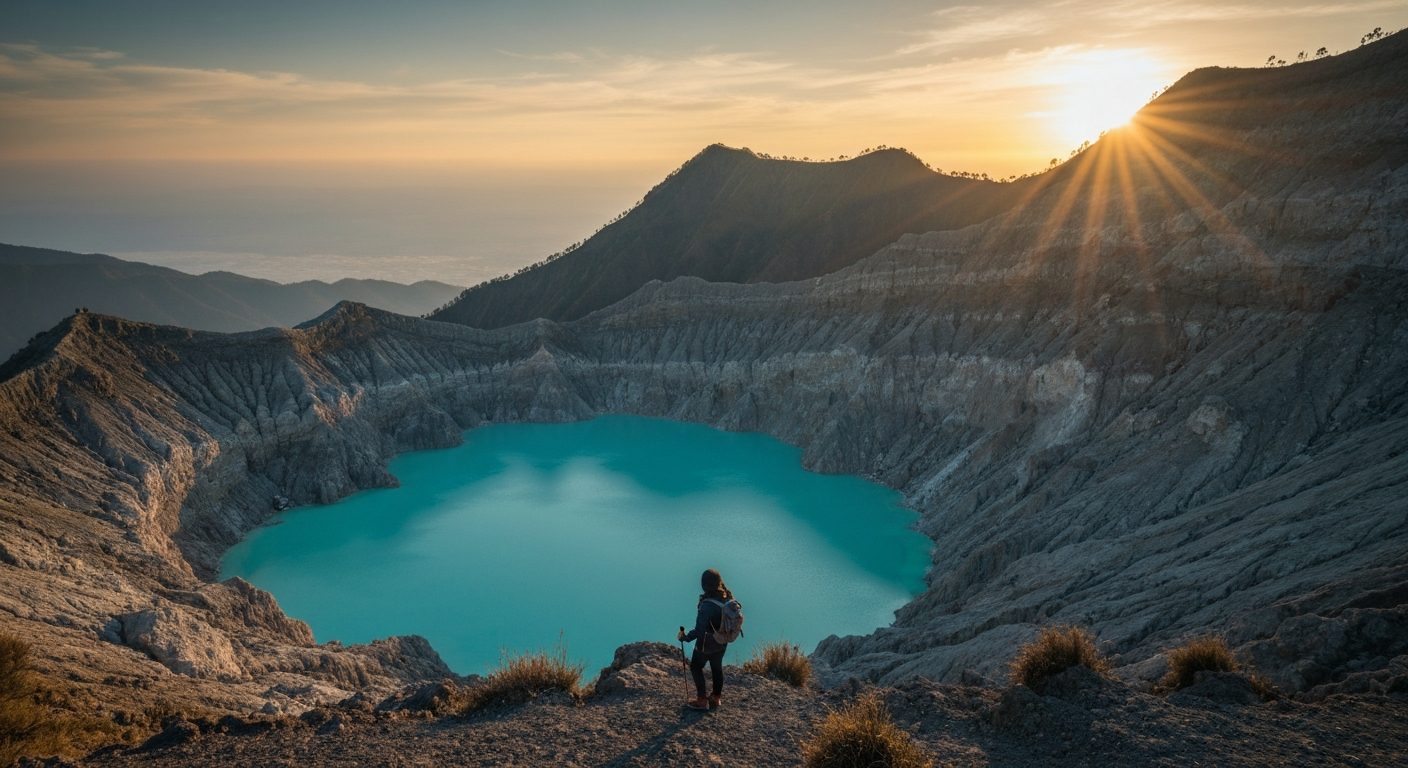
As the Kawah Ijen Trek & Volcano Editor at Ijen Blue Fire Tours, I’ve walked the path to Ijen’s crater rim more times than I can count – over a hundred, through every season. My goal is always to time our departures so guests witness the electric-blue fire before the first hint of daylight dims its magic. When travelers ask, “Do you actually need an ijen guide or no guide solo hiking to Kawah Ijen?” my answer comes from firsthand experience, regulatory clarity, and a deep understanding of the mountain’s demands.
The straightforward reality is this: while independent hiking to the Kawah Ijen crater rim is technically possible, the descent into the sulfur basin to witness the blue fire requires a licensed guide under current park regulations. The toxic sulfur gas, the treacherous pre-dawn darkness, and the steep, often slippery terrain make a professional guide the unequivocally safer and often more cost-effective choice for almost everyone, especially those considering kawah ijen blue fire without tour solo.
Understanding Kawah Ijen’s Unique Challenges
Kawah Ijen is a spectacle, a natural wonder unlike any other, but it is also an active volcano. Its beauty comes with inherent risks that demand respect and preparation. Many underestimate the ijen crater hike difficulty for solo hikers until they are on the trail.
The Altitude and Terrain
The hike begins at the Paltuding ranger post, situated at approximately 1,850 meters (6,070 feet) above sea level. From there, it’s a strenuous, uphill climb of roughly 3 kilometers (1.8 miles) to reach the crater rim, which stands at 2,386 meters (7,828 feet). The trail itself is a mix of compacted earth, loose volcanic sand, and rocky sections. It’s consistently steep, gaining nearly 1,000 meters in elevation over a relatively short distance. This ascent, particularly in the dark, can be demanding on your cardiovascular system and leg muscles.
Pre-Dawn Darkness and Poor Visibility
To see the blue fire, you must start hiking in the middle of the night, typically between 1:00 AM and 2:00 AM. The trail is unlit, plunging trekkers into complete darkness. A reliable headlamp is essential, but even with one, navigating unfamiliar, uneven terrain in the dark presents significant challenges. Without the ambient light of a group or the directional guidance of an experienced guide, it’s easy to lose your footing or misjudge the path.
Volcanic Sulfur Gas: The Invisible Threat
This is the most critical factor. The blue fire itself is ignited sulfuric gas. The entire crater basin is a highly active sulfur mining operation, where plumes of concentrated sulfur dioxide and hydrogen sulfide are constantly released. These gases are corrosive, irritating to the eyes and respiratory system, and can be lethal in high concentrations. Exposure without proper protection can lead to severe coughing, shortness of breath, eye irritation, and even loss of consciousness. A good quality gas mask (specifically an N95 or respirator-grade mask with activated carbon filters) is non-negotiable for descent into the crater.
Cold Temperatures
Despite Indonesia’s tropical climate, temperatures at the high altitude of Kawah Ijen before dawn can drop significantly. Expect temperatures ranging from 5-15°C (41-59°F), and sometimes lower, especially if there’s wind. Warm layers are crucial to prevent hypothermia during the long wait for the blue fire and the subsequent sunrise.
The Regulatory Reality: Is a Guide Mandatory for Kawah Ijen?
This is where clarity is essential. Is a guide mandatory for Kawah Ijen? The answer depends on your objective.
The national park authority’s regulations currently state that visitors must be accompanied by a licensed local guide to descend into the crater basin to witness the blue fire. Access to the crater rim for sunrise viewing is generally permitted without a guide, though conditions can change, and it’s always wise to confirm the latest rules with the park authority or a reputable operator before your trip.
Why the Rules Exist
These regulations are not arbitrary. They are in place for your safety and to protect the environment. The descent into the crater is steep, rocky, and often slippery, especially in the dark. The concentration of toxic gases can fluctuate rapidly with wind changes, creating extremely hazardous conditions. Local guides are intimately familiar with the terrain, the gas patterns, and emergency protocols. They carry appropriate safety equipment, including proper gas masks, and know how to react if someone experiences gas exposure or an injury.
Attempting to descend into the crater ijen without guide solo hiking requirements bypasses these crucial safety measures. You risk not only your own well-being but also potential fines or being turned back by park rangers. It’s simply not worth the danger or the legal repercussions.
Solo Hiking Kawah Ijen: When It Makes Sense (and When It Doesn’t)
For seasoned mountaineers or highly experienced trekkers comfortable with self-sufficiency in challenging, high-altitude environments, reaching the crater rim for sunrise could be a solo endeavor. However, even for these individuals, the blue fire requires a guide.
When Solo Hiking to the Rim Might Be Considered:
- Experienced Hikers: You have extensive experience with night hikes, high altitude, and navigating challenging terrain independently.
- Self-Sufficiency: You carry all necessary gear (headlamp, warm clothing, food, water, first-aid, respirator-grade gas mask, GPS/map) and know how to use it.
- No Blue Fire Objective: Your sole aim is to reach the crater rim for sunrise views, not to descend into the sulfur basin for the blue fire.
- Cost-Conscious: You are focused on minimizing costs and are willing to handle all logistics yourself (transport, permits, accommodation, food).
When a Guided Tour Is Strongly Recommended (Almost Always):
- First-Time Ijen Visitors: The complexity of the trek, the toxic gases, and the unique challenges are best navigated with an expert.
- Blue Fire Objective: If seeing the electric-blue flames up close is your priority, a guide is mandatory for the descent.
- Safety Priority: You prioritize your safety and want to mitigate risks associated with volcanic gas, darkness, and uneven terrain.
- Logistical Ease: You prefer having all transfers, permits, and timing arranged for you.
- Gas Mask Provision: A reputable tour will provide a proper gas mask, which is often difficult to source independently. Ijen blue fire with gas mask included tour packages are the norm for this reason.
- Solo Female Travelers: For enhanced safety and peace of mind (more on this below).
- Anyone Concerned About ijen trekking guide required rules: A guide ensures you comply with park regulations.
The Advantages of a Guided Kawah Ijen Tour
Choosing a guided tour, particularly one operated by our own Bali Premium Trip, provides a comprehensive, safer, and more enriching experience. We arrange and operate these private night treks, partnering with vetted, licensed East Java guides who are experts of the mountain.
Enhanced Safety and Peace of Mind
Our local guides are not just navigators; they are lifelines. They know the safest paths, monitor wind direction for gas plumes, and carry emergency equipment. Should a gas pocket shift unexpectedly or someone experience dizziness, their immediate intervention can be critical. They understand the mountain’s moods.
Seamless Logistics
From your pickup in Bali or East Java to the ferry crossings, the 4×4 jeep ride to Paltuding, and the timing of your trek to catch the blue fire at its peak, a guided tour handles every detail. This includes park permits and crucial items like proper gas masks. For an ijen tour from bali overnight, coordinating all these elements independently can be a logistical headache.
Expert Local Knowledge and Cultural Insight
Our guides live and breathe Ijen. They share insights into the geology, the history of the sulfur mining operation, and the lives of the resilient sulfur miners. They can point out details you would miss on your own and provide context to the incredible landscape around you. They know the best spots for photos and the exact timing to experience the blue fire at its most intense before the first light bleeds it away.
Proper Gas Mask Provision
As mentioned, a high-quality gas mask is vital. Our tours ensure you receive a respirator-grade mask with activated carbon filters, specifically designed to filter out sulfur dioxide. This is far superior to disposable paper masks or simple surgical masks, which offer no protection against volcanic gases.
Solo Female Traveler Safety at Kawah Ijen
For ijen blue fire tour solo female traveler safety, a guided tour offers significant advantages. While generally safe, any solo travel, especially at night in remote locations, requires extra precautions.
Hiking in the pre-dawn darkness, in an unfamiliar environment, can feel isolating. Having a licensed, vetted guide from a reputable operator like Bali Premium Trip provides an immediate layer of security. Our guides are professionals, trained to prioritize the safety and comfort of all trekkers. They accompany you every step of the way, ensuring you are never alone on the dark trails or within the crater.
Furthermore, traveling with a group (even a small private group arranged by your tour operator) can deter unwanted attention and provide a sense of camaraderie. For solo female travelers, the peace of mind that comes from knowing all arrangements are handled by a trusted local team, and that you have a dedicated guide, is invaluable.
Comparing Solo vs. Guided Ijen Treks
To help you decide, here’s a direct comparison of the key aspects when considering ijen guide or no guide solo hiking:
| Feature | Solo Hiking (to Rim) | Guided Tour (Blue Fire & Rim) |
|---|---|---|
| Access to Blue Fire | ❌ Not permitted (crater descent illegal without guide) | ✅ Permitted (with licensed guide) |
| Safety & Risk | Higher (navigation, gas exposure, no immediate help) | Lower (expert guidance, gas mask, emergency protocols) |
| Gas Mask Provision | Requires independent sourcing of suitable respirator | ✅ Provided (respirator-grade with activated carbon filters) |
| Logistics & Transfers | Requires self-arrangement (transport, permits, entry) | ✅ Fully arranged (from Bali/Java, jeep, ferry, permits) |
| Local Expertise | None (rely on own research) | ✅ In-depth knowledge of volcano, miners, best viewing spots |
| Cost | Potentially lower upfront (but hidden costs, risks) | Consolidated price for comprehensive service & safety |
| Solo Female Safety | Increased vulnerability in darkness/unfamiliarity | Enhanced security with vetted guide and group presence |
| Overall Experience | Raw, independent, but potentially stressful/limited | Comprehensive, safe, informative, full access to blue fire |
Logistics & Costs: Ijen from Bali for Solo Travelers
For solo travelers, arranging an ijen tour from bali overnight can seem complex, but with an operator like Bali Premium Trip, it becomes straightforward. The ijen blue fire tour from bali for solo traveler price typically includes several components:
- Round-trip transfers: From your accommodation in Bali to the Gilimanuk ferry port.
- Ferry crossing: From Bali to Ketapang, Java.
- Land transport in Java: From Ketapang to your accommodation near Ijen, then a 4×4 jeep transfer to the Paltuding ranger post.
- Park entrance fees: Mandated by the national park.
- Licensed local guide fee: For your trek and crater descent.
- Gas mask provision: A proper respirator-grade mask.
- Accommodation: Usually a basic but comfortable guesthouse or hotel in the Sempol area for a few hours of rest before the hike.
An indicative price range for a comprehensive 2-day/1-night ijen tour from bali overnight for a solo traveler, covering all these elements, would typically be around US$280 – US$450 per person (last verified June 2026). Prices vary based on the level of accommodation, whether it’s a private or shared tour, and specific inclusions. While this might seem higher than simply paying for a park ticket, it consolidates all your major expenses and provides the critical safety and logistical support that DIY travel to Ijen often lacks.
This structure allows you to experience the full magic of Kawah Ijen without the stress of coordinating multiple bookings, finding reliable transport in the middle of the night, or worrying about ijen trekking guide required rules.
Ready to Plan Your Guided Ijen Adventure?
Pre-Trek Preparation & Safety Reminders
Regardless of whether you choose a guided tour or attempt the rim solo, preparation is key.
Physical Fitness
The Kawah Ijen trek, particularly the ascent, is physically demanding. You should be in good health and have a reasonable level of fitness. If you have respiratory issues, heart conditions, or are pregnant, consult your doctor before planning this trip.
Essential Gear Checklist
- Sturdy Trekking Shoes: Good grip is essential for the varied terrain.
- Warm Layers: Base layer, fleece, and a windproof/waterproof jacket. Gloves and a beanie are also highly recommended.
- Headlamp with Spare Batteries: Absolutely critical for navigating in the dark.
- Water and Snacks: Stay hydrated and energized.
- Personal First-Aid Kit: For minor cuts, blisters, or headaches.
- N95/Respirator-Grade Mask: Even if a tour provides one, having your own high-quality mask is a good backup, especially if you plan to spend extended time near gas plumes. This is strongly recommended.
- Small Backpack: To carry your essentials.
Volcanic Gas Warnings
Volcanic gas exposure is the primary danger. If you ever smell strong sulfur, experience eye irritation, or difficulty breathing, immediately move away from the source, ideally to higher ground or upwind. Listen to your guide. They will advise on when to wear your gas mask and when it’s safe to remove it. Remember that trail conditions and gas concentrations can change rapidly.
Disclaimer: This information is provided as a general travel guide and should not be considered professional safety or medical advice. Volcanic gas exposure levels and trail conditions can change rapidly. Always confirm current permit rules and conditions directly with the park authority or your tour operator before your visit.
Frequently Asked Questions About Ijen Treks
Is Kawah Ijen safe for tourists?
Yes, Kawah Ijen is generally safe for tourists when proper precautions are taken and park regulations are followed. The primary risk is exposure to toxic volcanic gases, which is mitigated by wearing a proper respirator-grade gas mask and being accompanied by a licensed guide, especially when descending into the crater. Following your guide’s instructions and being adequately prepared are crucial for a safe experience.
What is the best time to visit Kawah Ijen for the blue fire?
The best time to visit for the blue fire is during the dry season, typically from April to October. During these months, the weather is more stable, with less rain, which means clearer skies and better visibility for both the blue fire and the sunrise. The blue fire itself is best viewed between 2:00 AM and 4:00 AM, before the first light of dawn diminishes its intensity.
How difficult is the hike to Kawah Ijen?
The hike to Kawah Ijen is moderately difficult. It involves a steep, uphill trek of about 3 kilometers (1.8 miles) to the crater rim, gaining nearly 1,000 meters in elevation. The path is uneven, with loose volcanic sand and rocks. The descent into the crater is shorter but much steeper and more challenging, especially in the dark and amidst sulfur fumes. A reasonable level of fitness is required, and comfortable, sturdy trekking shoes are essential.
Can I bring children to Kawah Ijen?
While there is no strict age restriction, the Kawah Ijen trek is not recommended for very young children due to the physical demands, the cold temperatures, and particularly the presence of toxic sulfur gas. Teenagers who are physically fit and understand the safety requirements can typically manage the trek, but parents should carefully consider the risks of gas exposure for developing respiratory systems. Always consult with your tour operator.
What specific gas mask is recommended for Kawah Ijen?
A respirator-grade gas mask with activated carbon filters is strongly recommended. Simple surgical masks or N95 masks without activated carbon offer minimal to no protection against sulfur dioxide. Reputable tour operators, like Bali Premium Trip, will provide appropriate masks as part of their guided packages. If going independently to the rim, you must source a proper chemical respirator yourself.
—
The majesty of Kawah Ijen’s blue fire and its turquoise crater lake is an experience that stays with you. My advice, forged over a hundred treks up this volcano, is to approach it with preparation, respect, and the right support. For a safe, compliant, and truly memorable journey to witness the blue fire, a guided tour with a trusted operator like Bali Premium Trip is the clear choice.
Plan your trip with us. Our team is ready to assist you in arranging your private Kawah Ijen adventure. Contact us today or reach out via WhatsApp for personalized planning.