A bromo ijen tour combines two of East Java’s most iconic volcanic landscapes into one memorable journey: the ethereal blue flames of Kawah Ijen and the dramatic sunrise over Mount Bromo’s caldera. This comprehensive guide helps you understand the logistics, safety, and photography essentials for experiencing both natural wonders.
A Bromo Ijen combo tour is designed to maximize your time in East Java, allowing you to witness both the otherworldly Kawah Ijen blue fire and the majestic Mount Bromo sunrise within a compact itinerary. These tours typically involve night hikes, early morning spectacles, and significant travel between locations, making expert guidance and meticulous planning crucial for a comfortable and safe adventure.
Combining these two destinations offers a compelling narrative of volcanic activity: Ijen with its active sulfur mining and mesmerizing blue flames, and Bromo with its vast, ancient caldera, towering cone, and spiritual significance. The contrast is stark, yet complementary. You move from the intimate, intense experience of the Ijen crater floor to the panoramic grandeur of Bromo’s sunrise vista. This dual adventure caters to those seeking both profound natural beauty and a deeper understanding of Indonesia’s geological power.
Choosing Your Bromo Ijen Tour Package: 2D1N vs. 3-Day Options
Deciding between a rapid 2-day, 1-night itinerary and a more expansive 3-day, 2-night journey is a key step in planning your mount bromo and ijen blue fire tour package. Both options deliver the core experiences, but they differ significantly in pace, rest opportunities, and the depth of exploration.
The Classic Bromo Ijen Blue Fire Tour 2D1N
The 2D1N Bromo Ijen tour is a condensed, high-energy option for travelers with limited time. It’s an intense experience, often involving late-night pickups, minimal sleep, and continuous travel.
- What to Expect: This package typically begins with an afternoon pickup, often from Surabaya or Bali, followed by a direct transfer to the Ijen region. You’ll check into accommodation for a few hours of rest before embarking on the midnight trek to Kawah Ijen for the blue fire. After sunrise at Ijen and a quick breakfast, you’ll travel to the Bromo region. Another early night is followed by the pre-dawn jeep safari to Mount Bromo for sunrise, often including a hike to the crater rim. The tour concludes with a drop-off back to your origin point or onward destination by late morning or early afternoon on the second day.
- Ideal For: This swift itinerary suits travelers who are fit, adaptable, and accustomed to fast-paced travel. It’s an excellent choice for those looking to tick off both major East Java volcanoes efficiently, without extended stays. Be prepared for early starts and limited downtime.
The Extended Mount Bromo and Kawah Ijen Blue Fire Tour 3 Day Package
For a more relaxed pace and a richer experience, the 3-day, 2-night option provides extra time for rest, local exploration, and photography.
- What to Expect: This longer bromo ijen 3 day 2 night tour typically allows for a more leisurely arrival and a full night’s rest before the Ijen blue fire trek. You might spend a day exploring the local area around Ijen or Bromo, or simply enjoy a proper night’s sleep between the two major volcano climbs. The additional night allows for better recovery from the strenuous hikes and long travel distances. It might also offer opportunities for other activities, such as exploring waterfalls near Malang or enjoying a more relaxed transfer.
- Ideal For: Photographers, families, or anyone preferring a less rushed schedule will appreciate the extra day. This itinerary mitigates some of the fatigue associated with back-to-back early morning starts and long drives, offering a more comfortable and immersive journey. It provides more flexibility for weather delays or simply savoring the moments at each location.
| Feature | 2D1N Tour | 3-Day Tour |
|---|---|---|
| Pace | Fast-paced, minimal rest. | Relaxed, more leisure time. |
| Travel Time | Consecutive long drives. | Travel spread across days. |
| Overnights | 1 night (often short rest before Ijen). | 2 nights (more substantial rest). |
| Fatigue Level | High, demanding. | Moderate, manageable. |
| Photography | Limited time for diverse shots. | Ample time for varied compositions. |
| Exploration | Focused solely on main attractions. | Potential for local village visits or additional sights. |
| Ideal For | Time-constrained, fit adventurers. | Photographers, families, comfort-seekers. |
Starting Your Adventure: Bromo Ijen Tour From Surabaya, Bali, or Yogyakarta
The starting point for your east java volcano tour bromo ijen significantly impacts travel time, logistics, and overall planning. Bali Premium Trip arranges private tours from three primary gateways: Surabaya, Bali, and Yogyakarta, each offering distinct advantages.
Bromo Ijen Tour From Surabaya
Surabaya (SUB) is the most common and geographically convenient gateway for a bromo ijen tour. Its proximity to both Bromo and Ijen makes it an efficient starting point.
- Logistics: Most tours originating in Surabaya begin with a late morning or early afternoon pickup from your hotel, Surabaya Juanda International Airport (SUB), or the train station. The drive to the Ijen region (usually to accommodation near Banyuwangi) takes approximately 6-7 hours, depending on traffic. If starting with Bromo first, the drive to the Bromo region (e.g., Cemoro Lawang or nearby towns) is shorter, around 3-4 hours. Transfers are conducted in comfortable, private vehicles.
- Private Bromo Ijen Tour From Surabaya Considerations: Opting for a private tour ensures flexibility. You dictate the pickup time (within reason) and have the vehicle exclusively for your group, allowing for comfort stops as needed. This personalized approach is invaluable for managing the long travel days.
- Bromo Ijen Tour Package Price From Surabaya: An indicative price range for a private 2D1N Bromo Ijen tour from Surabaya, for two people, typically falls around US$450-700 per person. For a 3-day bromo ijen 3 day 2 night tour, expect prices in the range of US$600-950 per person. These are indicative prices per person for a private tour, last verified June 2026, and vary significantly based on group size, chosen accommodation standard, and season.
Bromo Ijen Tour From Bali (via Ketapang Ferry)
For those already enjoying Bali’s beaches, starting your bromo ijen tour from bali offers a seamless transition to East Java’s volcanic landscapes.
- Logistics: The journey typically begins with an early morning pickup from your Bali hotel (e.g., Seminyak, Canggu, Ubud, Denpasar). You’ll be driven to the Gilimanuk ferry port in West Bali, a journey that can take 3-5 hours depending on your Bali location and traffic. From Gilimanuk, a short ferry ride (approximately 45-60 minutes) takes you to Ketapang, East Java. Our team will meet you at Ketapang port with a private vehicle to continue to the Ijen region (Banyuwangi). This entire travel day to Ijen can be long, often 8-10 hours including ferry wait times.
- Ijen Bromo Combo Tour With Bali Drop Off Flexibility: Many travelers appreciate the option to start in Bali and conclude their tour with a drop-off back in Bali, or conversely, start in Surabaya and end in Bali. This flexibility allows for diverse travel plans, avoiding backtracking. Bali Premium Trip arranges these cross-island transfers efficiently.
Ijen Bromo Tour From Yogyakarta
Yogyakarta, with its cultural heritage sites like Borobudur and Prambanan, is another popular starting point, though it involves longer travel to East Java.
- Logistics: An ijen bromo tour from yogyakarta typically involves an initial journey to Surabaya or Malang. This can be done via a scenic train ride (approx. 4-5 hours) or a domestic flight (approx. 1 hour flight time + airport transfers). Once in Surabaya/Malang, you’ll transfer to our private vehicle and continue the journey to either the Bromo or Ijen region, following the standard itineraries from Surabaya. This option adds a significant travel component on the first day.
- Considerations: While possible, starting from Yogyakarta requires careful planning to manage the extensive travel time. We recommend the 3-day itinerary from Yogyakarta to allow for adequate rest between long transit legs and volcano treks. This route is best for those who have already explored Central Java and wish to continue their Indonesian adventure eastward without flying back to a different hub.
| Origin Point | Primary Advantages | Initial Travel to Ijen/Bromo Region | Typical Drop-off |
|---|---|---|---|
| Surabaya (SUB) | Most direct, shortest overall travel time. Excellent for direct flight arrivals. | 3-7 hours by private car (depending on destination Bromo/Ijen first). | Surabaya, Malang, or direct to Ijen/Bromo region. |
| Bali | Convenient for travelers already in Bali. Scenic ferry crossing. | 8-10 hours (Bali pick-up, drive to Gilimanuk, ferry to Ketapang, drive to Ijen). | Bali, Surabaya, or Malang. |
| Yogyakarta | Ideal for extending Central Java trip. Offers diverse transport options (train/flight). | Additional 4-5 hours (train/flight to Surabaya/Malang) + 3-7 hours to volcano region. | Yogyakarta, Surabaya, Malang, or Bali. |
For personalized planning of your Bromo Ijen adventure, connect with our Bali Premium Trip reservations team. We’re here to tailor your journey, ensuring a smooth transition from any of these gateways. Plan Your Trip or WhatsApp us directly at +6281128590000.
A Guide to Kawah Ijen: Blue Fire, Photography, and Safety
As the Blue Fire Photography & Safety Editor, I’ve spent countless pre-dawn hours at Kawah Ijen, observing the electric-blue flames and the miners’ arduous climb. This isn’t just a scenic spot; it’s an active sulfur mine in a highly active volcanic crater. Understanding the environment is key to a safe and rewarding experience.
The East Java Volcano Tour Bromo Ijen Highlight: Kawah Ijen’s Blue Fire
The blue fire of Kawah Ijen is a phenomenon unique in its scale and accessibility. It’s not lava; it’s the combustion of sulfuric gases that emerge from cracks in the volcano at high pressures and temperatures, igniting into brilliant blue flames upon contact with oxygen. This spectacle is visible only in absolute darkness, typically between 2:00 AM and 4:00 AM, before the first hint of dawn.
- What the Blue Fire Is: The gases, rich in sulfur, can reach temperatures of up to 600°C (1,112°F). When they cool and condense, they form molten sulfur, which flows down the crater walls as a liquid, solidifying into bright yellow deposits. This is what the miners collect.
- The Descent into the Crater: What It’s Really Like: From the Paltuding parking area (elevation ~1,850 meters), the trek to the crater rim is approximately 3 kilometers, gaining about 400 meters in elevation. It’s a steady uphill climb on a well-maintained but unpaved path. From the crater rim (elevation ~2,300 meters), the descent into the crater to reach the blue fire point is another ~800 meters down a steep, rocky, and often slippery path. This section is challenging, requiring careful footing and full attention, especially in the dark. It’s not a casual stroll. You’ll navigate loose scree, uneven rocks, and often share the path with sulfur miners carrying heavy loads.
- Gas-mask and sulfur-exposure safety: This is non-negotiable. Sulfur dioxide (SO2) gas is present in high concentrations, particularly near the blue fire. Inhaling it causes coughing, burning eyes, and respiratory distress. Everyone must wear a properly fitted gas mask with a fresh filter. Our guides will provide these and ensure you know how to use them. Listen to your guide’s instructions. If the wind shifts and blows dense gas clouds your way, move quickly to higher ground or follow your guide’s direction. Even with a mask, prolonged exposure can be uncomfortable; never remove your mask in the gas zone.
- Honest Fitness Requirements: The Ijen trek, especially the descent into and ascent out of the crater, demands a good level of physical fitness. You’ll be hiking in darkness, often on uneven terrain, for several hours. The climb back out of the crater, after witnessing the blue fire, can be particularly taxing. You need strong knees, good balance, and stamina. Regular walking or hiking in the weeks leading up to your trip will be beneficial.
Low-Light Photography at Ijen
Capturing the blue fire requires specific camera techniques and preparation. The environment is dark, dusty, and gaseous.
- Gear Checklist:
- Camera: A mirrorless or DSLR camera capable of good performance at high ISOs.
- Lens: A fast, wide-angle lens (e.g., 14-24mm f/2.8 or 24-70mm f/2.8) is ideal for capturing the flames and the crater landscape. A fast prime lens (e.g., 35mm or 50mm f/1.8 or f/1.4) can also be excellent for isolating the flames.
- Tripod: Absolutely essential for long exposures in low light. A sturdy, lightweight one is best for portability.
- Headlamp: A powerful one with a red-light option (to preserve night vision) is crucial for navigating.
- Spare Batteries: Cold temperatures drain batteries quickly. Keep spares warm in your pockets.
- Lens Cloths and Blower: Sulfur dust can settle on your lens.
- Camera Rain Cover/Plastic Bag: To protect against sulfur dust and potential light drizzle.
- Camera Settings:
- ISO: Start around ISO 1600-3200. Adjust higher if needed, but be mindful of noise.
- Aperture: Shoot wide open (e.g., f/2.8 or f/1.8) to gather maximum light.
- Shutter Speed: Experiment with 10-30 seconds. Longer exposures will capture more light from the blue flames, but can also lead to star trails if visible, or blur if anything moves.
- Focus: Manual focus is best. Set your focus to infinity or use live view to zoom in on a distant light source (like a miner’s headlamp) to achieve sharp focus.
- White Balance: Auto White Balance often struggles with the blue light. Try setting it manually to Tungsten or adjust in post-processing.
- Protecting Your Gear from Sulfur: The acidic sulfur dust and gases can be corrosive. Keep your camera in its bag when not actively shooting. Wipe down your camera and lens regularly with a clean cloth. Consider adding a UV filter for front lens protection. A simple plastic bag over your camera body, with a hole for the lens, can also offer a layer of defense.
The Turquoise Crater Lake: After the Blue Fire
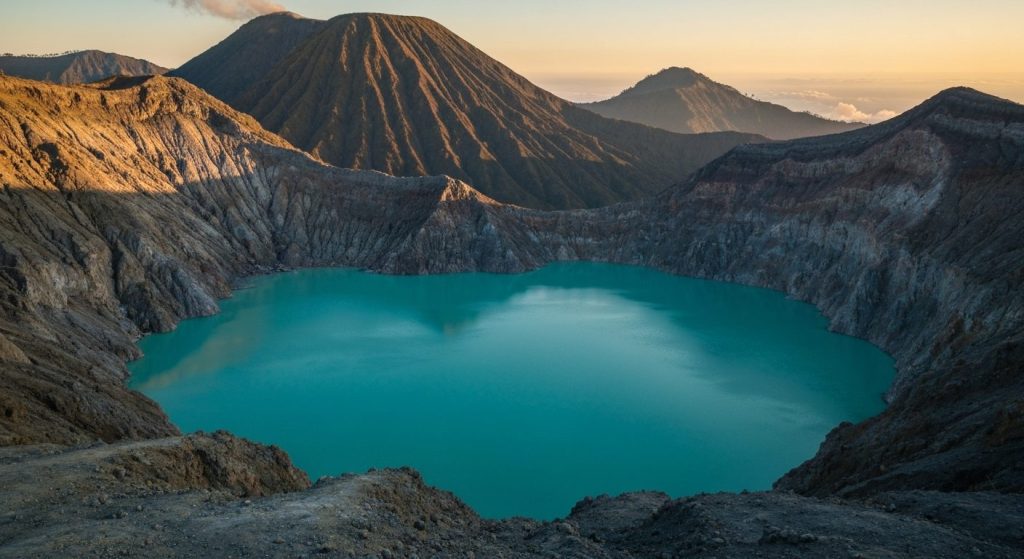
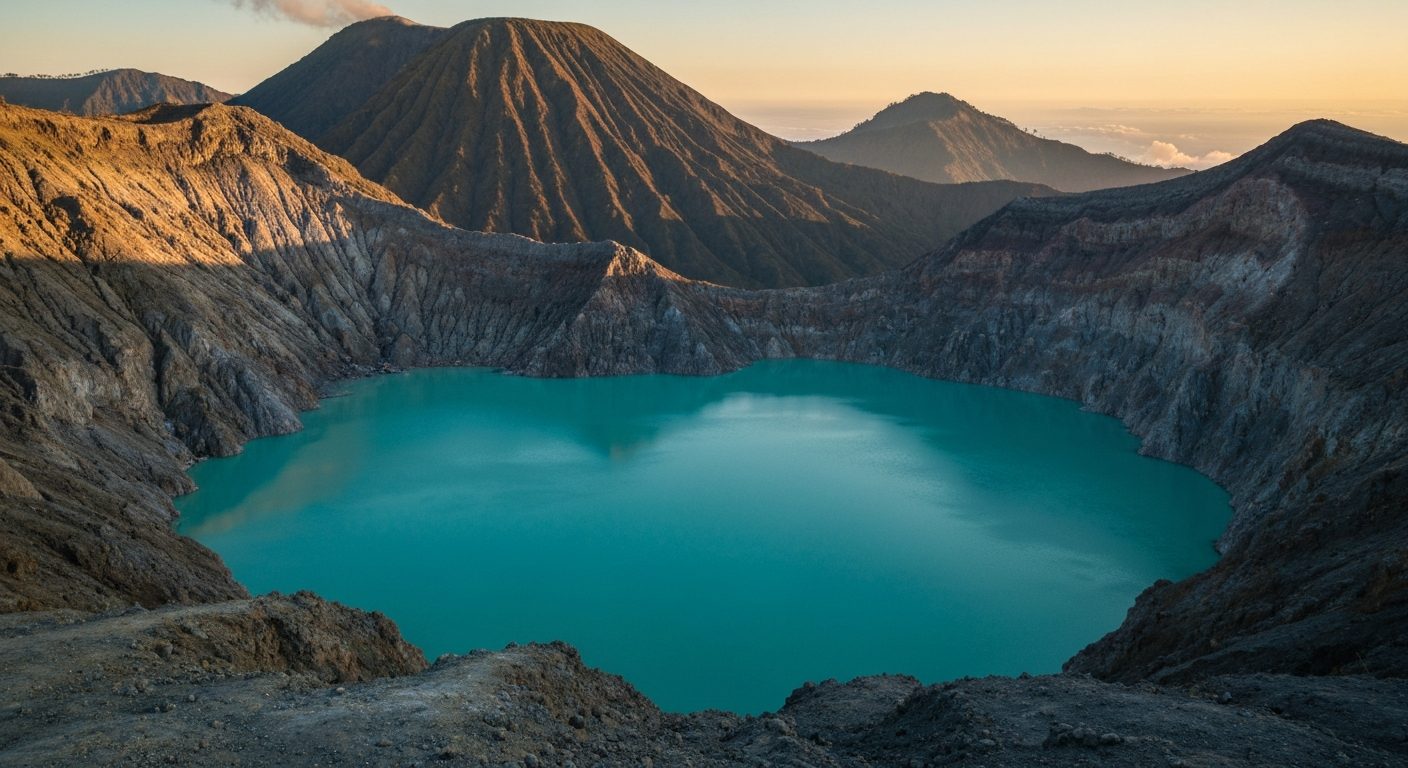
As dawn breaks, the blue flames gradually fade, revealing Kawah Ijen’s other mesmerizing feature: the world’s largest acidic crater lake. Its vibrant turquoise color, a result of high concentrations of sulfuric acid and other minerals, presents a dramatic contrast to the yellow sulfur deposits and the surrounding volcanic landscape. The view from the crater rim at sunrise, with the lake slowly coming into full light, is a powerful conclusion to the Ijen experience. Take time to simply observe, letting the scale and unique beauty sink in.
Mount Bromo Sunrise: A Different Kind of Dawn
After the intense, intimate experience of Ijen, Mount Bromo offers a grand, sweeping panorama. It’s a different kind of volcanic encounter, focused on vast landscapes and the spectacle of a new day.
The Jeep Safari to Penanjakan Viewpoint
Your Bromo adventure begins in the pre-dawn hours, typically around 3:00 AM, with a thrilling jeep safari. Our sturdy 4×4 jeeps navigate the dark, dusty “sea of sand” (Kaldera Tengger) towards one of the designated viewpoints. The most popular is Penanjakan Viewpoint 1 (elevation ~2,770 meters), which offers classic, unobstructed views of the entire Tengger caldera, including Mount Bromo, Mount Batok, and the distant, towering Mount Semeru (East Java’s highest peak). There are also other viewpoints, like Bukit King Kong or Seruni Point, which offer slightly different perspectives and can be less crowded. The drive is bumpy and exhilarating; hold on tight.
The Hike to Bromo’s Crater Rim: Conditions, Challenges
After sunrise, the jeep will take you closer to Mount Bromo’s base. From the jeep drop-off point, you’ll set off on a walk across the “sea of sand” – a wide, dusty plain. This part of the journey is relatively flat, covering about 1.5-2 kilometers, but the soft volcanic sand can make walking tiring. You’ll then face a set of concrete stairs, approximately 250 steps, leading directly to the crater rim of Mount Bromo.
- Conditions: The air at Bromo is often cold and dry in the early morning. Dust is a constant companion, especially in the dry season. The crater rim itself can be narrow in places, with no railings, and the sulfurous fumes from Bromo’s active vent are often present. While generally less intense than Ijen, the gases can still be irritating.
- Challenges: The main challenges are the cold (wear layers!), the dust, and the altitude. The walk across the sand can feel longer than it is, and the stairs, while not overly steep, require steady effort. Crowds can also be a factor, especially at sunrise viewpoints and the crater stairs. Patience is necessary.
Photography Tips for Sunrise and Volcanic Landscapes
Bromo offers incredible photographic opportunities, from sweeping panoramas to intimate details of the volcanic landscape.
- Sunrise: Use a wide-angle lens to capture the vastness of the caldera and the multiple peaks. Look for interesting foreground elements like the jeeps lined up, or lone figures walking across the sand. Bracket your shots (take multiple exposures at different settings) to ensure you capture detail in both the bright sky and the darker foreground.
- Crater Rim: The active crater, with its plumes of smoke and raw, lunar-like surface, is a powerful subject. Use a telephoto lens to compress the landscape and emphasize the scale of the volcanoes. The textures of the volcanic ash and the unique shapes of the landscape make for compelling abstract shots.
- Lighting: The golden hour light immediately after sunrise, as the sun illuminates the peaks, is magical. Look for shadows and highlights that define the landscape.
- Protect Your Gear: Just like at Ijen, dust is an issue. Keep lens caps on when not shooting, and use a blower to remove dust from your lens and sensor. A polarizing filter can help cut haze and deepen sky colors.
Safety Considerations at Bromo (e.g., gases, crowds)
While generally less hazardous than Ijen, safety at Bromo is still important.
- Gases: Bromo is an active volcano. Sulfur fumes are present at the crater rim. If the wind changes direction and the fumes become strong, do not linger. Listen to your guide.
- Crowds: Penanjakan Viewpoint can get very crowded, especially during peak season. Maintain awareness of your surroundings. The stairs to the crater rim can also be busy; take your time.
- Footing: The crater rim path is narrow and drops steeply into the crater on one side, and down the outer slopes on the other. Stay on the designated path and do not venture too close to the edge.
- Altitude: At ~2,329 meters, Bromo’s altitude is moderate, but some individuals might feel minor effects like lightheadedness or shortness of breath, especially during the climb up the stairs. Take it slow, hydrate, and inform your guide if you feel unwell.
Essential Gear and Fitness Checklist for Your Mount Bromo and Ijen Blue Fire Tour Package
Preparing adequately for your overnight tour bromo ijen blue fire package is crucial for comfort and safety. The conditions at these volcanoes can be demanding, ranging from freezing pre-dawn temperatures to dusty, warm daytime treks.
What to Pack: Layers, Sturdy Shoes, Headlamp, Personal Meds
This is a comprehensive list, but remember to pack efficiently, as you’ll be moving between locations.
- Clothing:
- Warm Layers: Absolutely essential. Temperatures at Ijen and Bromo before dawn can drop to 5-10°C (41-50°F), sometimes even lower. Pack a warm jacket (down or fleece), thermal base layers, a hat, gloves, and a scarf. You’ll shed layers as the sun rises and temperatures climb.
- Comfortable Hiking Pants: Quick-drying, breathable material is best. Avoid jeans.
- Waterproof/Windproof Outer Layer: For protection against unexpected rain or strong winds.
- Spare Clothes: A change of clothes for after the dusty hikes is always welcome.
- Footwear:
- Sturdy Hiking Shoes/Boots: With good ankle support and grip. The terrain at both Ijen (rocky, slippery) and Bromo (sandy, dusty, stairs) demands appropriate footwear.
- Socks: Wool or synthetic hiking socks to prevent blisters and wick moisture.
- Safety & Navigation:
- Headlamp with Spare Batteries: Crucial for navigating in the dark at both Ijen and Bromo. A powerful beam is highly recommended.
- Gas Mask: Provided by Bali Premium Trip for Ijen, but ensuring it fits well and understanding its use is your responsibility.
- Health & Hydration:
- Personal Medications: Any prescription medications you require.
- Basic First-Aid Kit: Blister plasters, pain relievers, antiseptic wipes, any personal preferences.
- Water Bottle/Hydration Pack: Staying hydrated is vital, especially with the strenuous activity and altitude.
- Snacks: Energy bars, nuts, or fruit for quick fuel during treks.
- Miscellaneous:
- Small Backpack: For carrying water, snacks, extra layers, and your camera gear.
- Sunglasses: For glare, especially after sunrise.
- Sunscreen: Even on cloudy days, UV exposure at altitude is high.
- Dust Mask/Bandana: Useful for Bromo’s dusty “sea of sand” to protect your mouth and nose.
- Power Bank: To charge your phone or camera batteries on the go.
- Reusable Bag: For your wet/dirty clothes or trash.
Physical Preparation: Honest Assessment of the Climbs
Both Ijen and Bromo involve significant physical exertion.
- Ijen: The trek to Ijen’s crater rim is a continuous uphill climb for about 1.5 hours. The descent into the crater is steep and rocky, lasting 30-45 minutes. The return climb out of the crater is challenging after the blue fire viewing. Total hiking time can be 3-5 hours.
- Bromo: The walk across the “sea of sand” is relatively flat but long, followed by ~250 concrete steps to the crater rim. Total walking time can be 1.5-2 hours.
- Recommendation: If you’re not regularly active, start a walking or hiking regimen a few weeks before your trip. Focus on inclines and stairs. The better your fitness, the more you’ll enjoy the experience. Don’t